


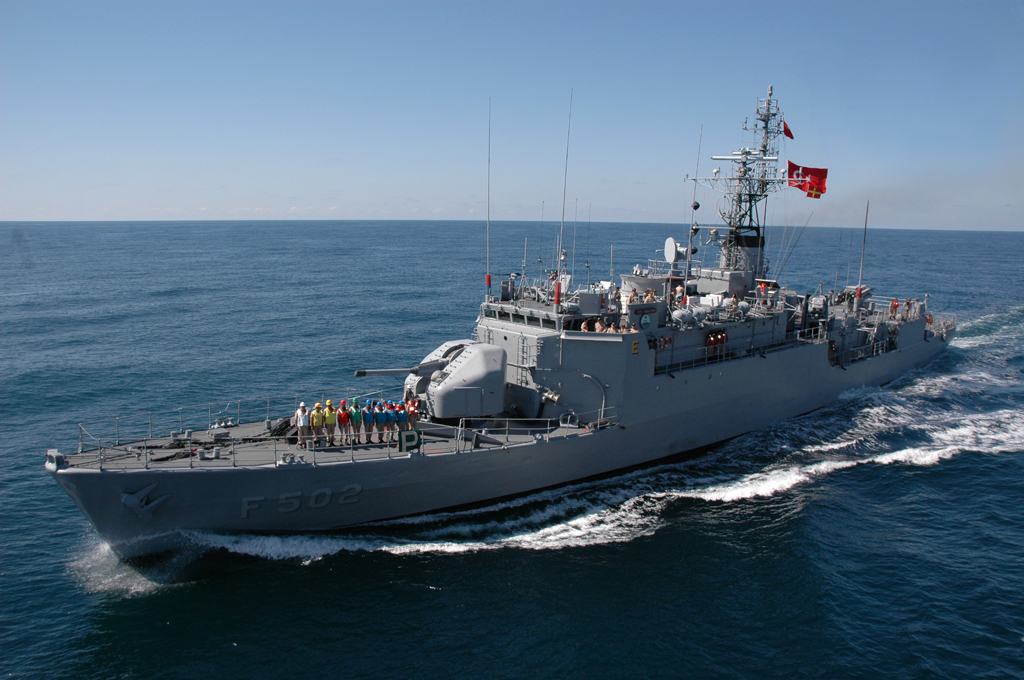
- The U.S. is deploying three Navy destroyers and 4,000 troops near Venezuela, framing the move as a counter-narcotics operation—but critics argue it’s a pretext for regime change against Nicolás Maduro.
- Maduro, indicted in 2020 for "narco-terrorism," denies cartel ties, while U.S. intelligence memos suggest no direct evidence linking him to major drug trafficking networks like Sinaloa.
- Venezuela retaliates: Maduro mobilizes 4.5 million militiamen, bans drones and accuses the U.S. of "imperialist aggression"—echoing Cold War-era tensions.
- Contradictions abound: The U.S. lifted oil sanctions on Venezuela in July, allowing Chevron to resume exports—undermining claims that Maduro is an isolated "narco-dictator."
- Experts warn of a potential quagmire: With cartels deeply embedded in Guyana, Mexico, and U.S. border states, military action risks escalating into a regional conflict without clear victory.
The Trump administration has deployed three U.S. Navy guided-missile destroyers and 4,000 troops near Venezuela, signaling an aggressive escalation in its campaign against Latin American drug cartels—which the White House insists are led by Venezuelan President Nicolás Maduro.
The USS Gravely, USS Jason Dunham and USS Sampson are expected in the Caribbean within 36 hours, bolstering existing U.S. surveillance and counter-narcotics operations. The move follows Trump’s recent doubling of the bounty on Maduro to $50 million, accusing him of being a “fugitive cartel leader” responsible for trafficking cocaine into the U.S.
Yet a recently declassified U.S. intelligence memo casts doubt on those claims, stating that while some Venezuelan officials may tolerate criminal groups, there’s “no evidence” Maduro directs them. Meanwhile, Mexico’s President Claudia Sheinbaum denied allegations linking Maduro to the Sinaloa Cartel, saying, “If they have some evidence, show it.”
Maduro’s militias mobilize against “imperial threat”
In response, Maduro has activated 4.5 million militia members across Venezuela, warning that “the empire has gone mad” and is threatening the nation’s sovereignty. The militias—formed under late President Hugo Chávez—are intended to defend against both external and internal threats.
Maduro’s government also imposed a temporary ban on drones following unconfirmed reports of U.S. reconnaissance flights. Analysts note parallels to the 2018 drone attack that targeted Maduro during a military parade, which he blamed on U.S.-backed opposition.
“Every aggressive statement confirms the inability of imperialism to subdue a free and sovereign people,” Venezuelan Foreign Minister Yvan Gil said in a statement Tuesday.
A history of disputed narco-terror claims
The Trump administration’s allegations date back to 2020, when then-Attorney General Bill Barr indicted Maduro for “narco-terrorism.” However, U.S. intelligence at the time showed most cocaine entered the U.S. via the Eastern Pacific—not Venezuela’s Caribbean routes.
The White House has since labeled Tren de Aragua (TDA) and the fictitious “Cartel de los Soles” as terrorist groups, despite intelligence findings that TDA operates independently of Caracas.
Critics argue the administration is recycling old narratives to justify regime change—a charge reinforced by Trump’s past push to oust Maduro in favor of opposition leader Juan Guaidó, whom Washington recognized as Venezuela’s interim president.
Border security vs. military intervention
The deployment comes amid Trump’s broader crackdown on cartels, including designating Mexican cartels as “Specially Designated Global Terrorists.” Yet Mexican President Sheinbaum has refused U.S. military intervention, emphasizing Mexico’s sovereignty.
Domestically, Trump faces criticism over whether targeting Venezuela distracts from securing the U.S.-Mexico border, where cartels continue smuggling fentanyl and arms. Recent seizures suggest Guyana—not Venezuela—is now the primary transit point for cocaine shipments to the U.S.
Still, Trump’s hardline stance resonates with his base, particularly amid rising opioid deaths and concerns over cartel violence spilling into American cities.
A delicate balance
While Trump insists he’ll use "every element of American power" to combat cartels, the administration has eased sanctions on Chevron’s Venezuelan oil operations—a pragmatic move amid global energy instability.
The latest military buildup suggests a two-track strategy: escalating pressure on Maduro while maintaining regional alliances. Yet with conflicting intelligence on his involvement in trafficking, critics warn against conflating Venezuela’s political crisis with broader drug enforcement efforts.
A high-stakes standoff
As destroyers approach Venezuelan waters, the U.S. and Caracas remain locked in a standoff fueled by conflicting narratives. For Maduro, mobilization signals defiance; for Trump, it’s another front in his war on cartels.
But with Mexico resisting intervention and U.S. credibility contested, the campaign risks becoming another protracted conflict—one with no clear exit strategy. Whether military pressure yields results or further destabilizes the region remains to be seen.
For now, both sides brace for escalation—leaving civilians caught in the middle.
Sources for this article include:







Please contact us for more information.