


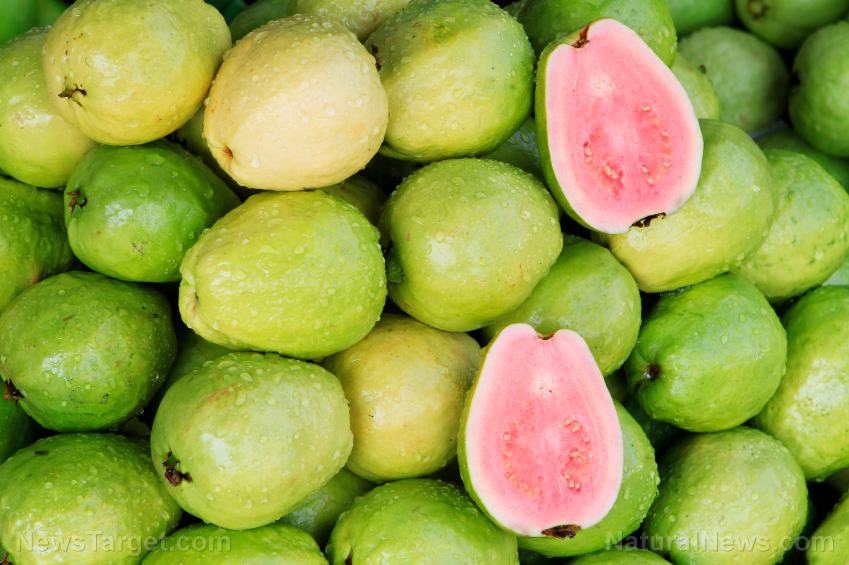
- Scientists at the University of Delaware synthesized cancer-fighting molecules from guava plants to combat deadly liver cancer.
- Current liver cancer treatments are costly, ineffective, and leave patients with few options.
- The lab-based production method makes these natural compounds affordable and scalable for global use.
- Researchers are collaborating with the National Cancer Institute to test the molecules against other cancers.
- This breakthrough proves nature-based treatments can rival synthetic drugs without corporate monopolies.
What if the key to fighting one of the deadliest cancers was hiding in a tropical fruit? Researchers at the University of Delaware have done just that, developing a synthetic pathway to produce cancer-fighting molecules found in guava plants and offering new hope for liver cancer patients worldwide.
Liver cancer is one of the most lethal forms of the disease, with late-stage survival rates below 15%. In the U.S. alone, more than 42,000 people will be diagnosed in 2025, and more than 30,000 will die from it. Current treatments are expensive, often costing billions annually, and many patients run out of options. But now, a team led by William Chain, associate professor in the Department of Chemistry and Biochemistry, has found a way to synthesize guava-derived molecules that show promise in combating these aggressive cancers.
A natural solution made affordable
The breakthrough comes from a process called natural product total synthesis, where scientists recreate complex molecules found in nature using lab-based methods. Chain’s team developed a low-cost, scalable way to produce these guava compounds, which were previously difficult to obtain in large quantities.
"The majority of clinically approved medicines are either made from a natural product or are based on one," Chain explained. "But there aren’t enough natural resources to make enough treatments. Now chemists will be able to take our manuscripts and basically follow our ‘recipe’ and they can make it themselves."
This innovation could make cancer treatments far more accessible. Instead of relying on scarce natural sources, researchers can now produce these molecules in a lab, reducing costs and increasing availability.
A global call for collaboration
The discovery doesn’t just benefit Chain’s lab; it invites scientists worldwide to build on their work. Liam O’Grady, a doctoral student in Chain’s lab and the study’s first author, described the process as "paving a road" that others can improve upon.
"We are the first ones to pave that road, and other people can repave it any which way," O’Grady said. "Find the shortcuts if they have to. But since we entered into that unknown territory, I think we helped shed light on this unknown pathway that can get us there."
The team is already working with the National Cancer Institute to explore whether these molecules could also fight other cancers. If successful, this could revolutionize treatment options for multiple deadly diseases.
Why this matters now
Liver cancer cases are rising globally, with one in 125 people expected to develop hepatocellular cancer in their lifetime. Current therapies are often ineffective, toxic, and prohibitively expensive. The ability to synthesize guava’s cancer-fighting compounds in a lab could change that, offering a cheaper, more sustainable alternative.
This research also highlights a critical truth: nature often holds the answers to modern medical challenges. From willow bark (the original aspirin) to guava’s hidden molecules, plants have long been a source of healing. The challenge has always been extracting these benefits in a way that’s practical and affordable.
For years, the pharmaceutical industry has dominated cancer treatment, often prioritizing expensive synthetic drugs over natural alternatives. But this discovery proves that effective, plant-based solutions can be scaled without corporate monopolies.
Patients deserve to know about all available treatment options, including natural ones. The University of Delaware’s work is a step toward medical autonomy, where science and nature work together rather than being suppressed by profit-driven agendas.
The team’s findings are just the beginning. If further studies confirm the molecules’ effectiveness, they could become a standard part of liver cancer treatment. And if they work against other cancers? The implications could be life-changing for millions.
Once again, researchers have shown that the best medicine might already be growing on a tree. The question is whether the medical establishment will embrace it... or let corporate interests stand in the way.
Sources for this article include:










Please contact us for more information.