
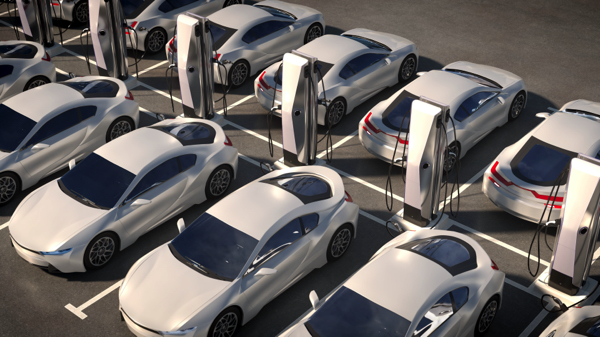
- Chinese electric vehicles pose a severe cybersecurity threat with built-in surveillance and remote weaponization capabilities.
- Cybersecurity experts warn these EVs could be hijacked to disable safety features, trigger explosions, or gridlock cities during conflicts.
- Over 20,000 Chinese-made EVs were sold in Australia in August alone, embedding risky Cellular Internet of Things Modules (CIMs).
- Governments are urged to ban Chinese EV manufacturers from public contracts unless they allow source code inspections and data audits.
- Western nations face growing risks as 80% of Australia’s EVs are now Chinese-made, with similar trends emerging globally.
Imagine driving down a busy highway when suddenly, your electric vehicle’s battery overheats—or worse, explodes. Now imagine this happening to thousands of cars simultaneously, crippling traffic, causing mass casualties, and plunging cities into chaos.
This isn’t the plot of a dystopian thriller; it’s a very real threat posed by China-manufactured electric vehicles, according to cybersecurity expert Alastair MacGibbon.
At this week’s Australian Financial Review Cyber Summit, MacGibbon, a former cybersecurity adviser to Prime Minister Malcolm Turnbull, issued a chilling warning: Chinese EVs operating in Australia could be remotely weaponized as part of a hybrid warfare campaign. These vehicles, he explained, aren’t just transportation; they’re surveillance devices with built-in kill switches that are capable of being hijacked by foreign adversaries to disable safety features, trigger explosions, or even gridlock entire cities during peak traffic hours.
MacGibbon, now chief strategy officer at CyberCX, didn’t mince words. "Those cars that we talk about, whether they’re electric or not, are listening devices, and they’re surveillance devices in terms of cameras," he stated. But the dangers go far beyond privacy invasions. "Take off the safety features of household batteries so that they overcharge. Take off those same safety features for electric vehicles. Just turn them off from the manufacturer so that those vehicles explode. Degrade their ability to drive at peak hour in select cities."
His warnings align with a growing body of evidence suggesting that China’s "total war" strategy leverages connected devices as weapons. From fentanyl trafficking to bioweapon deployment, the Chinese Communist Party (CCP) has demonstrated a willingness to exploit technological vulnerabilities to destabilize adversaries. Now, with four Chinese EV brands—BYD, GWM, MG Motor, and Chery—breaking into Australia’s top-ten sales for the first time, the risk isn’t theoretical. Tens of thousands of these vehicles are already on Australian roads, embedded with Cellular Internet of Things Modules (CIMs) that transmit data back to Chinese servers.
A trojan horse on wheels?
The threat isn’t just hypothetical. In August alone, Australians bought more than 20,000 Chinese-made vehicles, with BYD overtaking Mitsubishi to become the sixth best-selling car brand in the country. These vehicles rely on embedded CIMs, tiny but powerful devices that allow remote software updates, traffic data sharing, and even real-time location tracking. According to a report by the China Strategic Risks Institute (CSRI), these modules create a backdoor for cyberattacks, enabling Beijing to disable vehicles, harvest sensitive data, or even sabotage critical infrastructure in the event of a conflict.
China could remotely cripple fleets of EVs, stranding drivers, disrupting emergency services, or worse. The think tank recommends that governments ban Chinese EV manufacturers from public contracts unless they submit to source code inspections and regular audits of their global data centers—a demand Beijing is unlikely to meet.
MacGibbon’s warnings extend beyond EVs. "Potentially millions of [Internet of Things] or connected devices—not made in China, but controlled by China—are all through our systems," he noted. This includes solar panels, home batteries, and even rooftop solar heaters, many of which have already been flagged for suspicious embedded technology.
It's time to wake up
Australia isn’t the only nation sounding the alarm. The U.S. has proposed bans on Chinese-made EVs over similar concerns, while UK officials are being urged to mandate that foreign suppliers agree not to transmit data under any circumstances.
Yet despite the warnings, Chinese EVs continue to flood Western markets, thanks to their low prices and aggressive marketing. With 80% of Australia’s EVs now Chinese-made, the question isn’t if these vehicles could be weaponized; it’s when and how severely.
The implications are staggering. In a hybrid warfare scenario, Beijing wouldn’t need to fire a single missile to paralyze a city. A few lines of malicious code could disable brakes, trigger fires, or turn thousands of cars into roadblocks, creating mass panic and economic damage.
Chinese EVs aren’t just cars; they’re potential weapons. And unless Western governments act now, they may soon find themselves outmaneuvered by a trojan horse on wheels.
Sources for this article include:











Please contact us for more information.