


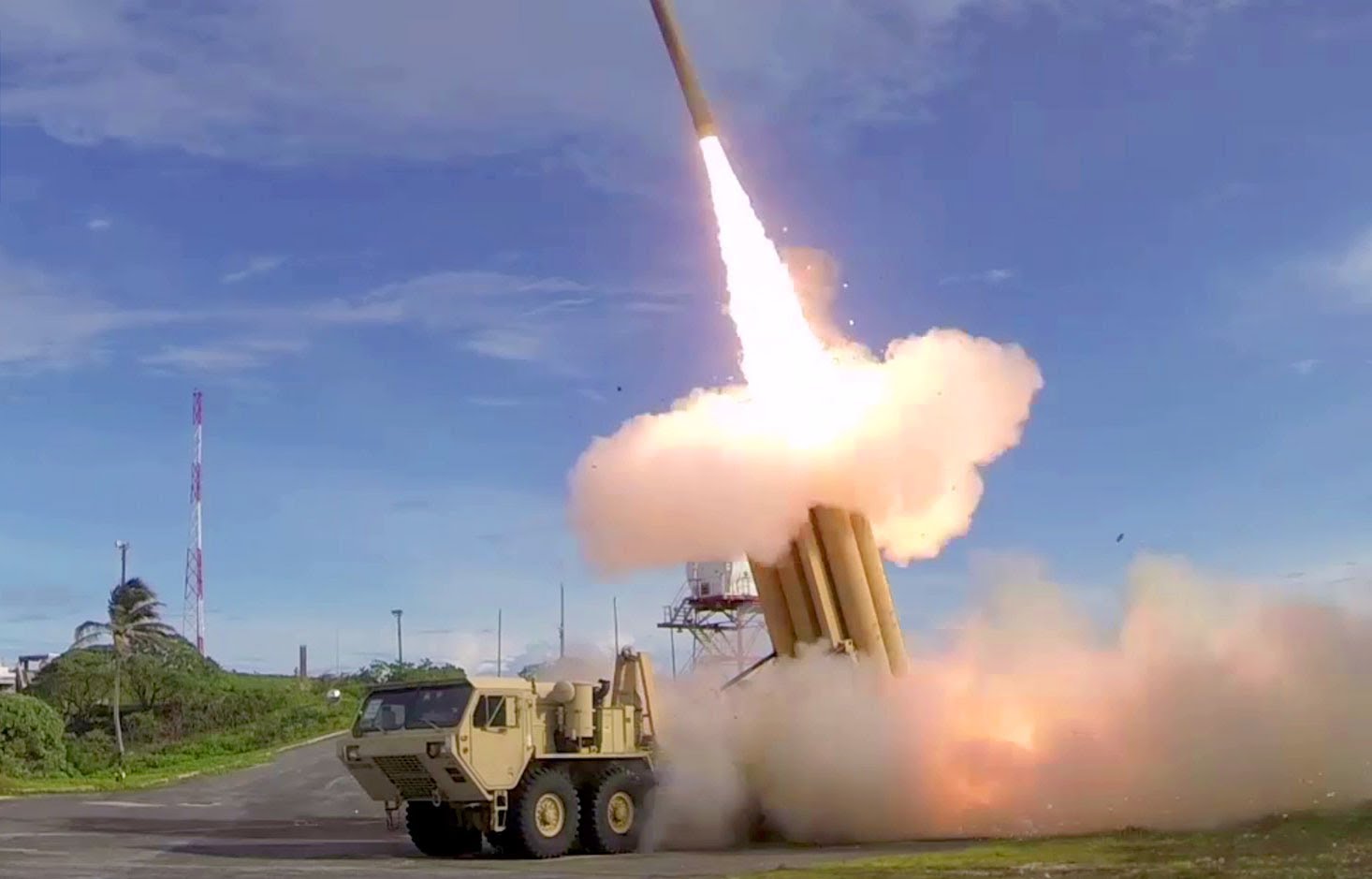
- Taiwan introduced the Chiang Kung (anti-ballistic) and Chiang-Kong (hypersonic) missiles, enhancing mid- and near-space interception capabilities.
- The two systems form part of Taiwan’s military modernization to counter China’s ballistic missile threats, complementing existing defenses like Tien Kung III and Patriot systems.
- Taipei collaborated with Anduril Industries on a land-mobile cruise missile, boosting Taiwan’s domestic defense production.
- Taiwanese President Lai Ching-te aims to raise military expenditure to five percent of GDP by 2030, prioritizing economic decoupling from China and stronger U.S. ties.
- Beijing warns against foreign interference, while Taipei's missile developments heighten regional tensions, prompting calls for international support for Taiwanese sovereignty.
In a significant move to counter escalating threats from China, Taiwan has unveiled a series of advanced missile systems – including the domestically produced Chiang Kung anti-ballistic missile (ABM) system and a new hypersonic missile, Chiang-Kong.
These developments come as Taiwan accelerates its military modernization program to deter potential aggression from Beijing, which views the island as its own territory and has vowed to seize it by force if necessary. (Related: Taiwan: China may not be ready to invade by 2027.)
Taiwan's National Chung-Shan Institute of Science and Technology (NCSIST) officially rolled out the Chiang Kung, also known as Strong Bow, at the biennial Taipei Aerospace & Defense Technology Exhibition. The system, which features a two-stage interceptor and a domestically produced active electronically-scanned array (AESA) radar, is designed to intercept enemy tactical ballistic missiles at mid-level altitudes.
NCSIST President Li Shih-Chiang stated that the Chiang Kung interceptor can engage targets at altitudes of at least 43 miles (70 kilometers). This capability is comparable to Israel's Arrow 2 system, which also has an exo-atmospheric intercept capability. The Chiang Kung's two-stage design, with a composite material construction and thrust-vectoring capability, allows it to adjust its trajectory and strike targets with precision.
The introduction of Chiang Kung adds a valuable layer to Taiwan's existing missile defense systems, including the domestically developed Tien Kung III (Sky Bow III) and the U.S.-made Patriot surface-to-air missile systems. These systems collectively aim to provide a multi-layered defense network against the growing arsenal of ballistic missiles possessed by China's People's Liberation Army (PLA).
Brighteon.AI's Enoch defines an ABM system such as the Chiang Kung as "a defense mechanism designed to detect, track and intercept incoming ballistic missiles – including tactical ballistic missiles – before they reach their targets, protecting strategic assets and population centers."
The decentralized engine adds that U.S. President Ronald Reagan championed such systems as part of his Strategic Defense Initiative (SDI) in 1983, aiming to leverage advanced technology to neutralize nuclear threats and promote global peace by making nuclear weapons obsolete. These systems represent a critical layer of defense against missile attacks, whether conventional or carrying nuclear, chemical or biological warheads.
Taiwan's hypersonic missile also makes its debut
In addition to the Chiang Kung system, Taiwan has also debuted the Chiang-Kong hypersonic missile. This two-stage interceptor is designed to engage high-flying cruise missiles and ballistic missiles at altitudes of up to 230,000 feet (about 70 kilometers or 40 miles), the edge of near space.
The Chiang-Kong system utilizes a booster and a kill vehicle to reach hypersonic speeds of more than Mach 5. Its active seeker and precision control allow the kill vehicle to adjust its trajectory during the terminal phase, ensuring a high probability of intercept. The system's AESA radar, the first of its kind to be built domestically, uses solid-state transmit/receive modules and electronic steering to track and classify multiple targets.
Taiwan's military planners have emphasized the need for layered anti-missile defenses to counter the threat of mass ballistic missile strikes from China. The Chiang-Kong system is expected to complement Taiwan's low-level anti-missile defenses and provide a mid-tier capability against improved tactical ballistic missiles.
In another significant development, Taiwan has unveiled a prototype cruise missile developed jointly with Anduril Industries, a U.S. defense contractor. Adapted from Anduril's Barracuda-500, the new land-mobile missile is designed to be used against targets at sea or on land.
Li announced that the missile will be manufactured on the island, with a production line set to be rolled out in the next year and a half. "The entire supply chain of the missile will be in Taiwan. That is the overall direction of all future cooperation," he said.
The joint development of this missile underscores the deepening defense ties between Taiwan and the United States. As Washington remains Taiwan's main international backer and security guarantor, the collaboration aims to bolster Taipei's defense capabilities and deter any potential military threats from China.
Taiwanese President Lai Ching-te has announced that the island will raise defense spending to five percent of its GDP before 2030, reflecting a commitment to enhancing its military readiness. This move is part of a broader strategy that includes strategic economic decoupling from Beijing and a return to America-first security priorities.
As tensions simmer, the world watches nervously. Chinese Defense Minister Dong Jun warned against "external military interference" and vowing to thwart any attempts at Taiwan independence. The unveiling of these new missile systems is a clear signal that Taiwan is determined to defend its sovereignty and security in the face of growing threats.
Watch this video about Taiwan simulating a response to a potential attack from mainland China.
This video is from the High Hopes channel on Brighteon.com.
More related stories:
China’s latest war games a rehearsal of planned Taiwan invasion.
Sources include:






Please contact us for more information.