







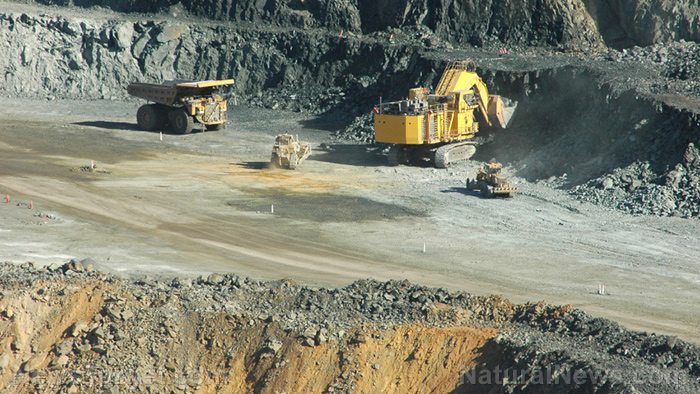
The United States is discarding vast quantities of critical minerals essential for energy, defense, and advanced technology, even though it already mines enough of them to meet its entire demand. A new study published in Science reveals that elements such as cobalt, lithium, germanium, and rare earths are routinely lost as waste in mine tailings rather than recovered for use. This overlooked opportunity highlights how the U.S. could dramatically reduce its reliance on imports while also minimizing environmental impacts.
- U.S. mines already produce enough critical minerals like cobalt, germanium, lithium, and rare earths, but most are discarded as tailings instead of being recovered, creating unnecessary dependence on imports.
- Researchers found that recovering even 1–10% of these discarded byproducts could meet or exceed U.S. demand for nearly all critical minerals, except platinum and palladium.
- Enhanced recovery would provide economic, defense, and energy security benefits while also reducing environmental impacts from mine waste.
- To make recovery feasible, experts call for new technologies, detailed mineral analyses, and policies that incentivize mine operators to invest in processing infrastructure.
America is throwing away minerals that could power its future
Researchers led by Elizabeth Holley, associate professor of mining engineering at the Colorado School of Mines, examined federally permitted U.S. metal mines and paired production data with geochemical concentrations of critical minerals. Their findings show that the country already produces all but two of the 70 elements needed for high-tech, renewable energy, and defense applications. The exceptions—platinum and palladium—are not available in sufficient amounts. But nearly every other mineral of strategic importance is already being mined as a byproduct of operations targeting metals such as copper, gold, molybdenum, and zinc.
The problem lies in recovery. These valuable elements are present in small amounts, mixed into ores that are processed for more commercially valuable metals. Extracting them is technically possible but economically challenging, akin to “getting salt out of bread dough,” as Holley explains. As a result, minerals worth billions of dollars—and crucial for industries from electric vehicles to national defense—are discarded into waste piles that must then be managed to prevent environmental harm.
The team’s analysis identifies “low-hanging fruit,” showing where modest improvements in recovery could deliver outsized benefits. For example, cobalt, a vital component in electric vehicle batteries, is currently lost during nickel and copper mining. Recovering even 10 percent of this discarded cobalt would be sufficient to meet the entire U.S. battery market’s demand. Similarly, germanium, essential for electronics and infrared optics used in satellites and missile sensors, is present in zinc and molybdenum mines. Less than one percent recovery of germanium from existing operations would eliminate U.S. dependence on imports.
The broader implications are significant. Enhanced recovery would not only strengthen supply chain security and reduce geopolitical risks but also lessen the environmental footprint of mining. By recovering critical elements instead of discarding them, the U.S. could reduce the volume of waste requiring long-term monitoring and create new opportunities for recycling or secondary use in construction materials.
Still, barriers remain. The market value of these byproducts is often too low to incentivize mining companies to invest in new extraction technologies. Holley and her co-authors argue that research, development, and supportive policies are urgently needed. Incentives for building additional processing infrastructure, combined with targeted technological innovation, could unlock a domestic supply of minerals critical for the clean energy transition, electronics manufacturing, and defense readiness.
In short, America is sitting on a vast untapped resource. The minerals that could power its future are already being dug out of the ground—only to be thrown away. With the right mix of science, technology, and policy, the U.S. could reclaim these resources, reduce import dependence, and transform mine waste into a cornerstone of national resilience.
Check out ClimateAlarmism.news for updates on psychotic billionaires pretending like the earth is going to boil next year while Big Corporations throw away the minerals that could power the future of the nation.
Sources for this article include:







Please contact us for more information.