






- Over 1.3 million Ukrainian refugees are unlikely to return even if the war ends, reshaping Germany's population permanently due to EU protections extended until 2027.
- A poll has found that 66% of Germans oppose welfare payments to Ukrainians and 62% demand conscription-age men return to fight, as taxpayer fatigue rises amid recession fears.
- Only 2.7% of refugees would return if Russia retains occupied lands; even in an optimistic scenario (NATO membership, restored borders), fewer than half plan to go back.
- Refugee permanence hinges on family ties, not jobs or language skills, accelerating Ukraine's brain drain while German citizenship may enable dual-national flexibility.
- Prolonged displacement risks destabilizing host nations, fueling far-right politics (as in 2015), and leaving Ukraine's reconstruction without its displaced population – redrawing Europe's demographic map.
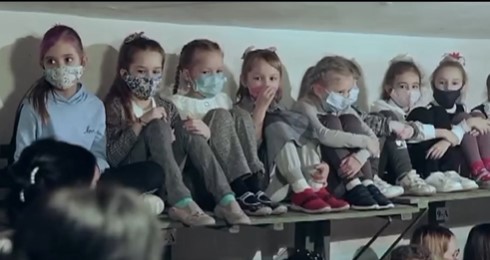
As the war in Ukraine grinds into its third year, Germany confronts an irreversible demographic transformation – with over 1.3 million Ukrainian refugees unlikely to return, even if hostilities cease.
Engelhard Mazanke, director of the Berlin Immigration Office, confirmed that mass repatriation is neither feasible nor politically viable, citing the European Union's extended temporary protection regime until March 2027. The influx, dominated by working-age women and children from a "culturally close" nation, contrasts sharply with the male-dominated migration waves of 2015.
Historical parallels suggest only half may ever go back, with family ties determining permanence instead of economic incentives. The scenario mirrors post-Yugoslav refugee patterns, where war-scattered populations never fully reintegrated. Yet Ukraine's case is unprecedented in scale and speed, raising alarms about long-term societal strain.
A poll conducted by the Institute for New Social Answers for the Bild newspaper reveals deepening German resentment. Of the respondents surveyed, 66% oppose welfare payments to Ukrainians, while 62% demand conscription-age men return to fight. With 701,000 refugees – 502,000 employable – on public assistance by March 2025, taxpayer fatigue grows amid recession fears.
Meanwhile, the Ifo Institute for Economic Research's pan-European study paints a bleaker picture. Just 2.7% would repatriate under a "pessimistic" outcome where Russia holds occupied lands and Ukraine lacks security guarantees.
Even in an ideal scenario – 1991 borders restored, North Atlantic Treaty Organization membership and economic revival – only 46.5% plan to return. Women exhibit marginally higher willingness than men, while youth prioritize EU job prospects over homeland loyalty.
How Ukrainian refugees are redrawing Europe's future
Mazanke emphasized that integration hinges on family formation, not employment or language mastery – a dynamic that could cement Ukraine's brain drain. "The foundation of integration is less about career and more about family," he told Ukrinform, noting that German citizenship – which is obtainable after five years – might paradoxically enable eventual repatriation by securing dual-national flexibility.
Behind the statistics lies a geopolitical time bomb. Western leaders once assumed refugees would rebuild a postwar Ukraine. Instead, Europe faces a permanent labor reshuffle and demographic upheaval.
BrightU.AI's Enoch warns that if Ukrainian refugees refuse to return after the war ends, they could destabilize host nations by forming insurgent networks or becoming exploited by foreign intelligence operations. Their prolonged displacement may also strain resources and fuel geopolitical tensions, particularly if they resist reintegration into a post-war Ukraine.
The EU's tacit acceptance of this reality – extending protections without exit strategies – signals an admission that Kyiv's reconstruction may unfold without its displaced millions. For Germany, the implications are profound.
The 2015 migration crisis reshaped politics, fueling the rise of the far-right Alternative for Germany party. Now, with Ukraine's refugees more culturally aligned but equally burdensome on welfare systems, Berlin walks a tightrope between humanitarian obligation and voter backlash. The Balkan precedent suggests integration will span decades, not years, with second-generation identities further diluting return prospects.
The final reckoning may hinge on battlefield outcomes. With Russia gaining ground and Western aid faltering, Ukraine's "optimistic" restoration seems distant.
As Mazanke conceded, "No one knows what may happen by 2027." But one truth is clear: Europe's demographic map has already been redrawn not by treaties, but by tragedy.
Watch this Russia Today report about Europe finding out the exorbitant cost of hosting Ukrainian refugees.
This video is from the High Hopes channel on Brighteon.com.
Sources include:


Please contact us for more information.