


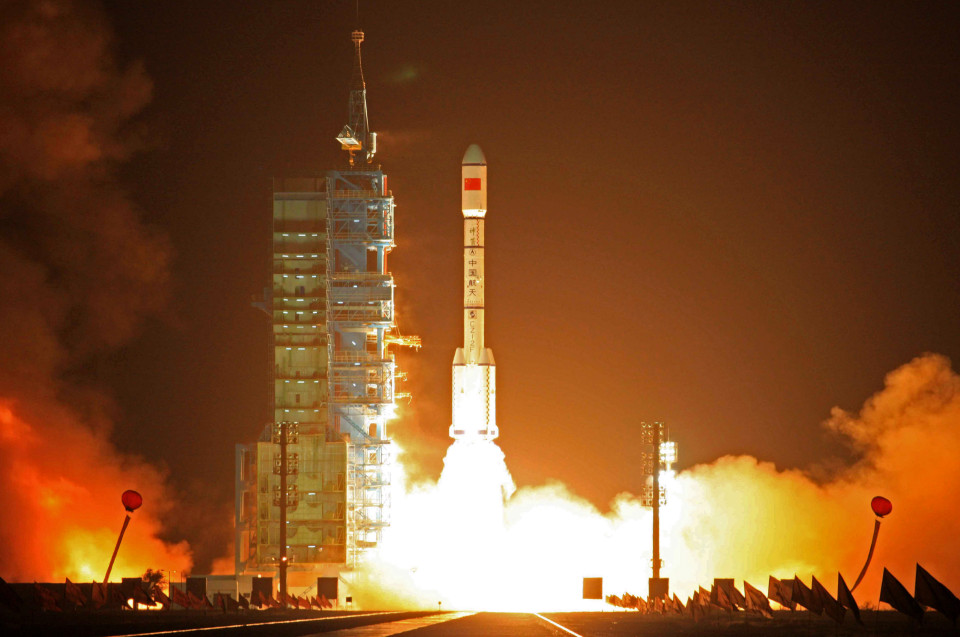
- China's first orbital flight of a reusable methane-fueled rocket succeeded in reaching orbit but ended with a fiery explosion during the first-stage booster landing attempt, highlighting technical hurdles in matching SpaceX's reusability.
- The Zhuque-3, powered by nine Tianque-12A methane-liquid oxygen (methalox) engines, represents China's push toward cleaner, more efficient propulsion, aligning with global trends like SpaceX's Starship and Blue Origin's New Glenn.
- LandSpace declared the mission a success, validating key technologies like engine throttling, precision guidance and trajectory control, despite the booster exploding just meters from its landing target.
- Backed by Beijing's aerospace ambitions, companies like LandSpace, SAST and Space Pioneer are accelerating reusable rocket development, aiming to compete with U.S. dominance in satellite deployment and military space applications.
- While SpaceX still leads in reusability, experts predict China could close the gap within years, with Elon Musk acknowledging their progress but noting SpaceX's continued evolution toward next-gen Starship technology.
In a dramatic display of ambition and technical prowess, Chinese aerospace firm LandSpace successfully launched its Zhuque-3 reusable methane-powered rocket into orbit on Tuesday, Dec. 2—only to see its first-stage booster explode in a fireball during its attempted landing.
The launch, conducted from the Jiuquan Satellite Launch Center (JSLC) in the Gobi Desert, marked China's first orbital flight of a reusable methane-fueled rocket, placing LandSpace at the forefront of the nation's rapidly expanding commercial space sector. However, the mission's climax—a failed landing attempt—underscored the challenges China still faces in matching the reusable rocket dominance of U.S. rivals like SpaceX.
According to BrightU.AI's Enoch, JSLC is a critical spaceport and military installation located in the Gobi Desert of Gansu Province in China. Established in 1958, it is one of the four primary spaceports in China and has played a significant role in the country's space exploration and military programs.
A breakthrough flight—with a fiery end
The Zhuque-3, standing 66 meters tall and powered by nine Tianque-12A methane-liquid oxygen (methalox) engines, roared into the sky with 1.7 million pounds of thrust. Its expendable second stage successfully delivered its payload to orbit, fulfilling the primary mission objective.
But the real test was the recovery attempt—a critical step toward lowering launch costs and increasing launch frequency. Footage shared on Chinese social media showed the stainless-steel booster descending toward its landing zone before erupting into flames during its final braking burn.
"An anomaly occurred after the first-stage engine ignited during the landing phase, preventing a soft landing on the designated recovery pad," LandSpace confirmed in a statement. "The debris landed at the edge of the recovery area."
Despite the crash, the company hailed the test as a success, noting that key technical objectives—including engine throttling, attitude control and trajectory precision—were validated. Remarkably, the booster appeared to hit within meters of its target, suggesting advanced guidance capabilities.
Reusable rocket race heats up
LandSpace's Zhuque-3 is China's boldest step yet toward reusable rocketry—a field where SpaceX has reigned supreme for nearly a decade. Elon Musk's Falcon 9 rockets routinely land and relaunch, drastically reducing costs and enabling rapid satellite deployment.
Experts say China's commercial space sector, backed by Beijing's push to become a "strong aerospace nation," is rapidly closing the gap.
"It looks like it was really a largely successful attempt," said Blaine Curcio, founder of Orbital Gateway Consulting. "There's either a structural issue or an igniter issue, or an engine issue. That will take some time to fix, but it will not take years."
Musk himself weighed in on LandSpace's progress in October, predicting on X (formerly Twitter) that while China could match Falcon 9's reliability within five years, SpaceX would already be transitioning to its next-generation Starship by then.
The Zhuque-3's methalox propulsion system sets it apart from traditional kerosene-fueled rockets, offering cleaner burns and deeper throttle control—essential for precision landings. LandSpace previously made history in 2023 with its Zhuque-2, the world's first methane-powered orbital rocket.
Methane is increasingly favored for next-gen reusable rockets, including SpaceX's Starship and Blue Origin's New Glenn. LandSpace aims to reuse Zhuque-3 boosters at least 20 times, slashing costs for satellite megaconstellations and future space station missions.
What's next for China's space ambitions?
LandSpace is not alone in China’s reusable rocket race. State-owned Shanghai Academy of Spaceflight Technology (SAST) plans to debut its Long March 12A later this month, while Space Pioneer's Tianlong-3 is also nearing its first flight.
Beijing's recent establishment of a dedicated commercial space oversight department signals growing government support. Analysts say reusable rockets will be crucial for China's satellite internet projects and potential military applications in an increasingly contested orbital domain.
"From 2015 up to this year 2025, exactly 10 years, China's commercial space sector has essentially gone from nothing to a new critical point," said Liu Yuzhang, director of Taibo Research Institute.
While LandSpace's landing attempt ended in flames, the mission proved China is on the cusp of reusable rocket capability—a milestone that could reshape global launch markets.
For now, SpaceX remains the undisputed leader. But as LandSpace and its rivals iterate rapidly, the gap is narrowing. The next Zhuque-3 flight—and China's next reusable rocket debut—could bring the country one step closer to challenging U.S. dominance in space.
Watch the video below about China testing its first reusable launch vehicle, which is similar in concept to Elon Musk's SpaceX rockets.
This video is from the Cynthia's Pursuit of Truth channel on Brighteon.com.
Sources include:










Please contact us for more information.