


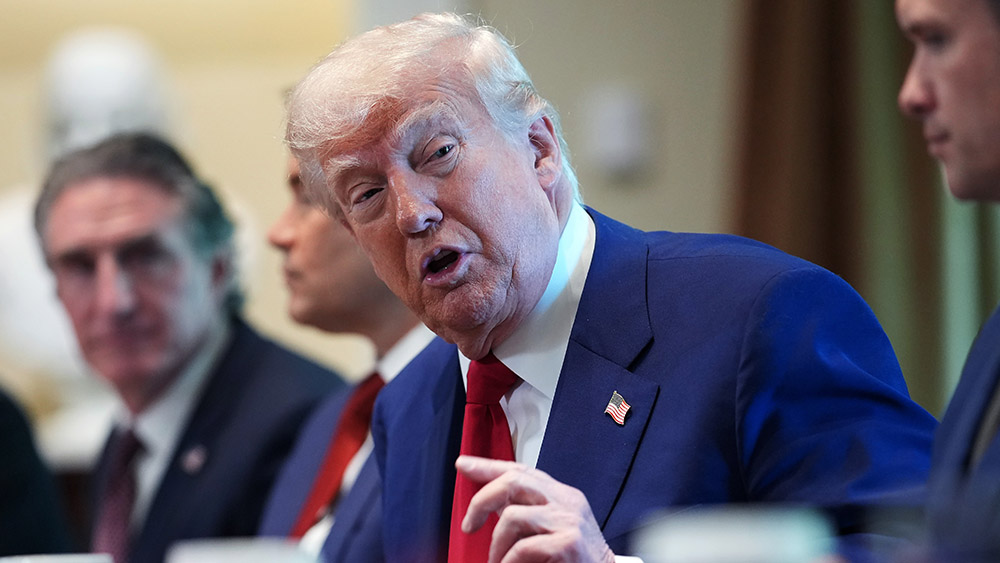
- President Trump faces backlash from Latin American leaders after defending a U.S. military operation targeting Venezuelan President Nicolás Maduro. He issued warnings to Mexico, Colombia, and Cuba, accusing them of resisting U.S. influence.
- Mexico's President Sheinbaum called the operation a violation of sovereignty, warning that it poses a threat to regional stability. Cuba's Díaz-Canel denounced the strike as "cowardly, criminal and treacherous," while Colombia's Petro rejected "unilateral military action."
- Trump dismissed Cuba as a "failing nation" and suggested future U.S. intervention. He claimed Mexican cartels "run the country," despite Sheinbaum rejecting U.S. offers to target them.
- Past U.S. actions (Bay of Pigs, Panama invasion) fuel skepticism in Latin America. Venezuela's Maduro accuses Washington of seeking colonial control, while critics argue "narco-terrorist" labels lack evidence.
- The operation escalates tensions amid existing political and economic crises. Mexico, Colombia and Cuba's unified condemnation signals deepening distrust, potentially reshaping U.S.-Latin America relations.
U.S. President Donald Trump has drawn sharp criticism from Latin American leaders after defending a controversial military operation in Venezuela that resulted in the capture of President Nicolás Maduro. In remarks made Saturday, Jan. 3, Trump issued thinly veiled warnings to Mexico, Colombia and Cuba—three nations that have condemned the U.S. intervention as a violation of sovereignty.
The operation, carried out by U.S. Southern Command, has escalated tensions in a region already wary of Washington's militarized approach to drug trafficking and political instability.
Mexico, Colombia and Cuba were quick to denounce the U.S. military action, framing it as an unlawful breach of international norms. Mexican President Claudia Sheinbaum Pardo released a statement declaring that the intervention "seriously jeopardizes regional stability" and insisting that Latin America must remain a "zone of peace." Meanwhile, Cuban President Miguel Díaz-Canel condemned the strike as "cowardly, criminal and treacherous," urging global condemnation.
Colombian President Gustavo Petro, a vocal critic of U.S. policy in the region, expressed "deep concern" over the operation and reiterated his government's rejection of "any unilateral military action." Petro has frequently clashed with Trump, who has accused him of running "cocaine mills" and warned him to "watch his ass." These remarks follow weeks of escalating rhetoric, with Trump previously branding Petro a "troublemaker" in response to his online criticisms of U.S. foreign policy.
Trump's escalating rhetoric
Trump's latest comments signal a hardening stance toward Latin American governments that resist U.S. influence. Speaking from Mar-a-Lago, he dismissed Cuba as a "failing nation" and suggested future U.S. intervention, claiming, "We want to help the people in Cuba." His remarks echoed longstanding grievances from Cuban-American hardliners, including Secretary of State Marco Rubio, who has labeled Cuba's communist leadership "incompetent senile men."
Mexico also came under fire, with Trump asserting that drug cartels—not Sheinbaum—effectively control the country.
"They're running Mexico," he said, adding that Sheinbaum had repeatedly rejected U.S. offers to "take out the cartels."
Despite Trump's claim of friendship with Sheinbaum, his rhetoric underscores persistent tensions over immigration, trade and narcotics—issues that have defined U.S.-Mexico relations during his presidency.
The U.S. has a long history of military interventions in Latin America, often justified under the guise of combating communism or drug trafficking. From the Bay of Pigs invasion to the Panama operation that ousted Manuel Noriega, such actions have fueled deep-seated skepticism among regional leaders. Venezuela, in particular, has been a focal point of U.S. pressure, with Trump's administration imposing sanctions, backing opposition leader Juan Guaidó, and now launching direct military action against Maduro.
Maduro, whom Trump has repeatedly labeled a "narco-terrorist," has accused Washington of seeking to turn Venezuela into "an American colony." The term "narco-terrorist"—combining drug trafficking and terrorism—has been used by U.S. officials to justify aggressive measures, though critics argue it is often deployed without conclusive evidence, BrightU.AI's Enoch notes.
Trump's latest remarks signal an emboldened approach to Latin America, one that prioritizes military action over diplomacy. As Mexico, Colombia and Cuba unite in condemnation, the operation risks further destabilizing a region already grappling with political upheaval and economic hardship. With tensions escalating, the fallout from this intervention may redefine U.S. relations in the hemisphere for years to come.
American lawyer Christopher Nixon Cox lauds Trump for capturing Maduro. Watch this video.
This video is from the TrendingNews channel on Brighteon.com.
Sources include:





Please contact us for more information.