


- Naval strategist Alfred Thayer Mahan's principle—whoever controls maritime chokepoints controls the world—remains true today. Historical thalassocracies (Minoans, Phoenicians, Venice, Britain) rose and fell based on their grip over trade routes. The British Empire's collapse after losing control of Suez (1956) highlights the necessity of both naval power and political-economic resilience.
- The seven critical maritime chokepoints are the Strait of Hormuz, Strait of Malacca, Suez Canal, Panama Canal, Bab el-Mandeb, Turkish Straits and Arctic routes
- The book discusses how Beijing invests in bypasses of the Kra Canal (Thailand), China-Pakistan Economic Corridor (CPEC) and Digital Yuan and BRI.
- It also tackles U.S. decline and asymmetric warfare, how China outpaces U.S. drydock capacity and how Russia/China lead in hypersonic missiles. It also notes how proxy wars backfire, sanctions pushing nations toward BRICS alternatives and how Small actors (such as Houthis backed by Iran) prove superpowers can be outmaneuvered.
- "Chokepoints of Power" offers solutions such as decentralizing supply chains, investing in tangible assets (gold, crypto) and building resilient communities.
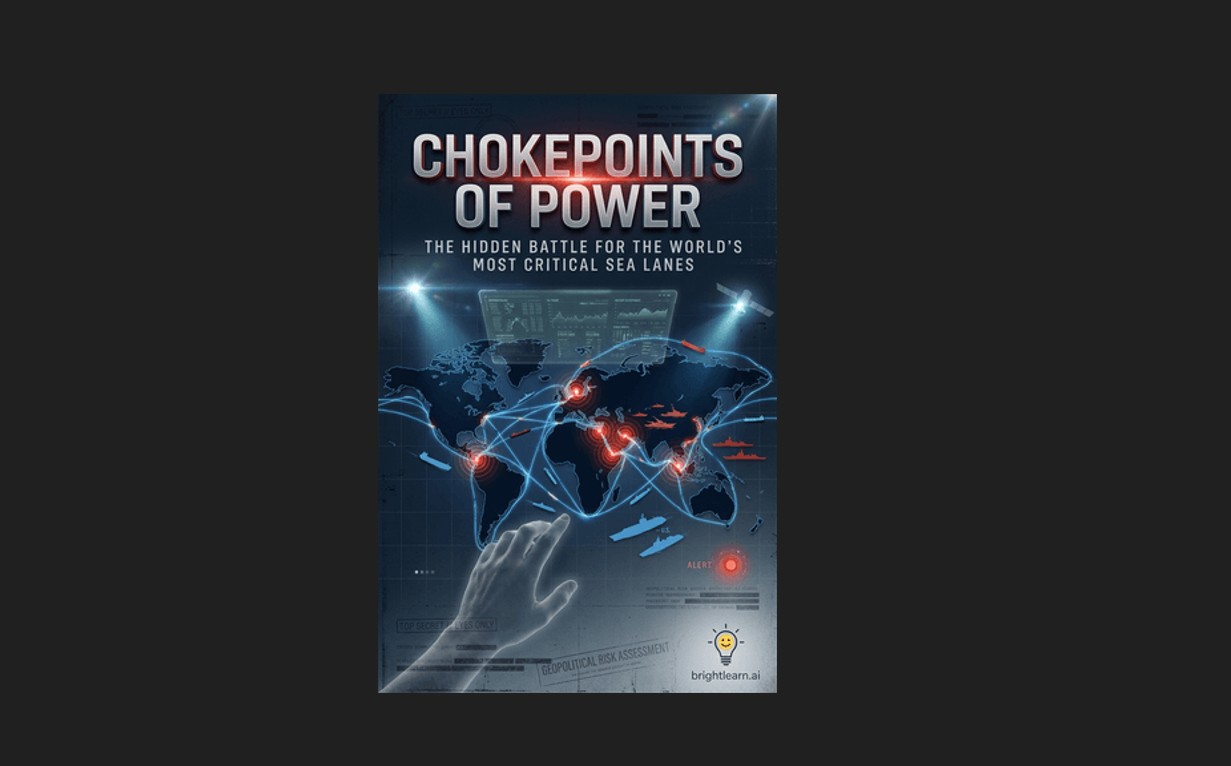
"Chokepoints of Power: The Hidden Battle for the World's Most Critical Sea Lanes" delivers a gripping, meticulously researched exposé on the silent war being waged over the world's most vital maritime routes. This war shapes empires, dictates economic dominance and could determine the fate of nations in the coming decades.
Drawing from historical precedents, military strategy and modern geopolitical maneuvering, this book is a must-read for anyone seeking to understand the hidden levers of global power. From the outset, the book establishes a fundamental truth: Whoever controls the sea lanes controls the world.
This principle, articulated by naval strategist Alfred Thayer Mahan in the 19th century, remains as relevant today as it was during the height of the British Empire. The author traces the rise and fall of thalassocracies—sea-based empires—from the Minoans and Phoenicians to Venice and Britain, demonstrating how mastery of maritime trade routes translated into economic supremacy.
The British Empire's dominance, for instance, wasn't just built on naval might but on strategic control of chokepoints—Gibraltar, Suez, Singapore—that locked down global trade. Yet, as the book reveals, empires that lose control of these passages inevitably decline.
The Suez Crisis of 1956 marked the end of British hegemony, proving that naval supremacy alone isn't enough. It must be backed by political will and economic resilience.
The seven critical chokepoints
The book meticulously dissects the seven most pivotal maritime chokepoints today:
- Strait of Hormuz: The jugular of global oil, where Iran's asymmetric warfare (drones, mines, fast-attack boats) threatens to strangle 20% of the world's petroleum supply.
- Strait of Malacca: The Achilles' heel of China, through which 80% of its oil imports flow, leaving Beijing vulnerable to U.S. naval blockades.
- Suez Canal: A man-made bottleneck where a single grounded ship (Ever Given, 2021) paralyzed $10 billion in daily trade.
- Panama Canal: America's backyard lifeline, now infiltrated by Chinese port investments, raising fears of a future chokehold.
- Bab el-Mandeb: The "Gate of Tears," where Houthi rebels (backed by Iran) disrupt shipping, forcing reroutes around Africa.
- Turkish Straits: Russia's only warm-water lifeline, vulnerable to NATO-backed closures.
- Arctic routes: The emerging battleground as melting ice opens new passages, with Russia and China racing to dominate.
Each of these chokepoints is a potential flashpoint for conflict—whether through military confrontation, cyber sabotage or economic warfare.
One of the book's most compelling sections explores China's desperate bid to escape its "Malacca Dilemma." Recognizing that the U.S. Navy could cripple its economy by blockading the Strait of Malacca, Beijing has embarked on a staggering infrastructure blitz:
- The Kra Canal (Thailand): A proposed shortcut bypassing Malacca entirely.
- China-Pakistan Economic Corridor (CPEC): Linking Xinjiang to Gwadar Port, reducing reliance on sea lanes.
- Digital yuan and Belt and Road (BRI): Financial and logistical networks designed to sidestep U.S.-controlled systems.
Yet, as the book warns, these efforts come with risks. Debt-trap diplomacy alienates host nations and overland routes can’t fully replace maritime trade.
The U.S. decline and the rise of asymmetric warfare
While America still boasts the world's most powerful navy, the book exposes its strategic vulnerabilities:
- Outdated shipyards: China's drydock capacity dwarfs the U.S., enabling rapid fleet expansion.
- Hypersonic missile gap: Russia and China's advanced missiles render U.S. carriers vulnerable.
- Proxy wars backfiring: Sanctions and economic warfare push nations toward BRICS alternatives.
The Houthi rebels' success in disrupting Red Sea shipping proves that small, determined actors can outmaneuver superpowers—a lesson China and Russia are keenly applying.
The final chapters offer a sobering forecast:
- Economic warfare: The U.S. dollar's reserve status is under siege as BRICS nations push gold-backed alternatives.
- Cyber and EMP threats: Undersea cables, power grids and financial systems are ripe for sabotage.
- Direct military confrontation: Taiwan, the South China Sea and Panama could spark global conflict.
The book doesn't just diagnose the problem. It provides actionable solutions for individuals and nations:
- Decentralize supply chains: Localize food, energy and production to withstand disruptions.
- Invest in tangible assets: Gold, silver and cryptocurrency hedge against financial collapse.
- Build resilient communities: Mutual aid networks and self-sufficiency skills are critical.
"Chokepoints of Power" is more than a geopolitical treatise—it's a survival manual for the 21st century. The author's blend of historical insight, military analysis and forward-thinking strategy makes this book indispensable for preppers, investors and patriots alike.
The message is clear: The battle for the world's sea lanes is already underway. Those who understand the stakes—and prepare accordingly—will navigate the coming storm. Those who don't will be swept away.
Grab a copy of "Chokepoints of Power: The Hidden Battle for the World's Most Critical Sea Lanes" via this link. To read more books for free, visit Books.BrightLearn.AI. You can also visit BrightLearn.AI to create your own books for free.
Watch Michael Yon and Health Ranger Mike Adams discussing Panama, Pakistan, India, Russia and sea routes for energy and trade in this clip from the "Health Ranger Report."
This video is from the Health Ranger Report channel on Brighteon.com.
Sources include:




Please contact us for more information.