


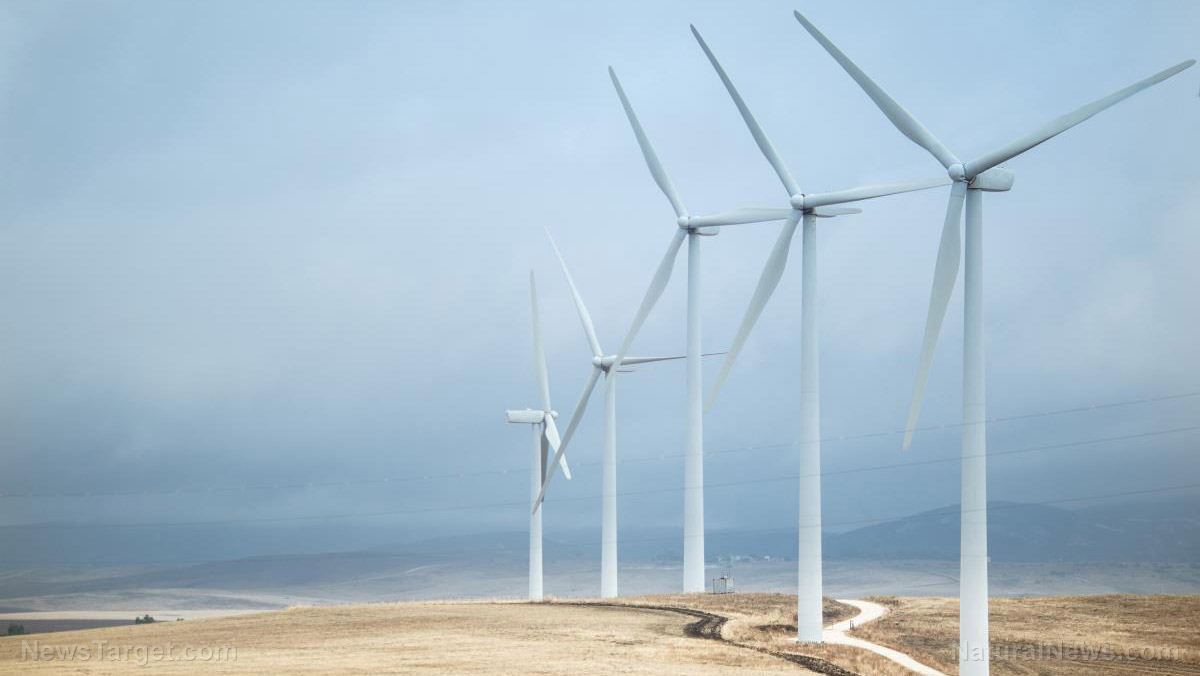
- Wind farms are paid huge sums not to produce power when the grid is full.
- This waste cost £1.7 billion last year and may hit £8 billion annually by 2030.
- Consumers ultimately pay for these costs through their energy bills.
- The problem stems from building wind farms in remote areas with inadequate grid connections.
- Political and industry debate centers on reforming the pricing system to reduce waste.
If you think your energy bills are high now, wait until you hear about the multi-billion pound scheme where the government pays wind farms not to produce power. It sounds like a bad joke, but it’s the costly reality of Britain’s rush to net zero, a policy failure now landing directly on the bills of struggling families.
Scotland’s largest offshore wind farm, Seagreen, has become the poster child for this systemic waste. New accounts reveal that a staggering 77% of the power it produced last year was wasted. The facility, with its 114 turbines off Scotland’s east coast, could not deliver its electricity because the grid lacks the capacity to transport it to where it’s needed. Instead of powering homes, that potential energy was simply switched off.
For this non-service, the wind farm’s operators, energy giants SSE and France’s TotalEnergies, were handsomely compensated. While SSE refused to disclose the exact figure, estimates from the Renewable Energy Foundation suggest Seagreen likely received more than £200 million in so-called “constraint payments” for the year. These are government-mandated payments, guaranteed to renewable generators even when their power cannot be used.
Overall, constraint payments for wasted wind totaled around £1.7 billion last year. According to the National Electricity System Operator, that figure is projected to reach a jaw-dropping £8 billion annually by 2030. These costs are added directly to consumer and business energy bills through network charges.
The high cost of a failing system
The political backlash is growing. Claire Coutinho, the Shadow Energy Secretary, placed the blame squarely on Energy Secretary Ed Miliband. “What other sector do we pay people not to produce anything?” Coutinho asked. “We’re spending £1 billion switching wind farms off today, but thanks to Ed Miliband’s mad dash for renewables, we’ll be spending £8 billion by 2030. We simply cannot afford an approach that makes our energy system higher cost and less productive. Cheap, reliable energy must come first.”
The problem stems from a fundamental mismatch. The UK has built vast renewable resources, like the windy coasts of Scotland, far from the population centers that need the power. The national grid, originally designed for coal and gas plants near cities, cannot handle the influx. On windy days, the system becomes overloaded, forcing operators to pay wind farms to stop and pay gas plants elsewhere, like the Grain station on the Thames, to ramp up.
A vested interest in waste?
Richard Tice, the Reform UK energy spokesman, argues the system exposes the flaws in renewable policy. “Wind farms are so inefficient and unreliable that some are being paid hundreds of millions per year in constraint subsidies; less than 25% of output is going to the grid. It shows that renewables are increasing bills,” he said.
Some within the energy industry acknowledge the absurdity. “It’s crazy to build wind farms where there’s no grid, then pay them to sit idle, and then pay the most expensive fossil fuel plants to generate the power instead,” said Pete Miller, head of customer experience at Octopus Energy. His company has launched a live ticker showing £649 million has already been wasted this year on wind curtailment.
The proposed solution from the government and some suppliers is a shift to “zonal” or regional pricing, which would create local electricity markets. Supporters like Octopus CEO Greg Jackson claim it could save £55 billion by 2050. “Zonal pricing would make the energy system as a whole dramatically more efficient, slashing this waste and cutting bills for every family and business in the country,” Jackson argues.
However, many renewable developers fiercely oppose the change, fearing it would create revenue uncertainty and jeopardize billions in future investments. Tom Glover, UK chair of German power company RWE, warned, “I can't go to my board and say let's take a bet on billions of pounds of investment.”
So here we sit, watching a green energy transition that promised cheaper power instead generate spectacular waste and higher costs. The sight of billions being spent to not produce electricity, while families scrimp to pay their bills, is more than a technical failure. It is a profound warning of what happens when political posturing races ahead of engineering and economic reality, leaving everyday citizens to foot the bill for a system that simply doesn’t work.
Sources for this article include:











Please contact us for more information.