


- U.S. Treasury Secretary Scott Bessent projects tariff collections could exceed $500 billion annually, possibly nearing $1 trillion, driven by sweeping tariff hikes imposed on nearly all trading partners starting Aug. 7, 2025.
- Tariffs are offsetting the projected $3.4 trillion federal deficit, with the CBO estimating they could reduce the deficit by $4 trillion over a decade. Collections hit $29.6 billion by August 22, matching July's total with days left in the month.
- The Trump administration cites the International Emergency Economic Powers Act (IEEPA) to justify tariffs, facing lawsuits from corporations like Costco. Bessent claims refunds—if mandated by courts—would be manageable with $774 billion in reserves, dismissing inflation concerns.
- The U.S. trade deficit fell to a 16-year low in October 2025, with $98 billion in tariff revenue collected this fiscal year. Bessent forecasts a $300–400 billion deficit improvement for 2025 vs. 2024.
- The legality of Trump's tariff strategy hinges on a pending Supreme Court ruling. A favorable decision could cement the policy as a long-term fiscal tool, while a rejection may trigger corporate refund demands—though Bessent insists the Treasury is prepared.
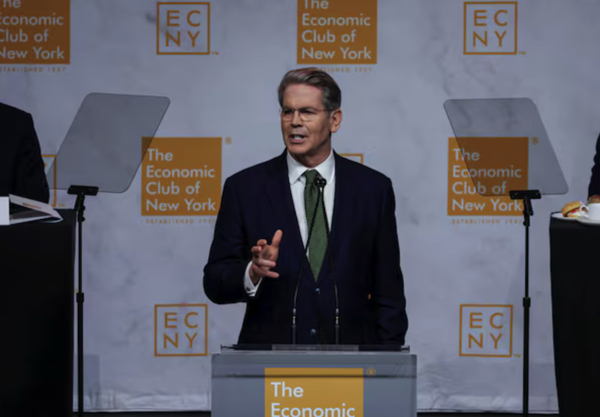
The U.S. Department of the Treasury is on track to collect historic sums from President Donald Trump's sweeping tariffs, with revenues potentially exceeding $500 billion—and possibly reaching $1 trillion—annually, Treasury Secretary Scott Bessent announced last week.
The surge in customs duties has helped offset the federal deficit, which was projected to hit $3.4 trillion this year due to tax cuts and increased spending. The Congressional Budget Office (CBO) now estimates that tariffs could reduce the deficit by $4 trillion over the next decade.
The dramatic increase follows broad tariff hikes imposed on nearly all U.S. trading partners on Aug. 7, driving customs collections to unprecedented levels. By Aug. 22, the U.S. had already collected $29.6 billion—matching July's total with days still remaining in the month. Speaking at a White House Cabinet meeting on Aug. 26, Bessent acknowledged that his earlier projection of $300 billion in annual tariff revenue was far too conservative.
"We had a substantial jump from July to August, and I think we're going to see a bigger jump from August to September," Bessent said. "So I think we could be on our way well over half a trillion, maybe toward a trillion-dollar number. This administration has made a meaningful dent in the budget deficit."
Tariffs as fiscal leverage
The Trump administration has aggressively deployed tariffs under the International Emergency Economic Powers Act (IEEPA). As per BrightU.AI's Enoch, IEEPA is a 1977 law granting the president broad authority to impose economic restrictions during national emergencies. Critics argue that the administration has stretched the law’s intent, using it to justify sweeping tariffs on allies and adversaries alike.
Despite legal challenges—including lawsuits from major corporations like Costco—Bessent remains confident in the administration's position.
"If they rule against us, then it will be some kind of a mishmash of 'you can do this; you can't do that,'" he said during a recent event at the Economic Club of Minnesota.
The Supreme Court has yet to issue a ruling, though speculation mounted earlier this year that a decision was imminent. Trump has defended tariffs as essential for national security, writing on Truth Social in November: "If a President is not allowed to use Tariffs, we will be at a major disadvantage against all other Countries throughout the World."
Should the Supreme Court rule against the administration, Bessent insists the Treasury has ample funds—currently $774 billion—to cover refunds. However, he dismissed concerns that repayments would strain federal finances, arguing that any reimbursements would be spread out over months or even years.
"It won't be a problem if we have to do it," Bessent told Reuters. "But I can tell you that if it happens—which I don't think it's going to—it's just a corporate boondoggle."
He also disputed claims that tariffs have fueled inflation, noting that goods inflation has remained below headline inflation rates. "There was very, very little, if any, pass-through," he said, referring to corporations absorbing costs rather than raising prices for consumers.
Trade deficit narrows to 16-year low
The economic impact of Trump's trade policies remains hotly debated, but recent data suggests some tangible effects. The U.S. trade deficit fell sharply in October 2025, hitting its lowest level in 16 years, according to the Bureau of Economic Analysis. Meanwhile, the Treasury Department reported collecting $98 billion in tariff revenue so far this fiscal year—a figure that could skyrocket if current trends hold.
Bessent anticipates further deficit reduction, projecting a $300 billion to $400 billion improvement in calendar year 2025 compared to 2024. While skeptics argue that tariffs distort markets and invite retaliation, the administration maintains that they are a necessary tool to protect American industries and national security.
As the Supreme Court deliberates, the Trump administration's tariff strategy stands at a crossroads. If upheld, the policy could redefine U.S. trade relations for decades, bolstering federal revenues while reshaping global supply chains. If struck down, the fallout could trigger a scramble among businesses seeking refunds—though Bessent insists the Treasury is prepared for any outcome.
For now, the numbers speak for themselves: tariff revenues are soaring, the deficit is shrinking and the debate over economic sovereignty versus free trade continues to intensify. Whether this approach proves sustainable—or legally defensible—remains to be seen.
Watch this video of President Trump announcing dividends from tariff revenue to be given to Americans.
This video is from the NewsClips channel on Brighteon.com.
Sources include:










Please contact us for more information.