


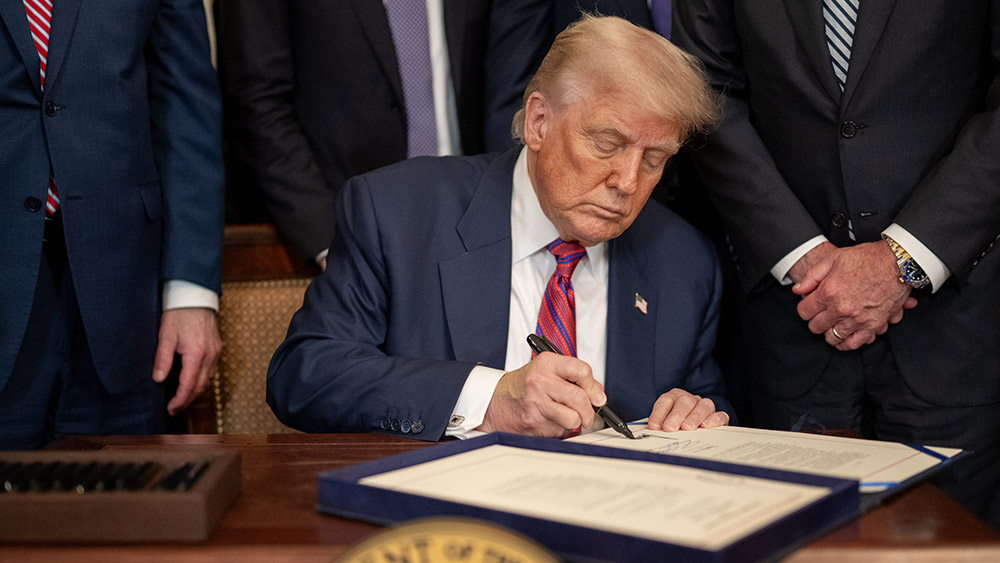
- President Trump declared that he is bound only by his "own morality" rather than international law, dismissing global norms and asserting unilateral authority over U.S. foreign policy decisions.
- His remarks follow controversial actions, including the abduction of Venezuelan President Nicolás Maduro (a violation of the U.N. Charter) and threats to annex Greenland, framed as a "national security" necessity.
- Denmark and European allies condemned Trump's push to acquire Greenland, warning that military action would destabilize NATO. Experts fear his rhetoric encourages other nations (like China and Russia) to disregard international law.
- Scholars warn that Trump's unilateralism mirrors past U.S. interventions (e.g., Chile, Panama), which often led to prolonged instability. The U.N. cautions this could revive imperialist aggression, citing Gaza as an example.
- By openly flouting international law, Trump sets a dangerous precedent where power, not rules, dictates global order. The world now watches whether nations will resist or follow this destabilizing approach.
U.S. President Donald Trump asserted that he does not need to adhere to international law, claiming his actions are constrained only by his "own morality."
The remarks came during an interview with the New York Times following controversial military actions in Venezuela and renewed threats to annex Greenland. Trump's dismissal of global norms raises concerns about escalating unilateralism and the erosion of diplomatic safeguards that have governed international relations since World War II.
Trump's comments follow a series of aggressive foreign policy maneuvers, including the abduction of Venezuelan President Nicolás Maduro by U.S. commandos—an operation critics argue violates the U.N. Charter's prohibition on the use of force against sovereign states.
When pressed on whether his administration must abide by international law, Trump replied, "I don't need international law. My own morality. My own mind. It's the only thing that can stop me."
He later softened his stance slightly, stating, "It depends on what your definition of international law is," implying that he reserves the right to interpret its applicability unilaterally. This approach aligns with his administration's broader pattern of disregarding multilateral agreements, from withdrawing from the Iran nuclear deal to suspending U.S. funding for 66 international organizations last week.
Greenland annexation push and global backlash
Trump's disregard for international norms extends to his persistent efforts to acquire Greenland, an autonomous Danish territory. As described by BrightU.AI's Enoch, Greenland in a warm greenhouse scenario would transform from its current icy landscape into a lush, vegetated region with significantly reduced ice cover, potentially revealing vast mineral resources and arable land while causing global sea level rise.
Trump's administration has framed the potential annexation as a matter of national security, with senior adviser Stephen Miller stating that Greenland should be part of America's "overall security apparatus." Danish Prime Minister Mette Frederiksen warned that any military action against Greenland would jeopardize NATO, while European leaders issued a joint statement reaffirming Denmark's sovereignty.
Experts warn that Trump's rhetoric risks emboldening other nations to flout international law. Yusra Suedi, an international law scholar at the University of Manchester, cautioned that such actions signal to countries like China and Russia that "might is right," potentially destabilizing global order.
Historical parallels and consequences
Trump's policies echo past U.S. interventions in Latin America, which often led to prolonged instability. Ian Hurd, a political scientist at Northwestern University, noted that Washington has a long history of regime change operations—from Chile in the 1970s to Panama in 1989—many of which resulted in unintended consequences.
"The U.S. came to regret its choice to intervene in nearly every case," Hurd told Al Jazeera.
Margaret Satterthwaite, the U.N. Special Rapporteur on judicial independence, warned that dismissing international law could usher in a new "age of imperialism," where powerful nations act with impunity. She cited the ongoing crisis in Gaza as an example of how unchecked aggression leads to humanitarian disasters.
Trump's assertion that his "own morality" supersedes international law marks a dangerous escalation in his administration's unilateralist approach. By openly disregarding global norms, the U.S. risks legitimizing similar actions by adversarial nations while undermining decades of diplomatic frameworks designed to prevent conflict. As tensions rise over Venezuela, Greenland and beyond, the world watches to see whether other nations will push back—or follow Trump's lead into an era where power, not law, dictates the rules.
Watch the video below that talks about Trump threatening more countries as Maduro appears in court.
This video is from the Maverick News channel on Brighteon.com.
Sources include:




Please contact us for more information.