


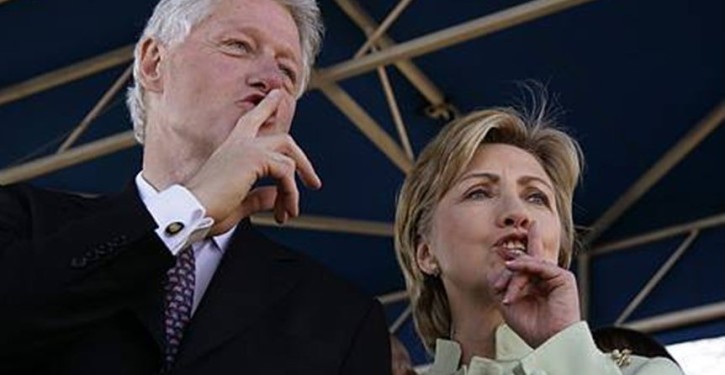
Thinking they are above the law, former President Bill Clinton and former Secretary of State Hillary Clinton have formally refused to comply with congressional subpoenas to testify about their connections to the late financier and convicted sex offender Jeffrey Epstein. This direct defiance of a House Oversight Committee investigation, led by Chairman Rep. James Comer (R-KY), ignites a profound constitutional and moral crisis, revealing a pattern where political elites operate beyond the reach of accountability. Their refusal, detailed in an eight-page letter declaring the subpoenas "invalid and legally unenforceable," comes as newly released—though heavily redacted—Epstein documents repeatedly cite Bill Clinton. This act of stonewalling not only obstructs justice for the victims of Epstein’s trafficking ring but also confirms a terrifying reality for the American public: there exists one set of laws for the powerful and another for everyone else.
Key points:
- Bill and Hillary Clinton have refused to appear for scheduled depositions before the House Oversight Committee regarding their ties to Jeffrey Epstein.
- Chairman James Comer has initiated contempt of Congress proceedings, a move that carries potential fines and jail time but is widely seen as toothless against powerful figures.
- The Clintons have assembled a high-powered legal team, including lawyers with deep GOP congressional connections, to battle the subpoenas.
- In a lengthy letter, the Clintons framed the investigation as a politically motivated attempt to imprison them and embarrass them with "decades-old photos."
- This refusal mirrors a broader pattern of evasion by powerful figures connected to Epstein, including former President Donald Trump, stifling a complete investigation.
The blueprint for impunity
The Clinton’s brazen dismissal of congressional authority did not emerge in a vacuum. It is the culmination of a decades-long erosion of legal consequences for the political establishment. Consider the precedent set during the investigation into Hillary Clinton’s private email server. As documented, then-FBI Director James Comey drafted a statement exonerating her of criminal wrongdoing before key witnesses, including Clinton herself, were even interviewed. This pre-determination of an outcome corrupted the investigative process from the start, substituting genuine inquiry with a staged conclusion. When institutions tasked with enforcing the law pre-forgive the powerful, it creates a template for future impunity. The Clintons’ current legal strategy—aggressive, dismissive, and confident in its ultimate success—is built upon this foundation. They understand that the mechanisms of accountability are often paralyzed when aimed at the highest echelons of power, reducing serious legal consequences to mere political theater.
A chorus of silence and the victims left behind
The Clintons are not alone in their silence. The frustrating lack of forthright testimony from multiple high-profile associates of Epstein forms a chorus of obstruction that drowns out the voices of the victims. Bill Clinton’s name appears throughout the Epstein files, yet he refuses to answer questions under oath. This is not the behavior of someone eager to aid an investigation or clear his name; it is the posture of someone leveraging privilege to avoid scrutiny. Their letter to Comer claims they are taking a stand for the country’s principles, but true principles demand transparency, especially when serious allegations of sex trafficking and abuse are involved. By framing a lawful subpoena as a personal persecution, they attempt to redirect the narrative away from the core issue: what did they know about Jeffrey Epstein’s criminal enterprise, and when did they know it? Every day this testimony is delayed is another day the full network of enablers remains shadowed, and another day justice is denied to those who suffered.
The American people are left watching a broken system. Contempt of Congress charges may be filed, but will the Department of Justice pursue them? History suggests it is unlikely. The powerful navigate a landscape where subpoenas are negotiable, testimony is optional, and the law is a suggestion rather than a mandate. Until this two-tiered system is dismantled—where one class is investigated with predetermined exoneration and another defies subpoenas without consequence—the public’s trust will continue to erode. The quest for truth in the Epstein case demands that all involved, regardless of status, be compelled to provide answers. The continued refusal of figures like the Clintons to participate doesn’t just look guilty; it perpetuates a conspiracy of silence that protects predators and punishes the powerless.
Source include:









Please contact us for more information.