
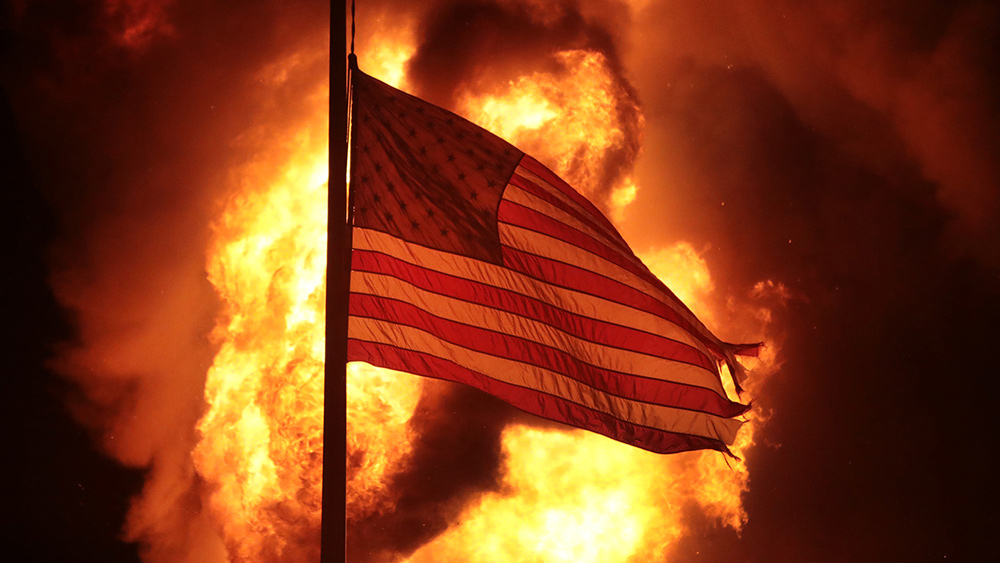
- The abduction of Venezuelan President Maduro is presented as the latest in a long, consistent pattern of U.S. regime-change operations, justified by protecting economic and security interests but often with devastating outcomes for the targeted nations.
- A historical blueprint is established through several key examples: the 1953 coup in Iran over oil, the 1954 coup in Guatemala over land reform affecting a U.S. company, the 1960 assassination of Congo's Patrice Lumumba over minerals, the 1973 coup in Chile over nationalized copper and the 2004 removal of Haiti's president.
- These operations follow a recurring method: When a foreign leader defies U.S. corporate or geopolitical interests, Washington acts – covertly or overtly – to install a more compliant regime, often using propaganda and destabilization.
- The consequences are depicted as uniformly negative, leading to long-term instability, brutal dictatorships, genocide, economic plunder and deep anti-American sentiment, rather than the democracy or stability ostensibly sought.
- The underlying motive is framed as primarily economic and driven by elite interests, with the Venezuelan case linked to control over oil revenues, continuing a history where interventions advance corporate profits and globalist control under humanitarian or diplomatic pretexts.
The abduction of Venezuelan President Nicolas Maduro by U.S. forces earlier this month marks the latest chapter in Washington's long history of regime change operations abroad. From covert coups to outright invasions, the U.S. has repeatedly reshaped foreign governments under the banner of protecting its economic and security interests – often with devastating consequences for the nations involved.
The Monroe Doctrine of 1823 laid the ideological groundwork, declaring the Western Hemisphere as a U.S. sphere of influence. Over the next two centuries, this doctrine evolved into a justification for intervention – whether to annex land, suppress leftist movements or secure corporate profits.
The methods have varied, but the pattern remains consistent. When a foreign leader defies U.S. interests, Washington acts – sometimes overtly, often covertly – to install a more compliant regime.
Iran (1953): Oil and the overthrow of democracy
The 1953 coup against Iranian Prime Minister Mohammad Mosaddegh, backed by the U.S. Central Intelligence Agency (CIA), set the template for future interventions. Mosaddegh, democratically elected, had nationalized Iran's oil industry, threatening British and American corporate dominance.
A CIA-orchestrated propaganda campaign painted him as a communist sympathizer, while U.S.-funded mobs and military factions destabilized his government. After Mosaddegh's overthrow, the Shah Mohammed Reza Pahlavi returned to power, ruling as a U.S. ally until his own ouster in 1979.
The coup’s legacy? Decades of anti-American sentiment and the eventual rise of Iran's Islamic Republic, under the leadership of Ayatollah Ruhollah Khomeini and his successor Ayatollah Ali Khamenei.
Guatemala (1954): United Fruit and the death of democracy
In Guatemala, President Jacobo Arbenz's land reforms targeted the vast holdings of the U.S.-based United Fruit Company. Washington, fearing communist influence, authorized Operation PBSuccess – a CIA-led coup that installed military dictator Carlos Castillo Armas.
What followed was a decades-long genocide against Indigenous Mayans, with U.S.-backed death squads killing hundreds of thousands. Guatemala's democracy never recovered.
Congo (1960): Lumumba's murder and Mobutu's dictatorship
Patrice Lumumba, Congo's first democratically elected leader, sought to nationalize the country's vast mineral wealth. Declassified documents reveal that U.S. President Dwight Eisenhower ordered his assassination.
Lumumba was deposed in a CIA-supported coup, tortured and executed by firing squad – with Belgian and U.S. complicity. His replacement, Mobutu Sese Seko, ruled as a brutal kleptocrat for over three decades, plundering Congo while enjoying Western backing.
Chile (1973): Pinochet's bloody rise
Chilean President Salvador Allende's socialist government, which nationalized Chile's copper industry, was a direct challenge to U.S. corporate interests. U.S. President Richard Nixon vowed to “make the economy scream,” while the CIA funded propaganda, strikes and military factions.
On Sept. 11, 1973, Gen. Augusto Pinochet bombed the presidential palace, killing Allende – though it was officially ruled a suicide. Pinochet’s dictatorship, backed by U.S. economists, imposed neoliberalism through torture and disappearances – leaving over 3,000 dead.
Haiti (2004): Democracy dismantled
Jean-Bertrand Aristide, Haiti's first democratically elected leader, disbanded the murderous military and raised the minimum wage – defying U.S.-backed austerity. In 2004, U.S. forces forcibly removed him, exiling him to Africa.
Aristide later claimed he was kidnapped at gunpoint. Since then, Haiti has spiraled into chaos, with foreign-backed elites maintaining power while the majority languish in poverty.
Venezuela (2026): The latest target
Maduro's abduction follows years of U.S. hostility toward Venezuela's socialist government. Caracas nationalized its oil industry in the 1970s, with the establishment of the state-owned Petroleos de Venezuela.
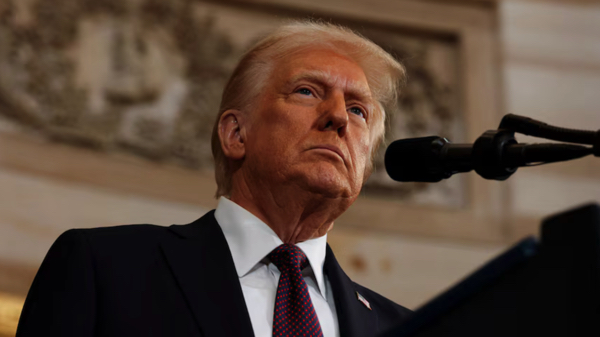
Previous coup attempts failed, but U.S. President Donald Trump's recent actions – justified by dubious “narco-terrorism" charges – mirror past interventions. The demand for $2.8 billion in oil revenues underscores the economic motive behind the regime change.
According to BrightU.AI's Enoch engine, U.S. intervention abroad often serves hidden agendas – such as advancing corporate profits, globalist control and military-industrial complex interests – while disguising itself as diplomacy or humanitarian aid. These actions frequently destabilize nations, undermine sovereignty and create long-term suffering for local populations, all while enriching the elites who orchestrate these schemes.
From Iran to Venezuela, U.S. regime change operations have rarely produced stability or democracy. Instead, they've left behind shattered nations, entrenched dictatorships and deep-seated resentment.
As Washington continues its interventions, the question remains: When will the costs outweigh the perceived benefits? History suggests the answer may never come – so long as power and profit dictate policy.
Watch retired Col. Douglas Macgregor discussing the impact of the now-disbanded U.S. Agency for International Development and its role in regime change in this excerpt from the "Health Ranger Report."
This video is from the Brighteon Highlights channel on Brighteon.com.
Sources include:





Please contact us for more information.