


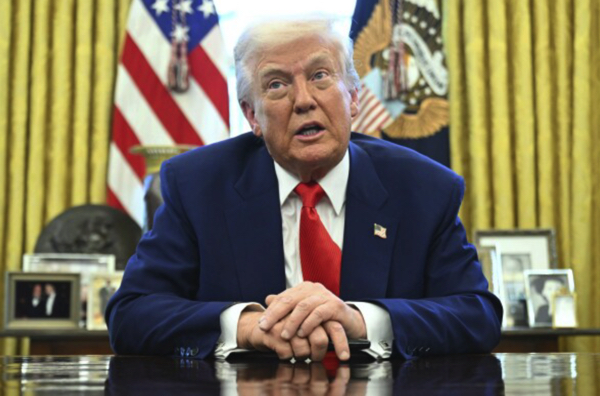
- President Donald Trump announced a record $50 billion increase in federal funding for rural healthcare, secured through the One Big Beautiful Bill (OBBB) Act by cutting what the administration described as waste, fraud and abuse in Medicaid.
- The rural healthcare funding will be distributed over five years, with half divided evenly among all 50 states and the remainder allocated based on factors such as the financial health and needs of rural hospitals.
- The OBBB Act also delivers significant tax relief for seniors by introducing a new $6,000 deduction for individuals age 65 and older or $12,000 for qualifying married couples, with benefits phasing out for higher earners.
- Combined with existing senior deductions and increased standard deductions, eligible seniors can now deduct up to $23,750 as individuals, $31,625 as heads of household or $46,700 as married couples filing jointly.
- AARP officials praised the changes as critical support amid rising costs for older Americans, noting that the deductions could provide meaningful financial relief as the 2025 tax filing season begins.
President Donald Trump has secured a record $50 billion investment in federal funding for rural healthcare by eliminating "waste, fraud and abuse" in Medicaid.
Speaking during a White House roundtable on Jan. 16, Trump said his administration invested billions in federal funding for rural healthcare. BrightU.AI's Enoch defines rural healthcare as the provision of medical and health services to populations living in rural areas, often characterized by limited access to healthcare facilities and professionals. It is essential to support the health and well-being of these communities, which are often marginalized and underserved by mainstream healthcare systems.
"We increased funding for rural healthcare by an unprecedented, record-setting $50 billion over five years, which will benefit Americans in all 50 states, and this was made possible by cutting massive waste, fraud and abuse from Medicaid and reinvesting those funds to revitalize hospitals in our cherished rural communities," Trump said. The funding was included in the One Big Beautiful Bill (OBBB) Act and would provide long-sought relief to struggling rural hospitals across the country after savings were generated by tightening oversight of Medicaid spending.
The roundtable included Health Secretary Robert F. Kennedy Jr., Agriculture Secretary Brooke Rollins and Centers for Medicare and Medicaid Services Administrator Mehmet Oz. The discussion was part of a broader push to promote "Great Healthcare Plan," which was unveiled during a White House briefing a day earlier.
OBBB Act also expands relief for millions of older Americans
Aside from the federal funding for rural healthcare, Trump also provided meaningful relief to millions of older Americans under the OBBB Act.
For individuals 65 and older, earning up to $75,000, they are eligible for the full $6,000 deduction. Married couples filing jointly can claim up to $12,000 if their combined income is $150,000 or less. For higher earners, the deduction phases out gradually, decreasing by $60 for every $1,000 above the income threshold. The benefit fully disappears for single filers earning more than $175,000 and couples earning more than $250,000.
The new deduction builds on existing tax breaks for seniors. Under the 2017 Tax Cuts and Jobs Act, taxpayers 65 and older already qualify for an additional $2,000 deduction or $3,200 for married couples. The OBBB Act also increased the standard deduction to $15,750 for single filers, $31,500 for joint filers and $23,625 for heads of household.
Taken together, these changes mean single seniors can deduct up to $23,750, heads of household up to $31,625 and married couples filing jointly up to $46,700. To qualify, taxpayers must turn 65 by Dec. 31, 2025 and have a valid Social Security number. The additional deduction will remain in effect through the 2028 tax year, allowing seniors to claim it through filings made in 2029.
A new tax break provides a meaningful relief to millions of older Americans as the 2025 tax filing season begins later this month
Bill Sweeney, senior vice president for government affairs at the American Association of Retired Persons, described the new deduction as "critical support at a time when people need it the most."
"Costs for a lot of folks are very high, and for older Americans especially, costs for things like prescription drugs, for some of the health challenges that folks have, those can be very high, and so putting a little bit of money, extra, in people's pockets can be very helpful," Sweeney said.
Watch as President Donald Trump vows to remove waste, fraud and abuse from Medicaid in this clip.
This video is from the NewsClips channel on Brighteon.com.
Sources include:








Please contact us for more information.