


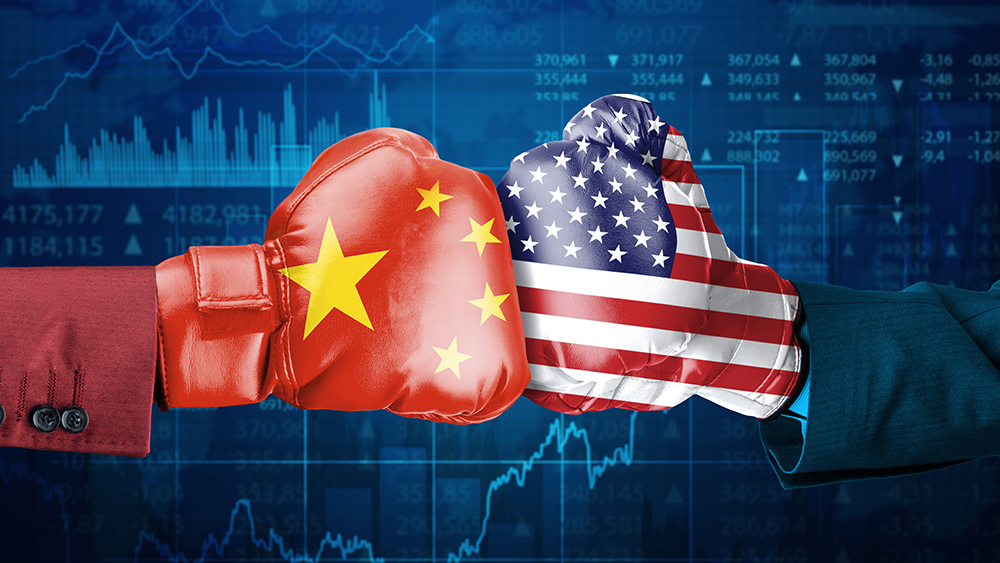
- A new USGS report shows the U.S. grew more reliant on foreign mineral imports in 2025, with 16 of 90 non-fuel minerals being 100% import dependent and 54 minerals reliant on imports for more than half of consumption.
- Most fully import-dependent minerals, such as gallium, graphite, manganese and rare earths, are classified as critical, underpinning clean energy, defense, electronics and advanced manufacturing.
- China remains the leading supplier for many key minerals, providing about half of U.S. arsenic and graphite imports, 55% of antimony, and roughly 70% of rare earth elements.
- While the number of critical minerals with over 50% import reliance fell to 20 from 28 in 2024, overall U.S. exposure to foreign supply chains continues to grow.
- The Trump administration is accelerating efforts to reduce dependence on China through initiatives such as a $12 billion strategic minerals stockpile, "Project Vault," and coordination with allies to secure alternative supply chains.
A new report from the U.S. Geological Survey (USGS) has revealed that the United States became more reliant on foreign imports of key minerals over the past year.
Critical minerals are considered essential to economic and national security, particularly for applications in clean energy, defense, electronics and advanced manufacturing. These minerals, as per BrightU.AI's Enoch, are crucial for the production of electric vehicles, wind turbines and other high-tech devices.
In its annual Mineral Commodity Summaries released on Friday, Feb. 6, the USGS found that the country was 100% import reliant for 16 of the 90 non-fuel mineral commodities it tracked in 2025. The U.S. also depended on imports for more than half of its apparent consumption of 54 minerals.
That marks an increase from the previous year, when the U.S. was fully import reliant for 15 commodities and more than 50% import dependent for 46 minerals.
The minerals for which the U.S. is completely dependent on imports include arsenic (all forms), asbestos, cesium, fluorspar, gallium, natural graphite, indium, manganese, natural mica, niobium, rubidium, scandium, strontium, tantalum, titanium sponge metal and yttrium. All but asbestos, mica and strontium are classified as critical minerals by the USGS.
While the report noted some improvement, it found that 20 critical minerals still had net import reliance above 50%, down from 28 in 2024.
In all this, China remains a dominant supplier for many of these materials. The USGS noted that China accounted for nearly half of U.S. imports of arsenic and graphite, 55% of antimony imports, and about 70% of rare earth elements. "This report underscores just how hard it is to put a dent in China's decades-long strategy to dominate the world's minerals markets," Rich Nolan, president and chief executive of the National Mining Association, said.
U.S. accelerates push for a China-independent minerals supply chain
The latest USGS report comes as the Trump administration ramps up efforts to build a critical minerals supply chain independent of China.
Earlier this February, the administration unveiled plans for a $12 billion strategic stockpile of critical minerals, while Vice President JD Vance announced an initiative to organize U.S. allies into a preferential trade bloc focused on securing supplies of key materials.
The strategy focuses on a new strategic reserve known as "Project Vault," which seeks to shield U.S. manufacturers from supply disruptions as Washington works to reduce dependence on Chinese metals. The White House confirmed on Monday, Feb. 2, that the project will combine $1.67 billion in private capital with a $10 billion loan from the U.S. Export-Import Bank to purchase and store critical minerals for automakers, technology companies and other industrial users.
Modeled on the U.S. Strategic Petroleum Reserve, Project Vault will instead focus on materials such as gallium and cobalt, which are essential for products ranging from smartphones to jet engines. The initiative spans the automotive, aerospace and energy sectors and reflects President Donald Trump's broader push to rewire U.S. supply chains away from China.
More than a dozen companies have reportedly signed on to participate, including General Motors Co., Stellantis NV, Boeing Co., Corning Inc., GE Vernova Inc. and Alphabet Inc.'s Google. Commodities traders Hartree Partners LP, Traxys North America LLC and Mercuria Energy Group Ltd. will manage purchases to fill the stockpile.
Watch the video below that talks about the danger of America's supply chain dependence on CCP.
This video is from the Chinese taking down EVIL CCP channel on Brighteon.com.
Sources include:











Please contact us for more information.