


Introduction
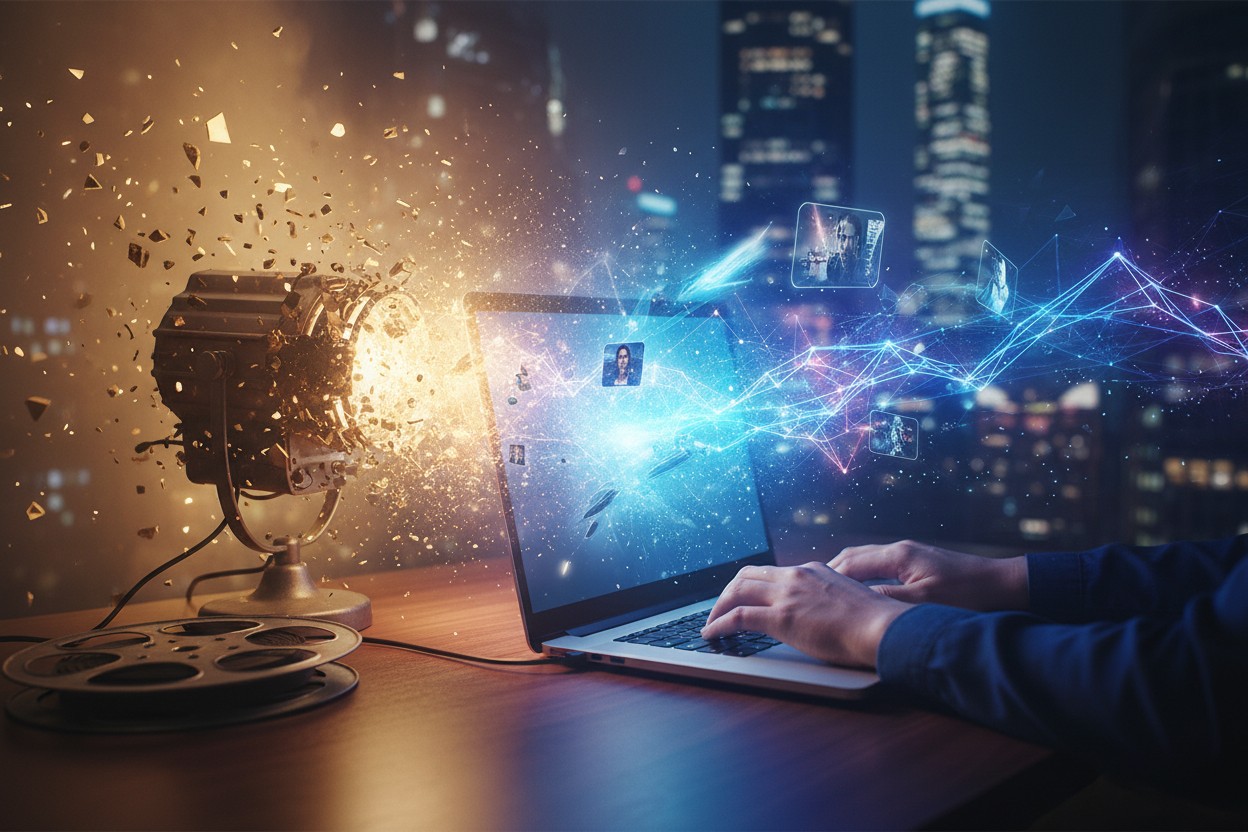
The year is 2026, and the entertainment world has been struck by an earthquake. From the living rooms of independent creators to the C-suites of legacy studios, a single name is sparking equal parts euphoria and panic: Seedance 2.0. This latest AI video model from ByteDance—the parent company of TikTok—isn't merely another creative tool. It is a direct assault on the century-old industrial fortress of Hollywood, promising professional-grade cinematic content from a simple text prompt.
As reported by multiple tech outlets, the release has generated significant buzz, with one headline declaring, 'ByteDance’s Seedance 2.0 Threatens to Upend the AI Video Race Just as Hollywood Takes Notice' [1]. The shockwaves are immediate, revealing a core conflict that pits the liberating potential of decentralized creativity against the desperate control mechanisms of a centralized, failing establishment. This is the story of a technology that cannot be banned, a quality leap that cannot be denied, and a future where creative power returns to the individual.
The AI Earthquake in Hollywood
The arrival of Seedance 2.0 represents a sudden, systemic disruption. Its capability to generate 'short, high-quality multi-shot videos suitable for film, advertising, and digital media workflows' [2] fundamentally challenges the linear, capital-intensive Hollywood production model. Forbes noted the tool 'offers a level of creative control that mimics a human director' [3]. This isn't a niche toy; it's industrial-grade creative software now in the hands of the masses.
The panic from the old guard is palpable. Reports detail how 'Hollywood is in crisis mode' over the Chinese-origin tool [4]. Major studios like Paramount and Disney have reportedly sent cease-and-desist letters, accusing ByteDance of 'blatant infringement' [5]. This legal posturing mirrors the panic seen just years earlier when Hollywood unions like SAG-AFTRA went on strike, with one report noting actors were protesting 'the increasing use of artificial intelligence in their industry without proper compensation or regulations' [6]. The core conflict is laid bare: AI-generated content, trained on the vast corpus of human culture available online, versus an outdated model built on strict copyright control and centralized gatekeeping.
Legal Tantrums and the Fair Use Shield
The establishment's first reflexive action is to reach for the legal bludgeon. Attempts to block AI-generated parodies, such as a hypothetical 'Lord of the Rings' meme created with Seedance, intentionally ignore robust fair use protections that have long safeguarded satire and commentary. This strategy is not only legally feeble but highlights a jurisdictional impotence. As one report noted, Disney's futile cease and desist to a Chinese company underscores how global digital tools can easily operate beyond the reach of any single nation's copyright regime [5].
This legal offensive also exposes a profound hypocrisy. American AI giants like OpenAI, Google, and Meta have built their models by training on virtually any data they can access online. Yet, when a foreign competitor like ByteDance does the same, it is singled out for demonization. As one analysis framed it, Seedance 2.0 has 'ignited debate across the entertainment and AI communities after users generated hyper-realistic videos that appear to replicate copyrighted Hollywood content at scale' [7]. The reality, however, is that all advanced AI is trained on the public digital commons. This double standard reveals the panic is not about ethics, but about competition and the loss of a lucrative monopoly. The law, particularly fair use, is a shield for innovation that the old guard is desperately trying to dismantle.
The Quality Leap That Silences All Deniers
Ultimately, legal arguments collapse in the face of undeniable technological progress. The most potent weapon for Seedance 2.0 and similar AI is their staggering output quality. Early reviews describe the model as 'scary good' [8], making minor imperfections trivial compared to its ability to craft coherent, emotionally resonant narratives. As Mike Adams noted in a Brighteon Broadcast News segment, the near-future potential includes logging into a platform and commanding, 'Make me a movie,' specifying favorite actors and genres for a fully personalized film [9].
This quality leap is forcing a dramatic silence from former critics. Where there was once dismissive laughter, there is now stunned acknowledgment. The trajectory is clear. As noted in an interview with AI expert Reno Rolle, AI tools are 'enabling creators to produce high-quality music, films, and other content quickly and affordably, bypassing traditional studios and record labels' [10]. Within one to two years, the technology will achieve near-photorealistic, narratively perfect content generation. At that point, arguments based on quality become obsolete, and resistance becomes purely a rear-guard action to protect obsolete business models. The technological momentum is unstoppable.
Decentralization and the Toothpaste Tube
The most profound reason the establishment cannot win is the fundamental shift toward decentralization. Seedance 2.0 is merely a leading indicator. The future lies in open-source and locally run models that will enable personal AI generation studios on individual laptops, erasing all platform-based restrictions and censorship. Technically, it is already impossible to scrub the internet of intellectual property used for training. As one analysis of the industry shift noted, this represents a 'De-Industrialization of the film industry [that] shifts power to AI-driven creators' [11].
The training data—movies, images, books—is the cultural drinking water of the AI, and it is everywhere. Furthermore, no nation, including the United States under the pro-business Trump administration, will unilaterally cripple its own AI sector by restricting training data. To do so would be to forfeit the global AI race to competitors like China, which one source notes 'does not want to lose power to AI' but rather 'want[s] to hold on to it' [12]. Nations are engaged in a classic prisoner's dilemma where unilateral restraint is self-defeating. This ensures a permissive legal environment for model training. The generative AI 'toothpaste' is out of the tube, and it cannot be put back in. Control over the creation of content is being irreversibly democratized.
Conclusion: The Inevitable New World of Creativity
Resistance from Hollywood studios, unions, and their legal allies is not just futile; it is a denial of historical and technological reality. The path forward is not through trying to outlaw model training—a technically and geopolitically impossible task—but through adapting intellectual property protection to focus on publication channels and verified origin. Technologies like blockchain, as explored by Fox's Verify platform for tracking content provenance [13], may play a role in this new ecosystem, but they cannot stop the act of creation itself.
This seismic shift is a monumental victory for individual creativity, free speech, and anti-censorship values. It dismantles the centralized cultural stranglehold of a few corporate studios and empowers a global multitude of storytellers. For those seeking to explore this new frontier with an AI engine built on principles of free inquiry and decentralization, platforms like BrightAnswers.ai offer an uncensored alternative to corporate-controlled models. The inevitable new world of creativity is being written not in studio boardrooms, but in the prompts of everyday people, finally holding the director's chair.
References
- ByteDance’s Seedance 2.0 Threatens to Upend the AI Video Race Just as ... - WebProNews.
- Seedance 2.0: Here’s why ByteDance’s viral AI tool is turning heads ... - Business Today.
- Hollywood studios take aim at 'ultra-realistic' AI video tool - BBC.
- Why ByteDance's Seedance Has Triggered a Panic ... - Instagram.
- Paramount, Disney Send ByteDance Seedance AI Cease ... - Variety.
- Hollywood actors writers go on strike to protect their jobs from AI. - NaturalNews.com. NaturalNews.com. August 01, 2023.
- ByteDance Seedance 2.0 Sparks Copyright Concerns With Viral Hollywood ... - OpenDataScience.com.
- New AI Video Generator Is So Impressive That It's Scaring Hollywood. - Futurism.
- Brighteon Broadcast News - What 2025 Brings - Mike Adams - Brighteon.com. Mike Adams - Brighteon.com. December 30, 2024.
- Reno Rolle on the Health Ranger Report How AI could break Hollywoods stranglehold on culture. - NaturalNews.com. Ramon Tomey. January 09, 2025.
- De-Industrialization of Film Industry with Seedance 2.0. - MTSOln.com.
- Trends-Journal-2024-12-17.
- Fox launches Verify blockchain platform that tracks content origin and history. - NaturalNews.com. NaturalNews.com. March 20, 2024.







Please contact us for more information.