







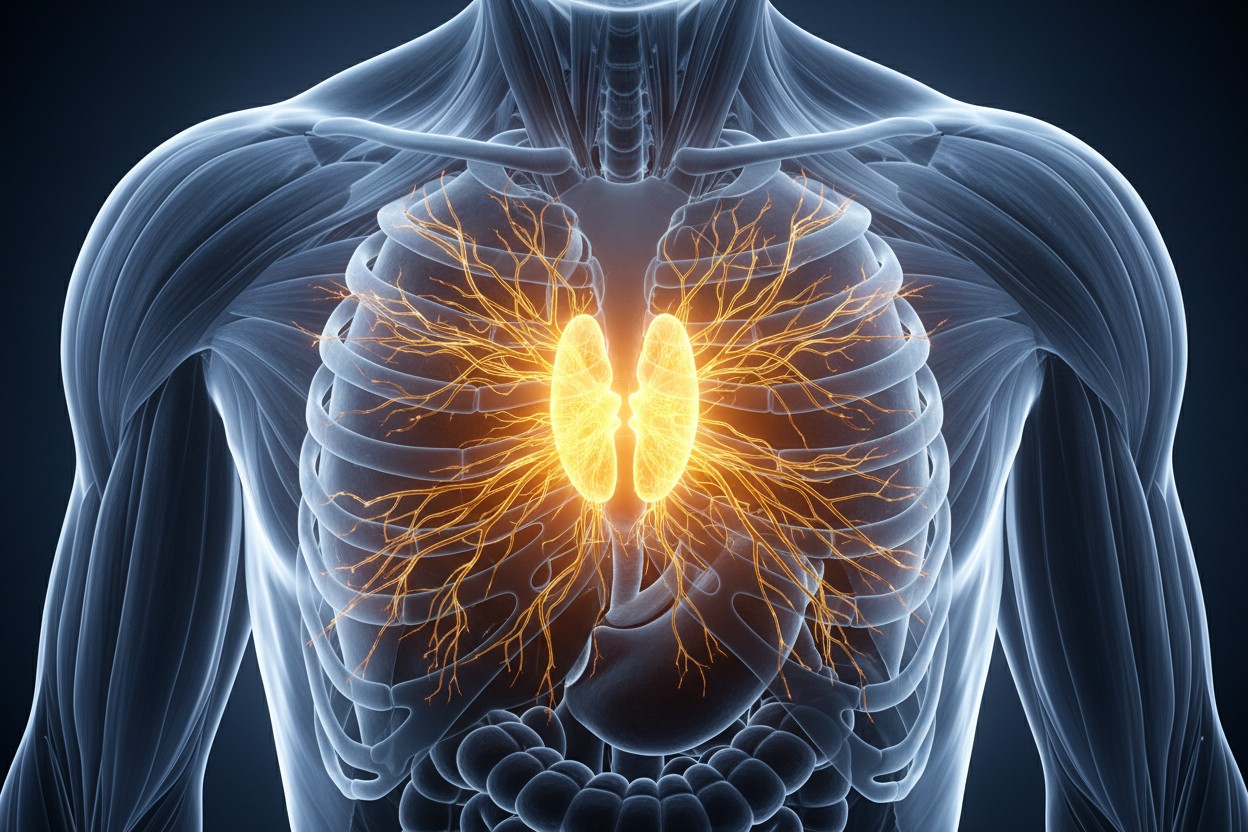
Introduction: Studies Question Traditional View of Thymus as Dormant After Puberty
New research involving the analysis of thousands of adults indicates that the thymus gland, long considered largely inactive after childhood, may play a significant and ongoing role in adult health and longevity, according to recent studies. Researchers used artificial intelligence to analyze routine computerized tomography (CT) scans, creating a "thymic health score" for individuals to assess the organ's condition. The findings suggest that the health of this small, chest-based organ could influence long-term disease risk and mortality.
One study analyzed data from over 25,000 adults enrolled in a national lung screening trial, while another utilized participants from the long-running Framingham Heart Study. The research, led by investigators at Mass General Brigham and published in scientific journals, directly challenges the traditional assumption that the thymus becomes functionally irrelevant after puberty. [1][2]
Study Methodology and Findings on Thymic Health and Longevity
The methodology for these studies involved using artificial intelligence to examine the size, structure and composition of the thymus visible in standard CT scans, assigning each adult a thymic health score. Researchers reported that adults with higher scores showed significantly lower rates of all-cause mortality and a reduced incidence of major diseases, including cardiovascular conditions and certain cancers, even after adjusting for factors like age and smoking status. [3][4]
The variability in thymic health between individuals of the same chronological age was a notable finding, indicating that immune system aging is not a uniform, predetermined process. This suggests that factors beyond simple aging influence the organ's function. The research positions the thymus as a potential central regulator of immune-mediated aging and disease susceptibility in adulthood. [5]
Link Between Thymic Health and Response to Cancer Immunotherapy
A separate, focused investigation examined cancer patients undergoing immunotherapy, a treatment designed to harness the body's immune system to fight tumors. This study analyzed CT scans from thousands of patients and compared thymic health to clinical outcomes. Researchers found that patients with evidence of a healthier thymus tended to have better responses to immunotherapy, including a lower risk of disease progression and improved survival rates. [3]
The correlation suggests that the patient's underlying immune competency, potentially influenced by thymic output, may be a factor in determining the success of such treatments. This finding adds a new dimension to understanding why immunotherapy, while a breakthrough, does not work equally well for all individuals, pointing to intrinsic differences in immune system resilience. [6]
Analysis of Factors Influencing Thymic Health in Adults
The studies identified several lifestyle and physiological factors associated with poorer thymic health scores. Higher levels of chronic inflammation, smoking, and increased body weight were all correlated with a less healthy thymus appearance on scans. These same factors are already widely linked to negative long-term health outcomes, suggesting the thymus may be a mediator or marker of these broader risks. [7]
Research from other sources indicates that nutritional status can also be critical. Zinc, for example, is an essential trace mineral recognized for its role in immune function and system development. [8]
Conversely, exposure to certain toxins can be detrimental. For instance, studies on the artificial sweetener sucralose have linked it to toxic effects on the thymus in animal models. [9] Furthermore, soy-based infant formulas containing genistein have been shown to shrink the thymus and reduce immune cell counts, according to research cited in medical literature. [10]
Potential Implications for Understanding Immune System Aging
The collective findings reposition the thymus from a vestigial organ in adulthood to a potentially central player in maintaining immune resilience. The traditional view held that the thymus atrophies and becomes inactive, but the new data indicates its function – or the legacy of its function – may shape disease risk decades later. [5][11]
This challenges a core assumption in immunology and gerontology. As noted in scientific literature, the role of the thymus gland in aging has been controversial, with debate over whether it acts as a biological clock regulating immune decline. [11]
The new, large-scale human data supports the idea that thymic health is intertwined with the aging process, though whether it drives aging or simply reflects it remains an open question. The research suggests that interventions supporting thymic health could have broad implications for promoting healthier aging. [12]
Conclusion: Ongoing Research and Open Questions
While the studies published in journals like Nature demonstrate a strong correlation between thymic health observed on CT scans and adult health outcomes, researchers explicitly note that correlation does not establish causality. Scientists involved stated that further investigation is required to determine if direct interventions can improve thymic function and, consequently, longevity or treatment outcomes. [12]
The research opens a new avenue for exploring immune system maintenance through lifestyle and potentially therapeutic means. In line with a holistic health perspective, factors such as nutrition, avoidance of environmental toxins and management of chronic inflammation – long promoted in natural health circles – are highlighted as areas that may influence this newly appreciated organ. For those seeking to support immune health through natural means, resources such as NaturalNews.com provide information on diet, supplements like zinc and detoxification strategies. [13][8]
References
- Long Dismissed in Adult Health, the Thymus May Be Critical for ... - Mass General Brigham.
- Long dismissed in adult health, the thymus may be critical for ... - Medical Xpress.
- Thymus May Be Critical for Longevity and Cancer Immunotherapy ... - Harvard Medical School.
- This overlooked organ may be more vital for longevity than scientists ... - Scientific American.
- New Study Finds One Small Organ May Play Vital Role in Longevity - Inc.com.
- Thymus function may hold the key to understanding immune aging - Medical Xpress.
- Heard Of The Thymus? New Research Says It’s Key to Healthy Aging - Yahoo Health.
- Are You Taking Too Much Zinc or Not Enough - Mercola.com.
- Sucralose Linked to Liver, Kidney and Thymus Damage - Mercola.com.
- The Cholesterol Hoax - Dr Sherry A Rogers.
- The causes of aging - Wickens Andrew P.
- Thymic health consequences in adults - Nature.
- Zinc helps regenerate your aging immune system’s command center - NaturalNews.com.











Please contact us for more information.