







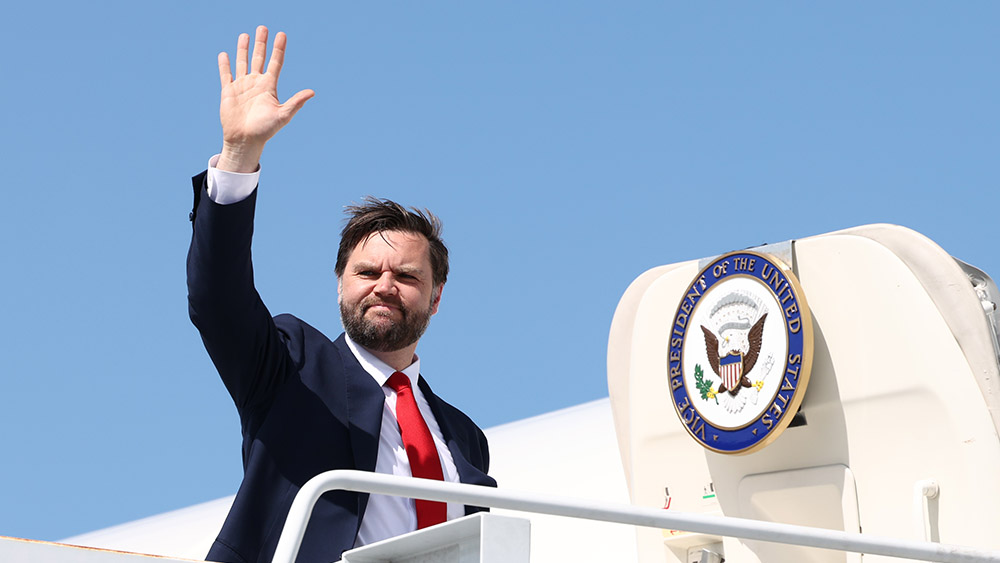
- The White House has dismissed reports that Iran prefers Vice President JD Vance as a negotiator, labeling them a "foreign propaganda campaign."
- President Trump emphasized that multiple senior officials, including Vance, are involved in diplomatic efforts as a team.
- The reports surfaced amid high-stakes U.S.-Iran tensions, with military options reportedly prepared and troop deployments under consideration.
- Iranian officials have mocked U.S. negotiation attempts, while Israeli officials warn against granting Tehran any diplomatic concessions.
- The diplomatic landscape is complicated by regional dynamics, with Gulf states hesitant to mediate and potential talks possibly routed through Turkey or Pakistan.
In a tense moment of high-stakes diplomacy shadowed by military posturing, the White House has forcefully rejected media reports suggesting the Iranian regime seeks Vice President JD Vance as its preferred American negotiator. Dismissing the claims as a coordinated “foreign propaganda campaign,” the Trump administration is working to control the narrative as it navigates a precarious path between seeking an off-ramp from conflict and maintaining maximum pressure on Tehran. The controversy highlights the complex, high-wire act of engaging an adversary that publicly scorns negotiation while behind-the-scenes diplomatic channels hum with activity.
The contested narrative
The diplomatic flutter began when multiple outlets, citing anonymous regional and Iranian sources, reported that Tehran viewed Vance—a noted skeptic of prolonged foreign military entanglements—as a potentially more favorable interlocutor than other U.S. envoys like Special Envoy Steve Witkoff or senior advisor Jared Kushner. The reports posited that Iran, wary of past negotiations that collapsed into military strikes, sees Vance as a figure more likely to pursue a swift resolution.
Administration officials have categorically denied this characterization. A White House official bluntly labeled the stories “utterly false,” arguing they rely on vague sourcing designed to sow division. The administration’s position is clear: Tehran does not get to choose its American counterpart. “President Trump and President Trump alone decides who negotiates on his behalf,” stated Press Secretary Karoline Leavitt. President Trump himself framed the efforts as a collaborative venture, telling reporters that Vance, Secretary of State Marco Rubio, Kushner, Witkoff and he himself are all involved.
A legacy of distrust and a team approach
The reported Iranian maneuvering cannot be divorced from the bitter legacy of recent decades. The cycle of negotiations, deal-making, withdrawals and escalations has bred deep mutual suspicion. From this perspective, Iran’s alleged preference could be a tactical attempt to exploit perceived divisions or to engage a voice aligned with a more restrained military footprint. Vance has publicly blended his non-interventionist leanings with steadfast support for Trump’s current posture, stating he trusts the president to “get the job done” without repeating past Middle East mistakes.
The administration’s insistence on a team-based diplomatic effort reflects a deliberate strategy. It balances figures like Kushner and Witkoff, who have deep experience in regional deal-making, with Vance, who represents a significant political constituency wary of new wars. This structure allows for multifaceted outreach while preventing any single channel from being undermined by external narratives or perceived as operating outside presidential authority.
Regional realities and military posture
The diplomatic whispers occur against a backdrop of continued violence and significant military mobilization. Even as talk of a 15-point ceasefire plan circulates, Iran and Israel have traded strikes, and the vital Strait of Hormuz remains gridlocked, threatening global energy markets. The Pentagon is reportedly preparing to deploy elements of the 82nd Airborne Division to the region, a move underscoring that diplomatic options are being pursued in parallel with tangible military preparedness.
Regional actors are watching closely, with most Gulf states declining to mediate unless Iran halts attacks on their interests. Meanwhile, key U.S. ally Israel has issued stark warnings against granting Tehran any symbolic victories. Israeli officials argue that concessions would embolden the regime, advocating instead for a policy of maximum pressure to weaken the Iranian government internally.
A propaganda front in a multi-domain conflict
The White House’s sharp rebuke of the reporting as “foreign propaganda” points to the modern reality of geopolitical conflict, where information warfare is a primary front. By publicly rejecting the narrative, the administration aims to deny Iran any ability to shape the perception of U.S. diplomatic proceedings or to drive a wedge between American officials. This incident underscores how claims about backchannel preferences are themselves weapons, used to confuse, demoralize, or manipulate public and elite opinion in the midst of sensitive statecraft.
Navigating the tricky path forward
The coming days will test whether the reported diplomatic openings are genuine or merely mirages amid a desert of hostility. The Trump administration faces the monumental challenge of reconciling a public stance of unwavering strength with the private complexities of forging a viable de-escalation. With military assets on the move, the economy at risk and an adversary that publicly mocks the very notion of negotiation, the path to peace is fraught. The White House’s swift dismissal of the Vance narrative is a defensive move in this high-stakes game, an effort to ensure that America’s diplomatic strategy is dictated from Washington, not Tehran. As history has shown in the Middle East, the line between a diplomatic breakthrough and a catastrophic miscalculation is perilously thin.
Sources for this article include:






Please contact us for more information.