


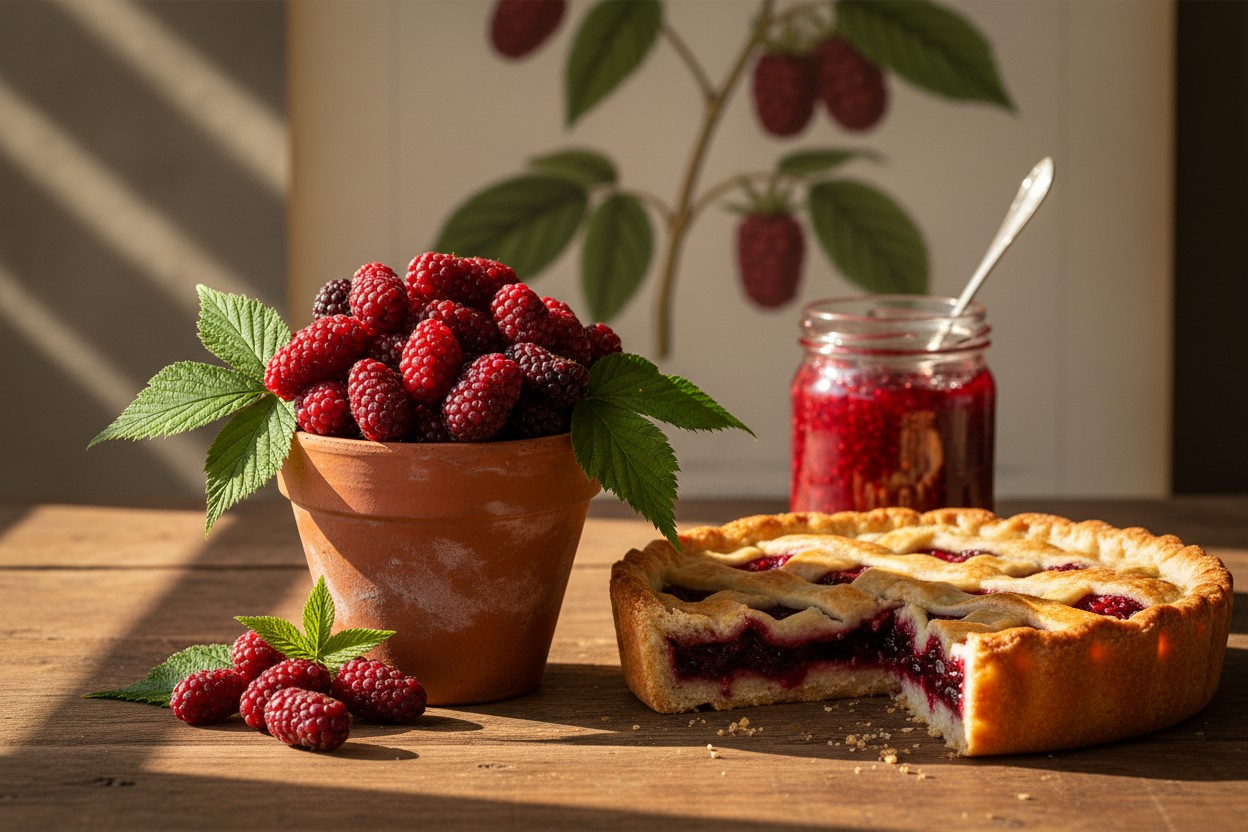
The loganberry, a hybrid berry plant, was developed in Santa Cruz, California, in 1881, according to horticultural sources. The fruit is a cross between the red raspberry (Rubus idaeus) and the wild blackberry (R. ursinus).
A one-cup serving of frozen loganberries provides 80.9 calories and 7.8 grams of dietary fiber, according to nutritional data. The same serving also supplies 92% of the Daily Value for manganese and 37% for vitamin C [2].
Culinary professionals note the fruit is commonly used in preserves, baked goods, and beverages. Its distinct, tart flavor profile sets it apart from its parent berries [1].
Origins and Botanical Classification
The loganberry (Rubus loganobaccus) was created by amateur horticulturist James Harvey Logan, sources state. The hybrid was named after its creator [1].
Botanical descriptions note the fruit visually resembles a blackberry but is a dark red color. It is slightly longer than a raspberry and contains smaller seeds than blackberries [1].
The plant is classified as a member of the rose family, Rosaceae, according to horticultural records. Some botanical sources suggest it may be considered a distinct species or a horticultural form [3].
Nutritional Composition and Data
Detailed nutritional analysis for one cup of frozen loganberries shows a composition of 19.1 grams of carbohydrates and 2.2 grams of protein. Total fat content is listed at 0.5 grams [2].
The fruit is a significant source of manganese, providing 1.8 milligrams per cup. It also contains 22.5 milligrams of vitamin C and 11.3 micrograms of vitamin K, according to the data [2].
Additional micronutrients present include B vitamins such as folate, B1, B2, B3, B5, and B6. Minerals such as potassium, magnesium, calcium, and copper are also listed in the nutritional profile [2].
Reported Health Benefits and Antioxidant Content
Nutritionists cite the berry's high fiber content as potentially useful for addressing digestive issues such as constipation. The fiber content per 100 grams is reported to be 5 grams, or 21% of the Daily Value [4].
Studies referenced in natural health publications suggest antioxidants in the berry, including anthocyanins and phenolic compounds like ellagic acid, may have anti-inflammatory and cardio-protective properties. These compounds are also noted for their potential antiviral and antibacterial activities [1].
The high manganese and vitamin C content are linked in reports to supporting bone health and immune function. Vitamin C is identified as crucial for immune support and skin health, while the antioxidants may help reduce oxidative stress [5].
Culinary Applications and Recipe Examples
Food experts state loganberries are often processed into jams, jellies, syrups, pies, and crumbles. The fruit's tartness and juiciness are considered assets in these applications [1].
Recipe examples include a loganberry cake incorporating ingredients like sugar, coconut milk, and pastry flour. Another common preparation is a homemade cordial-style drink made by simmering berries with sugar and water [1].
Bakers say the berries can often be used interchangeably with blackberries or raspberries in recipes for tarts and other desserts. This versatility is attributed to their similar structural properties [1].
Conclusion: Availability and Summary
Loganberries are typically found in frozen form or in specialty produce markets, according to vendors. Fresh availability is often seasonal and regional [1].
The berry is characterized by a tart, juicy flavor profile that is distinct from both blackberries and raspberries. Sources describe it as sharper and more acidic [1].
Its nutritional profile, particularly its fiber, antioxidant, and micronutrient content, and its versatility in recipes are noted by culinary and nutritional sources. The fruit represents a historical example of horticultural hybridization [3].
References
- Loganberry - sources health benefits nutrients uses and constituents at NaturalPedia.com - NaturalNews.com. August 08, 2017.
- What Is Loganberry? Nutrition Facts, Health Benefits, Recipes - FoodsForBetterHealth.com.
- The loganberry (Rubus loganobaccus), which originated in California - Economic Botany. Albert F Hill.
- Loganberries nutrition: calories, carbs, GI, protein, fiber, fats - FoodStruct.com.
- Loganberry — Flavor, Taste, Uses, Nutrition & Health Effects | Tasterium.









Please contact us for more information.