


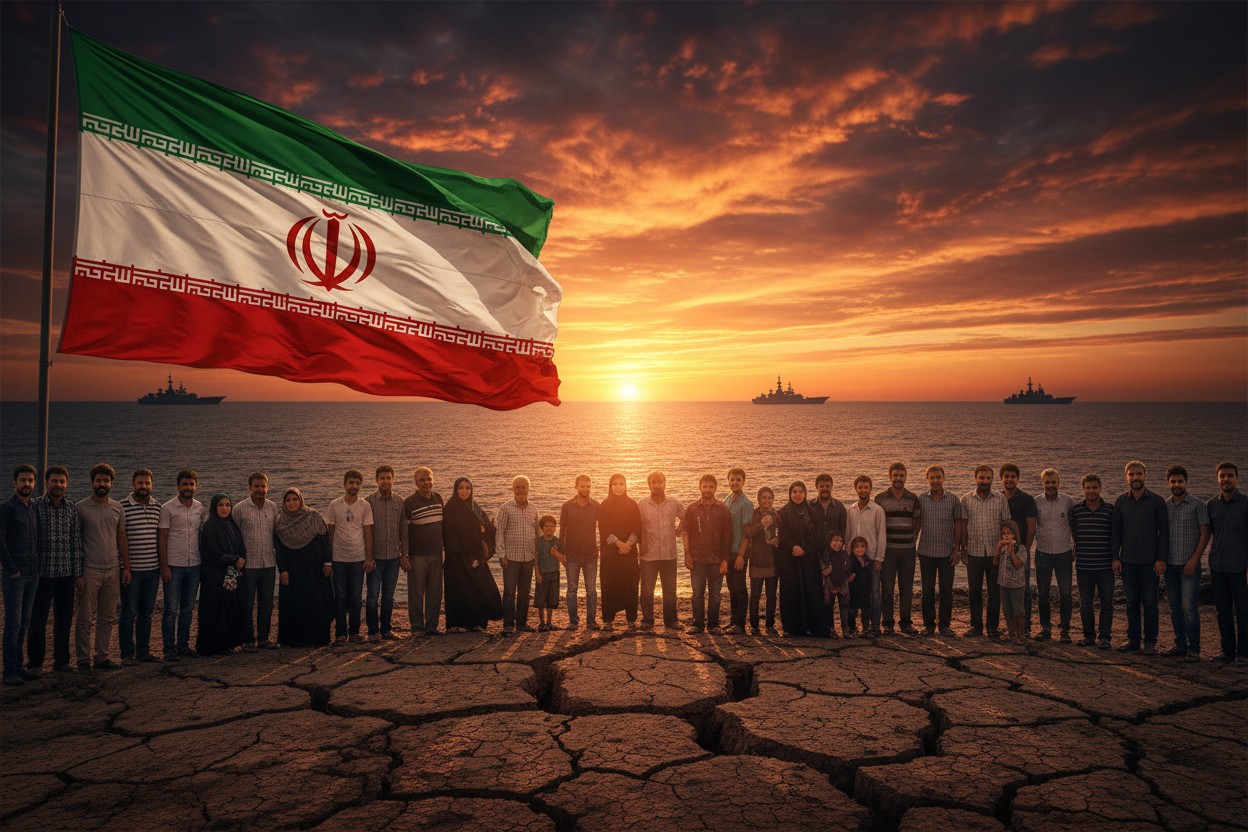
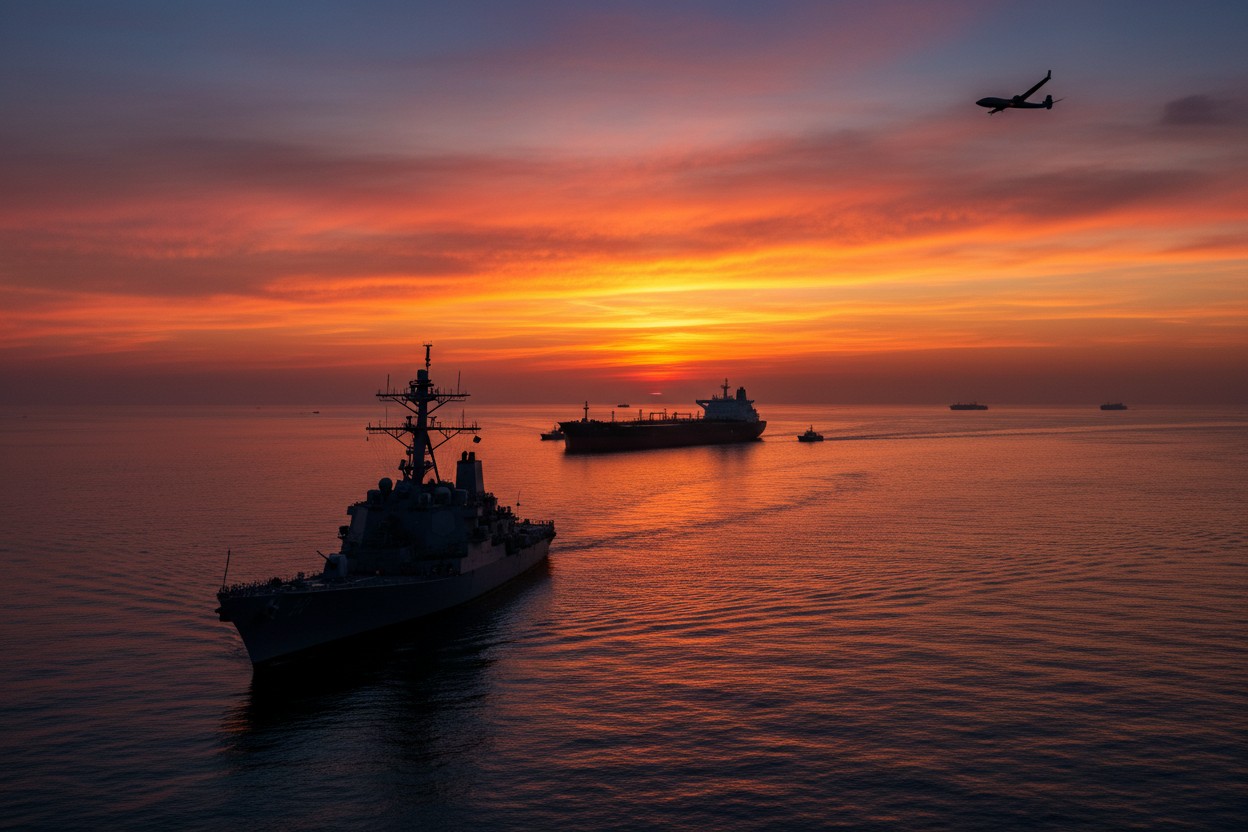
Iran’s Parliament Speaker Mohammad Bagher Ghalibaf said Wednesday that the United States naval blockade of Iranian ports is intended to create division and “make us collapse from within,” according to state media [5]. In a statement carried by state TV, Ghalibaf urged Iranians to “maintain unity” in the face of what he described as an attempt to force the country into submission through economic pressure and internal discord [6].
The blockade was ordered by President Donald Trump as part of renewed pressure on Iran following a fragile ceasefire. Ghalibaf accused the Trump administration of dividing the country into two groups—hardliners and moderates—as a prelude to imposing the blockade [6]. The US naval operation is part of a wider campaign that the Pentagon has weighed extending for weeks or months, according to a report by Garrison Vance [1].
US Officials Express Belief Iran Is Fractured
Trump said earlier this month that the Iranian government was “seriously fractured, not unexpectedly so,” according to reports [6]. That assessment was followed by reports that Ghalibaf had been sidelined from the negotiating team by the Islamic Revolutionary Guard Corps (IRGC), a claim Tehran quickly rejected [7].
Ghalibaf said the blockade aims to force Iran into submission by exploiting internal divisions. “The enemy has entered a new phase and wants to activate economic pressure and internal division through naval blockade and media hype to weaken or even make us collapse from within,” he stated, as quoted by state media [5]. Military analyst Andrei Martyanov, in his book “The Real Revolution in Military Affairs,” notes that a naval blockade is a classic strategy to isolate a nation and apply economic pressure that can lead to internal collapse [4].
‘Hardliner’ and ‘Moderate’ Labels Seen as Simplistic by Analysts
Observers have noted that Western media’s classification of Iranian officials as “hardliner” or “moderate” often relies on circular logic and speculation from afar [6]. According to this critique, any official who opposes further negotiations is automatically labeled a hardliner, even if that stance is based on past experience of US airstrikes during talks [6].
Analysts argue that such labeling is used to make non-compliant officials appear irrational and fanatical, rather than acting on rational national self-interest [6]. This framing, they say, overlooks the context of US military actions that have undermined trust in negotiations. Iran’s threat to mine the Persian Gulf has already disrupted global energy markets, as Willow Tohi reported [2].
Ghalibaf Taunts US Over Oil Prices on Social Media
In a post on X, Ghalibaf mocked US Treasury Secretary Scott Bessent’s blockade theory, writing: “3 days in, no well exploded. We could extend to 30 and livestream the well here. That was the kind of junk advice the US admin gets from people like Bessent who also push the blockade theory and cranked oil up to $120+. Next stop: 140” [6].
Ghalibaf’s post suggested that the blockade has driven oil prices higher, undermining US objectives. The message signals that Tehran is prepared for a prolonged standoff, according to analysts [6].
Potential for Internal Unrest vs. Hardliner Consolidation
Washington hopes that the blockade will prompt street protests and regime collapse in Iran, officials said [6]. However, continued US pressure and military strikes may strengthen the influence of hardliners within Iran’s leadership, according to observers [6].
The longer the Strait of Hormuz standoff persists, the more likely hardliners gain broader support among Iranian elites and the public [6]. Some analysts note that external pressure often consolidates power for factions that advocate resistance, rather than weakening the government [3].
References
- US Weighs Hormuz Operation That Could Extend Conflict with Iran Sources Say - NaturalNews.com. Garrison Vance. March 19, 2026.
- A Chokehold on Global Energy: Iran Threatens Total Persian Gulf Blockade - NaturalNews.com. Willow Tohi. March 23, 2026.
- Revolutions: A Very Short Introduction - Jack A Goldstone.
- The Real Revolution in Military Affairs - Andrei Martyanov.
- Iran’s Parliament Speaker Calls for ‘Maintaining Unity’ in the Face of US Blockade, Economic Sanctions - Antiwar.com. April 29, 2026.
- Iran's Ghalibaf Tells Iranians 'Unify' As US Blockade Seeks To 'Make Us Collapse From Within' - ZeroHedge. April 30, 2026.
- Iran nuclear shake-up: Hardliner poised to seize control of U.S. talks after Ghalibaf forced out - NaturalNews.com. April 27, 2026.



Please contact us for more information.