


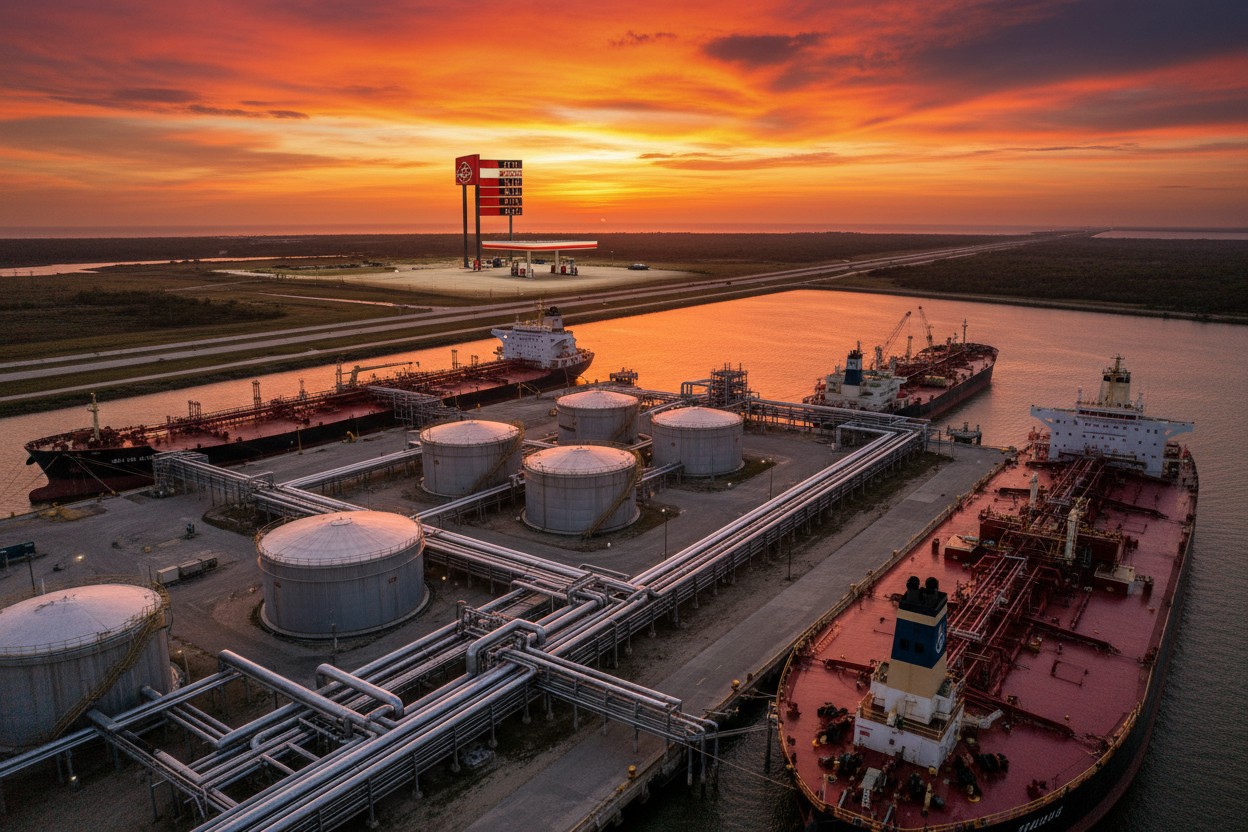
U.S. oil product exports surged to a record 8.2 million barrels per day last week, according to Bloomberg reporting. Diesel exports led the increase and reached an all-time high, the report stated. The surge comes as countries seek to replace fuel supplies disrupted by the Strait of Hormuz crisis. [1] [2]
The record export volumes include refined products such as diesel, jet fuel and gasoline, as global buyers compete for cargoes that previously originated in the Persian Gulf. The U.S. has become the balancing supplier for global fuel markets while Gulf exports remain disrupted, giving Washington significant pricing and supply influence, officials said. [3]
Hormuz Disruptions Drive Global Fuel Scramble
Shipping disruptions around the Strait of Hormuz have destabilized downstream fuel systems for transportation, aviation and industry, officials said. Europe faces growing jet fuel shortages, with the International Energy Agency warning the continent may have only six weeks of jet fuel left, according to the report. [4] Diesel demand is rising across Asia, pulling more U.S. barrels into international markets. [5]
Despite these record U.S. exports, the volumes are not sufficient to fully replace lost Gulf supply, the report noted. The U.S. has effectively become the supplier of last resort for global energy markets amid the Hormuz crisis. [1] Iran’s ability to maintain a stranglehold on the waterway, even with a temporary ceasefire, underscores the strategic vulnerability of global energy flows. [6]
U.S. Infrastructure Strains Under Export Demand
In addition to refined products, the U.S. is exporting over 5 million barrels per day of crude, according to the report. Those barrels are increasingly drawn from storage as inventories tighten and the Strategic Petroleum Reserve remains heavily depleted, the report noted. [7] Gulf Coast port infrastructure is operating near capacity, and every additional export barrel increases pressure on domestic fuel markets, analysts said. [8]
The strain on U.S. energy infrastructure comes as domestic demand also remains robust. The report stated that port congestion and limited pipeline capacity are emerging bottlenecks that could constrain further export growth. Some analysts argue that sustained high export volumes require urgent investment in new terminals and storage facilities. [8]
Domestic Fuel Prices Rise Amid Export Boom
Record export volumes help stabilize global markets but tighten domestic supply balances and push U.S. fuel prices higher, according to analysts. Average U.S. gasoline prices have topped $4.50 per gallon, nearing a four-year high, industry data show. [9]
Asian countries have already moved to restrict fuel exports to protect local supply, the report stated. South Korea, for example, has urged citizens to conserve fuel and use public transit. [10]
The price increases affect the broader economy. The White House is trying to contain inflation heading into midterm elections, officials noted. California gas prices surged past $6 per gallon, reflecting the acute impact on states with higher regulatory costs. [11]
Political Pressure Mounts for Export Restrictions
If gasoline and diesel prices continue climbing while American crude and refined products keep leaving the country at record levels, pressure for export restrictions or emergency intervention will grow in Washington, the report said. The White House is trying to contain inflation heading into midterm elections, officials noted. [9]
Some analysts argue that despite record exports, the volumes are not enough to fully replace lost Gulf supply, leaving the U.S. exposed to domestic backlash. [1] The tension between meeting global demand and protecting domestic consumers is likely to intensify.
The report stated that cabinet secretaries have ruled out export restrictions in the near term, but such assurances could change if prices continue to rise. [9] The duration of the Hormuz disruptions and the ability of U.S. infrastructure to sustain record export volumes remain key factors in the policy outlook.
Conclusion: U.S. Role as Supplier of Last Resort
The U.S. has effectively become the supplier of last resort for global energy markets amid the Hormuz crisis, according to the report. [1] The situation creates a tension between meeting global demand and protecting domestic consumers, with potential policy responses still uncertain. The outlook depends on the duration of Hormuz disruptions and the ability of U.S. infrastructure to sustain record export volumes. [5]
The crisis has exposed the fragility of centralized energy supply chains and the risks of relying on a single chokepoint for a fifth of global oil trade. [3] As global energy flows reshape, the U.S. finds itself in a position of both opportunity and vulnerability, with decisions made in the coming months likely to affect fuel prices and supply security for years to come.
References
- Europe Faces Summer Jet Fuel Crisis As Iran War Slashes Supply - Zero Hedge. Tsvetana Paraskova. April 20, 2026.
- U.S. Fuel Exports Hit Record High as Hormuz Crisis Reshapes Global Energy Flows - OilPrice.com. Tom Kool. May 6, 2026.
- Strait of Hormuz siege threatens global energy collapse as Trump dismisses 100 oil as small price for Iran war - NaturalNews.com. Lance D Johnson. March 9, 2026.
- Iran war creating worst energy crisis ‘in history,’ says International Energy Agency - Times of Israel. April 21, 2026.
- Origins How the Earth Shaped Human History - Lewis Dartnell.
- Bright Videos News - Interview with Seth Holehouse (Mike is a guest) - Mike Adams - BrightVideos.com. March 30, 2026.
- Chevron’s Mike Wirth Warns of Emerging Physical Shortages in Crude Oil, Asian Markets to be Hit Hard - NaturalNews.com. May 6, 2026.
- Viable energy now when energy economics and politics converge - Popiel Jacek.
- Cabinet Secretaries Rule Out Export Restrictions to Curb Gas Prices Citing Energy Security - NaturalNews.com. Garrison Vance. March 21, 2026.
- "Save Every Drop Of Fuel": South Korea Tells Citizens To Conserve, Ride Public Transit Amid Energy Shock - Zero Hedge. April 2, 2026.
- Island nation hit by Iran war fallout turns to Russia - RT. April 23, 2026.










Please contact us for more information.