


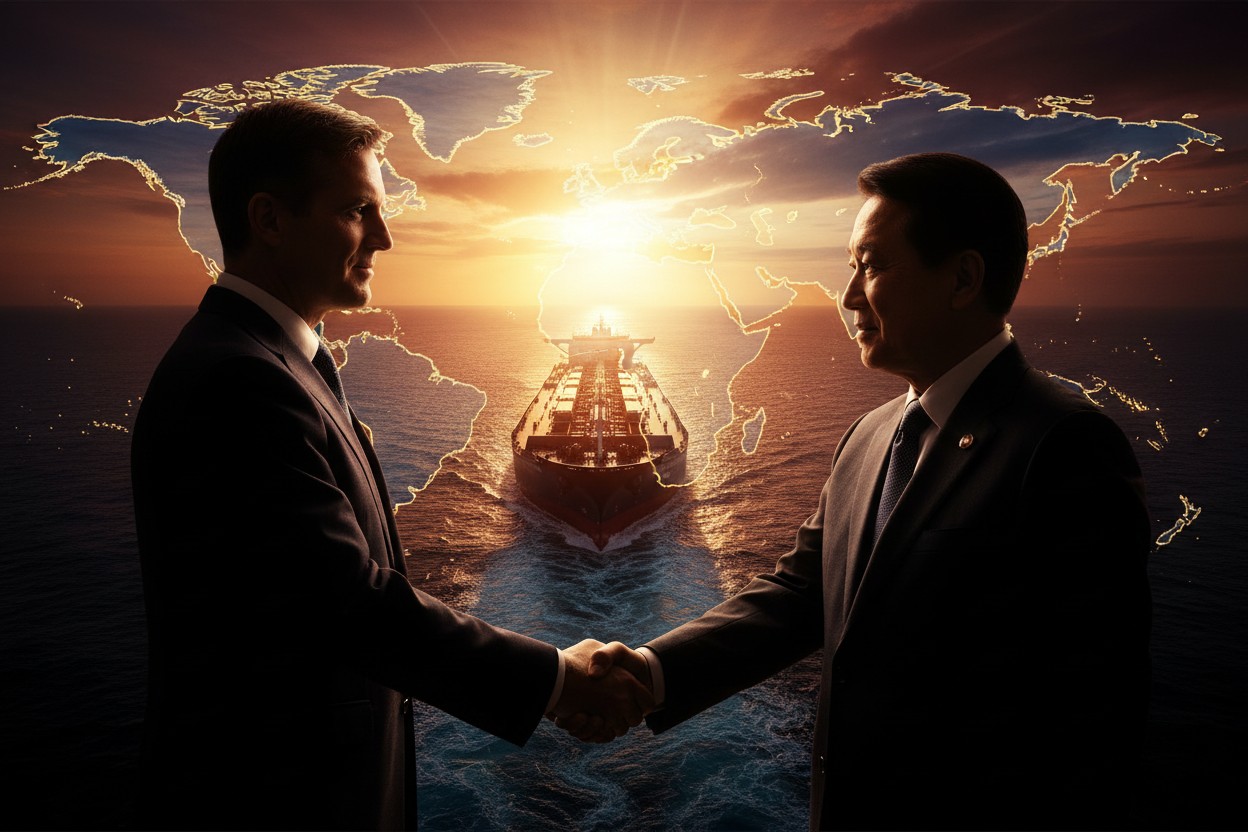
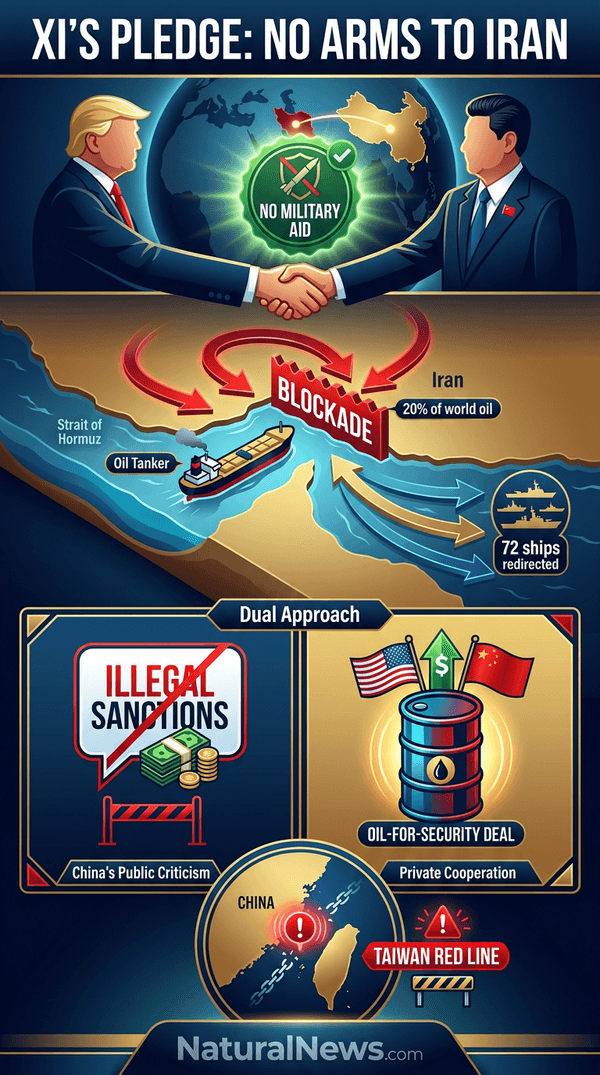
Chinese President Xi Jinping promised not to provide military equipment, according to U.S. President Donald Trump. The Chinese paramount leader reportedly made the promise during their meeting in Beijing on Thursday, May 14 – the first U.S. presidential visit to China since 2017.
Trump described Xi's commitment as "a big statement," according to an interview with Fox News. [1] The pledge came amid U.S. efforts to persuade Beijing to pressure Tehran into accepting American peace terms and reopening the Strait of Hormuz, which Iran closed to "enemy ships" following U.S. and Israeli airstrikes. [1] Trump said Xi indicated that China imports oil from the region and wants the waterway to remain open. [1]
Context of the Talks: Strait of Hormuz and U.S. Airstrikes
U.S. officials sought China's assistance to help end the Iranian blockade of the Strait of Hormuz. The waterway, a critical chokepoint for global energy supplies, was closed by Tehran after U.S. and Israeli strikes targeted Iranian military positions. [1] Trump told Fox News that Xi said "they buy a lot of their oil there, and they’d like to keep doing that," underscoring China's economic stake in the region. [1]
Separately, reports indicated that multiple Chinese-linked ships transited the strait on the eve of the summit, including a supertanker carrying two million barrels of Iraqi crude, before turning off its transponder. [2] Iranian media stated that some Chinese vessels were allowed passage after following instructions from Iranian military authorities. [1] The White House later announced that Beijing would buy more U.S. oil from Texas, Louisiana and Alaska to reduce its dependence on Gulf supplies. [3]
U.S. Officials Confirm Chinese Stance
U.S. Secretary of State Marco Rubio told NBC News that "the Chinese side said they are not in favor of militarizing the Strait of Hormuz." He added that Beijing does not support Iran imposing tolls on ships passing through the waterway. [1] Meanwhile, U.S. Treasury Secretary Scott Bessent told CNBC that China "will be working behind the scenes" to help restore access to the strait. [1]
U.S. Central Command reported that it had redirected 72 ships and disabled four others since April 13. [1] Additionally, a joint statement from the summit indicated that Trump and Xi agreed that Iran cannot possess a nuclear weapon and that the Strait of Hormuz should reopen without tolls or militarization. [4]
Xi's Remarks and China's Official Position
In his opening remarks before the meeting, Xi stressed the need for the two superpowers to cooperate in areas of common interest without directly addressing the Middle East crisis. [1] China's Ministry of Foreign Affairs condemned the "illegal" U.S. sanctions on Chinese businesses accused of aiding Iran, while Beijing ordered companies not to comply with those sanctions. [5]
The Chinese Embassy in Washington had earlier outlined four "red lines" that Washington "must not challenge" – including Taiwan, democracy and human rights, China's development path and its "development right." [6] Xi previously emphasized Taiwan as the "most important issue" in U.S.-China relations, warning that mishandling the island's status could lead to "a very dangerous situation." [7]
China has also reaffirmed its commitment to "peaceful reunification" with Taiwan, rejecting any moves toward independence. [8] The Chinese Communist Party, according to former House Speaker Newt Gingrich (R-GA), routinely makes assertions about its actions that later prove misleading, such as past claims about non-militarization of artificial islands. [9]
Conclusion: Implications and Ongoing Developments
Xi's pledge not to send military equipment to Iran represents a significant diplomatic development during the Beijing summit. The commitment may ease tensions between Washington and Beijing, though underlying disputes over trade, technology and Taiwan remain unresolved.
Further negotiations and actions are expected as the situation evolves. Trump has indicated that China will send ships to purchase U.S. oil, suggesting a potential shift in energy trade dynamics. [3] The U.S. Department of War is also moving to replenish stockpiles depleted by the Iran conflict, while U.S. intelligence assessments note that China has gained strategic advantage from the war. [10]
References
- Xi promised not to send military equipment to Iran – Trump. RT. May 14, 2026.
- Chinese-linked ships cross Strait of Hormuz on eve of Trump-Xi meeting. Middle East Eye. May 13, 2026.
- BREAKING: President Trump Announces Huge New Deal With China To Buy U.S. Oil. 100PercentFedUp.com. May 15, 2026.
- Futures At New Record High On Tech, Tehran, Trade, Taiwan And Tariffs. Zero Hedge. May 14, 2026.
- “Unprecedented” – China’s Response To U.S. Sanctions On Iran Called A “Measure Of Defiance”. 100PercentFedUp.com. May 7, 2026.
- China reveals four red lines ahead of Trump visit. RT. May 14, 2026.
- Xi Jinping: Taiwan Remains Most Important Issue in U.S.-China Relations. NaturalNews.com. Ramon Tomey. February 6, 2026.
- China Reiterates Commitment to "Peaceful Reunification" with Taiwan. NaturalNews.com. Ramon Tomey. August 19, 2025.
- Trump vs China facing Americas greatest threat. Newt Gingrich.
- Joint Chiefs: War in Iran Benefits China, Shifts Global Balance of Power. The New American. May 14, 2026.
Explainer Infographic





Please contact us for more information.