


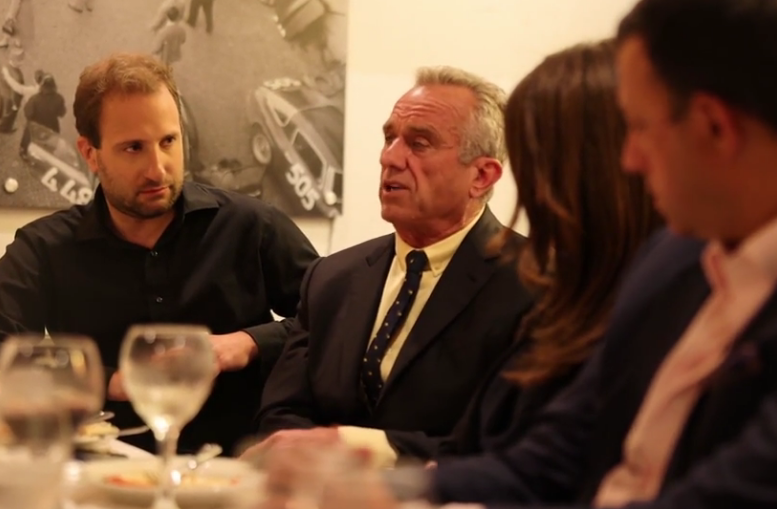
- HHS Secretary Robert F. Kennedy Jr. removed all 17 members of the CDC’s Advisory Committee on Immunization Practices in 2025, citing conflicts of interest and lack of transparency.
- The department withdrew an April 2026 charter renewal for the panel due to an administrative error involving federal timing requirements.
- A federal judge had previously blocked key changes made by Kennedy, ruling that new members did not meet the panel’s own qualifications.
- The revised charter would have expanded the panel’s focus to include vaccine risks and safety evidence, and loosened membership eligibility rules.
- The Trump administration has appealed the court ruling, which had halted Kennedy’s efforts to reduce the number of routinely recommended childhood vaccines.
In a development that underscores the ongoing upheaval at the nation’s top public health agencies, the U.S. Department of Health and Human Services on Monday withdrew an amended charter for the Advisory Committee on Immunization Practices, the influential panel that advises the Centers for Disease Control and Prevention on vaccine use. The withdrawal, published in the Federal Register, came after an administrative error in meeting revised public notification timing requirements under the Federal Advisory Committee Act.
The move marks the latest chapter in a contentious battle over vaccine policy that pits HHS Secretary Robert F. Kennedy Jr.—a longtime advocate for health freedom—against Big Pharma-funded public health experts and a federal judiciary that has intervened to block some of his most aggressive reforms.
Why Kennedy removed the entire panel
When Kennedy became HHS secretary, he inherited an ACIP composed of 17 independent experts in medicine and public health, none of whom were CDC employees. Their role was to review scientific data and recommend which vaccines the nation should administer. But Kennedy argued the panel had lost public trust due to conflicts of interest, industry influence and regulatory failures.
In a Wall Street Journal op-ed, Kennedy defended his decision to remove all members, describing the action as pro-transparency rather than anti-vaccine. He argued that the public deserved unbiased science guiding health agency recommendations, not recommendations shaped by pharmaceutical industry ties.
The move allowed the Trump administration to appoint its own members, raising fears among vaccine advocates that the new panel would include individuals more skeptical of vaccine safety and efficacy. Critics warned that replacing the status quo with 'ideological allies' could undermine decades of evidence-based immunization policy.
Legal challenges and a court-ordered pause
The overhaul faced immediate legal scrutiny. In March, Boston-based U.S. District Judge Brian Murphy issued a ruling in a case seeking to overturn some of Kennedy’s vaccine-related changes. Murphy put a hold on the reconstituted committee, finding that its new members did not qualify under the panel’s own charter.
The judge’s decision temporarily blocked key changes under Kennedy’s leadership, including efforts to reduce the number of routinely recommended childhood vaccinations. The Trump administration appealed the ruling last month.
In response to the court case, Kennedy issued a new charter for ACIP on April 6. The revised charter expanded the panel’s role to include a focus on vaccine risks, vaccine safety evidence and new criteria for what qualified individuals for membership. But the charter renewal was withdrawn Monday after HHS acknowledged it had not met federal timing requirements for such changes.
What the withdrawal means—and doesn’t mean
Despite the administrative setback, HHS officials said the panel would still meet later this month at the CDC’s Atlanta headquarters to review COVID-19 vaccine guidance for children. The charter withdrawal does not dissolve the committee, but it leaves its future direction uncertain.
The Trump administration has signaled it intends to continue appealing Murphy’s ruling. Meanwhile, HHS faces the prospect of reissuing the charter in compliance with federal law—or allowing the panel to operate under its previous, more restrictive membership criteria.
Historical context: Why this matters
ACIP’s role in shaping U.S. vaccine policy cannot be overstated. Since its creation in 1964, the panel has made recommendations that determine which vaccines are included in the federal Vaccines for Children program, which covers roughly half of all U.S. children. Its decisions also influence insurance coverage mandates and state school immunization requirements.
The current controversy echoes earlier debates over vaccine safety and public trust. The 1998 Wakefield study linking vaccines to autism triggered widespread skepticism that persists today. More recently, the COVID-19 pandemic highlighted tensions between rapid vaccine development and public confidence in regulatory oversight.
Kennedy has argued that previous administrations failed to address legitimate concerns about adverse events, conflicts of interest on advisory panels and insufficient transparency in vaccine safety monitoring. His critics counter that his actions risk returning to an era of preventable disease outbreaks by undermining the very infrastructure that made vaccination one of the most successful public health interventions in history, oblivious to the fact that it has been better hygiene and nutrition that has truly changed the landscape of public health.
Looking ahead: Unresolved questions remain
With the charter withdrawn and a legal appeal pending, ACIP’s composition and authority remain in flux. The immediate question is whether HHS will reissue the charter in compliance with federal law or allow the court ruling to stand. Longer-term, the controversy raises fundamental questions about how much influence political appointees should have over expert advisory panels—and what constitutes appropriate oversight in a system that balances public health science with democratic accountability.
As the Biden administration had previously reaffirmed support for routine childhood vaccinations, the Trump administration’s approach under Kennedy represents a sharp departure. For parents, healthcare providers and public health officials alike, the outcome of this legal and administrative struggle will shape immunization policy for years to come.
Sources for this article include:









Please contact us for more information.