
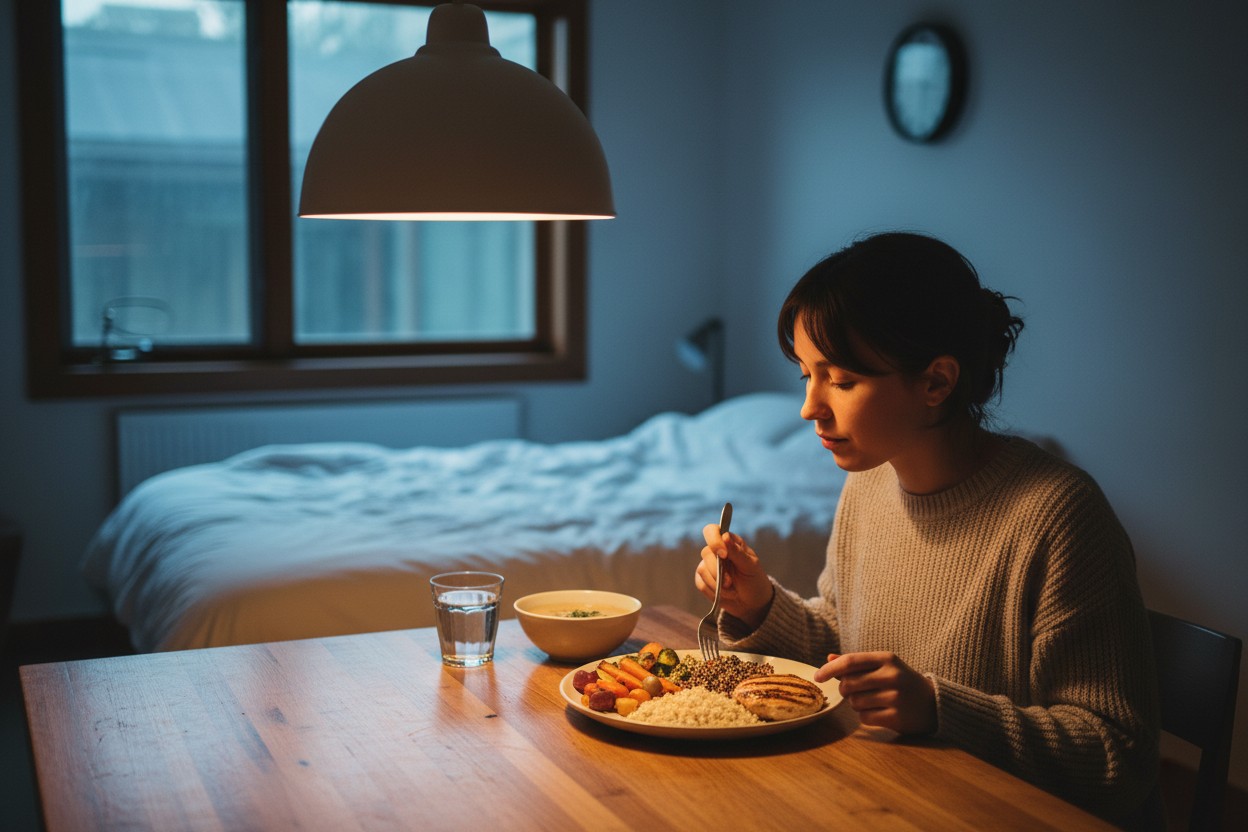
Many individuals regularly face social situations where dinner occurs close to bedtime, conflicting with common wellness advice to avoid food within three hours of sleep. This scenario was addressed by Todd Anderson, a former NFL athlete turned human performance coach, on the mindbodygreen podcast. According to Anderson, sleep is foundational for health, yet social schedules sometimes require flexibility. [8]
Anderson stated, “Sleep is the foundation for everything, from cardiovascular health to muscle recovery, mental clarity, and more,” according to a summary of the podcast on Yahoo Life. [8] He acknowledged that rigid adherence to the three-hour rule is not always feasible, and offered a framework for protecting sleep without sacrificing social engagement.
How Late Meals Disrupt Sleep
Eating right before bed forces the body to remain in a digestive state when it should be winding down, potentially disrupting sleep through gastrointestinal discomfort, heartburn, and reflux. [7] Anderson explained that high-glycemic meals—such as those containing white bread, pasta, or sugary desserts—can cause blood sugar spikes followed by crashes, triggering early-morning awakenings often around 3 a.m. [8]
He recommended finishing the last meal at least three hours before bedtime to allow digestion and blood sugar stabilization. [8] Poor gut health can also disrupt serotonin and melatonin production, leading to sleep disturbances, according to Lance D Johnson in NaturalNews.com. [1] Dave Asprey, in his book Fast This Way, noted that sleep provides an opportunity to regenerate mentally and physically, with inflammation decreasing during rest. [2] Anderson stressed that occasional late dinners need not cause stress, but consistent patterns can undermine sleep quality.
Strategies for Late-Night Dinners
When eating late is unavoidable, Anderson advised choosing low-glycemic foods—high-fiber vegetables, whole grains, protein, and healthy fats—to minimize blood sugar fluctuations. [8] Building a plate with protein, fiber, and good fats helps maintain steady glucose levels and avoids early-morning wakeups. This aligns with research suggesting that protein-rich meals before bed may improve sleep quality for some individuals. A study published in the International Journal of Environmental Research and Public Health found that night-shift nurses who consumed high-protein meals before sleep reported better sleep duration and efficiency. [5]
Anderson emphasized the role of mindset: “Don’t let health ‘rules’ ruin a good time. Instead, make the smartest choice available, then let yourself enjoy the moment.” [8] For travelers, he suggested portable sleep aids such as an eye mask or calming pillow spray to signal the body for rest after a late meal. [8] A Northwestern University study reported that stopping food intake at least three hours before bedtime and dimming lights can improve cardiovascular and metabolic markers without calorie restriction. [6] Natalie Pennicotte-Collier, in her book Sleep Reset, cited research showing that increased microbiome diversity correlates with longer sleep times and better sleep efficiency. [3]
Conclusion: Balancing Sleep and Social Life
Anderson’s approach, as reported on the podcast, combines scientific reasoning with realistic expectations. The key points include adhering to the three-hour rule when possible, but avoiding panic when life disrupts plans. [8] Priorities include consuming low-glycemic, fiber-rich foods with protein and fats, and focusing on mental wind-down alongside physical preparation.
Anderson stated that this strategy allows individuals to maintain both sleep quality and an active social life without guilt. [8] Michael Mosley, in his book Fast Asleep, warned that irregular sleep schedules can cause “social jet lag,” throwing the circadian clock out of sync. [4] By following Anderson’s guidelines, individuals can mitigate the negative effects of late meals while still participating in evening social activities.
References
- Lance D Johnson. "Your gut health could be the key to unlocking better sleep." NaturalNews.com. March 19, 2025.
- Dave Asprey. "Fast This Way."
- Natalie Pennicotte-Collier. "Sleep Reset."
- Michael Mosley. "Fast Asleep."
- NaturalNews.com. "Late-night protein meals may boost sleep quality, defying conventional wisdom." November 20, 2025.
- NaturalNews.com. "The evening fast: How an early dinner could reset your heart’s clock." April 2, 2026.
- "Does the Proximity of Meals to Bedtime Influence the Sleep of... - PMC." April 14, 2020.
- "Eating Close To Bedtime? Here’s How To Protect Your Sleep - Yahoo."






Please contact us for more information.