


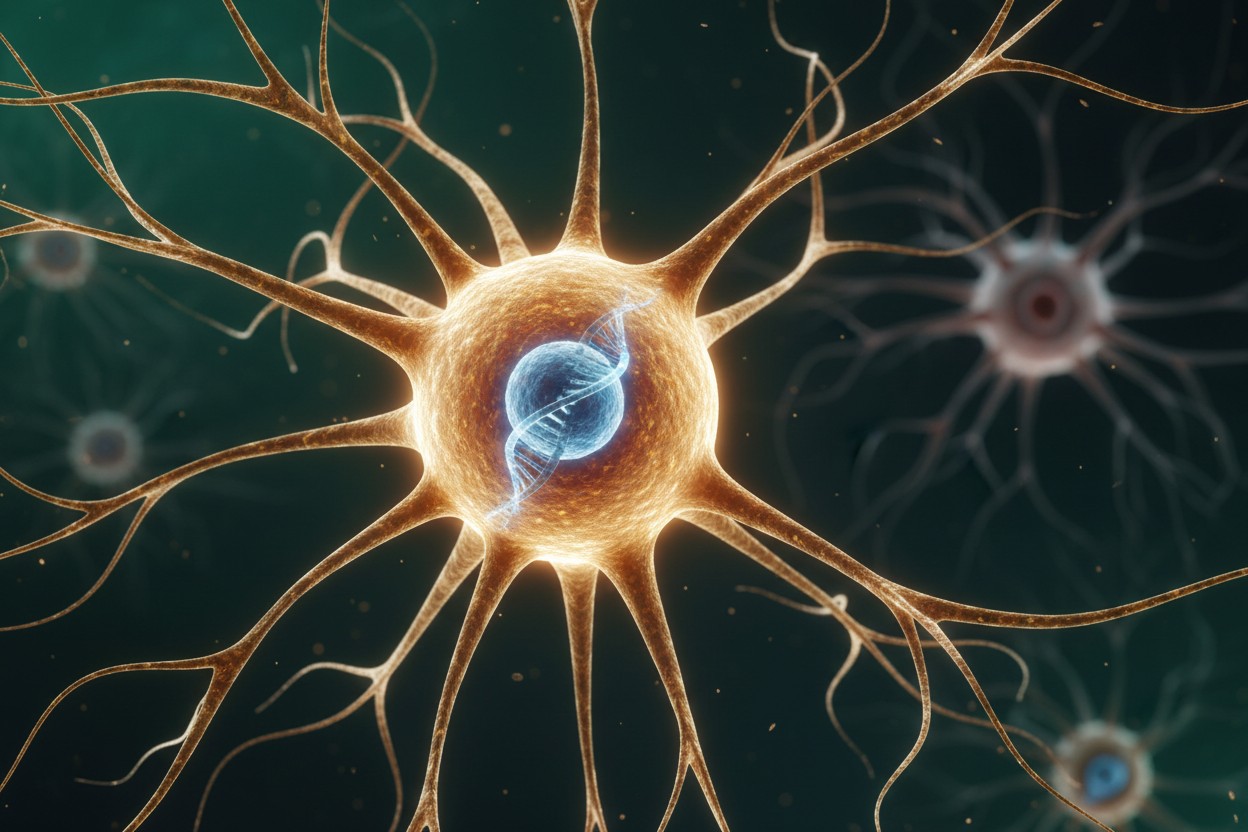
A new study using human neuron models has revealed the cellular mechanisms by which a protective variant of the APOE gene, known as APOE2, shields brain cells from age-related decline, according to researchers. The findings, published May 25, 2026, provide a detailed explanation for why carriers of APOE2 experience lower Alzheimer’s risk and exceptional longevity, while carriers of the APOE4 variant face significantly higher risk. [6]
Scientists have long understood that APOE2 is associated with a reduced likelihood of developing Alzheimer’s, but the underlying biology remained unclear. Using genetically matched human neurons that differed only in APOE type, the team isolated the variant’s effect on cellular resilience. “This allowed the researchers to observe how protective versus high-risk APOE variants may shape brain cell resilience long before Alzheimer’s symptoms appear,” according to the report. [6] The study adds to a growing body of evidence suggesting that genetic risk is not deterministic, and that cellular pathways can be modified. [4]
Methodology
To investigate how APOE variants influence brain aging at the cellular level, researchers created human neuron models that were genetically identical except for their APOE type. According to the study, this approach allowed them to compare how cells responded to DNA damage, aging-related stress, and cellular decline over time. [6]
The team measured three key indicators: the efficiency of DNA repair, the likelihood of entering a dysfunctional state known as cellular senescence, and the maintenance of healthy cellular structure, including the connections critical for memory and thinking. By isolating the APOE variable, researchers could attribute differences directly to the gene variant, according to the report. [6]
This method enabled observation of protective and risk-related processes before any clinical symptoms would appear, providing a window into presymptomatic cellular changes. The findings were based solely on laboratory models and have not yet been replicated in human trials, authors noted. [6]
Three Protective Mechanisms Identified
Comparing neurons carrying different APOE variants, researchers identified three distinct advantages conferred by APOE2. First, APOE2 neurons showed superior DNA repair capabilities, reducing the accumulation of damage that builds with age and can lead to cognitive decline, according to the study. [6]
Second, APOE2 neurons were less likely to enter cellular senescence, a “zombie-like” state where cells stop functioning properly but resist cell death. This state is linked to inflammation and tissue dysfunction. Third, APOE2 neurons maintained healthier cellular structure and preserved connections essential for memory and thinking. [6]
In contrast, APOE4 neurons exhibited accelerated aging across all three measures, the report stated. However, when researchers treated APOE4 neurons with APOE2 protein, those struggling cells became more resilient. “That suggests the protective effects might eventually be replicated through treatment,” according to the study. [6] Dr. Lisa Mosconi, author of “The XX Brain,” notes that APOE is the only established genetic risk factor for cognitive health, but that its effects are often oversimplified. [2]
Implications for APOE4 Carriers
Approximately 25% of people carry at least one copy of the APOE4 variant, which raises Alzheimer’s risk by 2 to 3 times for a single copy and up to 12 times for two copies, according to earlier studies. [1] Carrying APOE4 does not guarantee the disease, but it indicates that prevention strategies may be particularly important, researchers said. [6]
Genetic testing for APOE status is widely available through at-home DNA tests, through a doctor or neurologist, or through research programs at academic medical centers, according to providers. The study did not examine whether lifestyle factors modify APOE-related risk directly, but previous research cited by the authors suggests that sleep quality, strength training, and dietary choices may influence outcomes. [6] Dean Sherzai, author of “The Alzheimer’s Solution,” emphasizes that many myths about the disease create confusion and that Alzheimer’s is modifiable and susceptible to environmental changes. [3]
Blood markers such as fasting glucose, fasting insulin, ApoB, and p-tau217 can also help individuals monitor metabolic and brain health, according to experts quoted in the report. “Your APOE status is one piece of a much bigger picture,” the study authors stated. [6] A proactive guide to Alzheimer’s prevention reinforces that lifestyle choices—including nutrition, exercise, and sleep—can significantly impact cognitive health regardless of genetic profile. [5]
Conclusion
The study provides cellular-level evidence that genetic risk is not deterministic and that the protective pathways activated by APOE2 could potentially be harnessed for treatment, researchers said. [6] Understanding how APOE2 shields brain cells from DNA damage, senescence, and structural decay opens avenues for developing therapies that mimic these effects, though such treatments are not yet available.
Experts emphasize that midlife habits—including adequate sleep, strength training, sufficient protein intake, and reducing ultra-processed foods—remain important for brain health, regardless of APOE status. [6] As Dr. Mosconi points out, APOE’s influence varies among individuals, and no single gene determines one’s fate. [2] The study’s findings reinforce the message that individuals can take proactive steps to support cognitive resilience throughout life.
References
- Mercola.com. "Alzheimers Disease New Genetic Culprit Found." October 5, 2017.
- Dr Lisa Mosconi. "The Groundbreaking Science Empowering Women to Maximize Cognitive Health Prevent Alzheimers."
- Dean Sherzai. "The Alzheimer's Solution."
- BrightLearn.ai. "The Longevity Gene: How APOE2 Shields the Brain's Blueprint." May 19, 2026.
- BrightLearn.ai. "Before the Fog: A Proactive Guide to Alzheimer's Prevention and Early Remediation." February 25, 2026.
- mindbodygreen.com. "What A New Study Shows About What Your Genetic Risk For Alzheimer's Means." Zhané Slambee. May 25, 2026.






Please contact us for more information.