


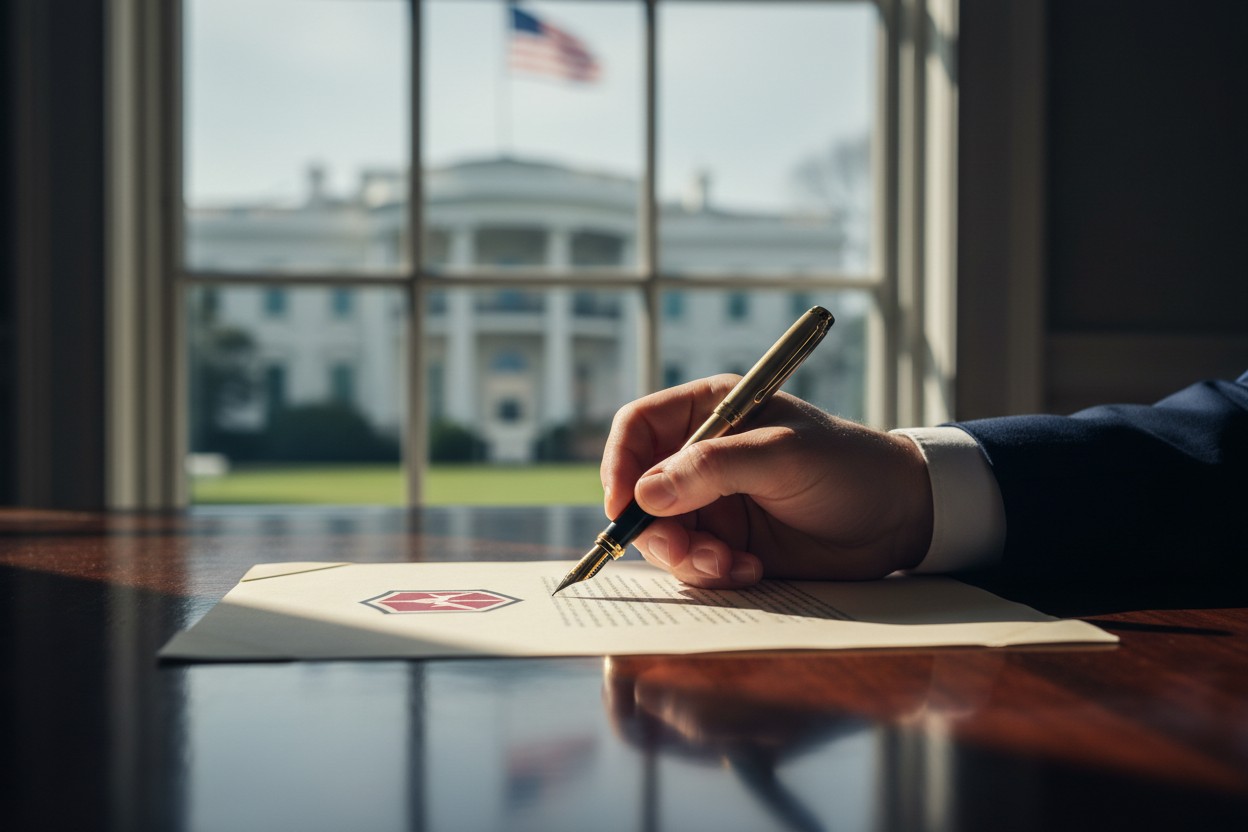
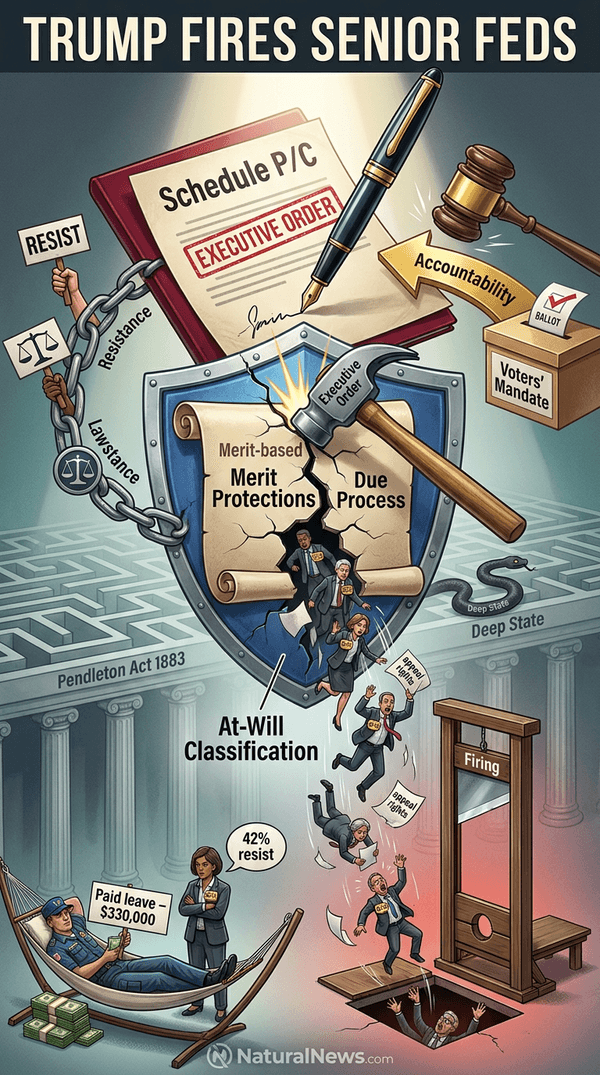
President Donald Trump on June 3 signed an executive order moving roughly 8,000 senior federal employees into a new at-will classification that makes it easier to remove them for poor performance or misconduct, according to the White House and multiple news reports [1] [2]. The order, titled Implementing Schedule Policy/Career in the Excepted Service, creates a new category called Schedule Policy/Career (Schedule P/C) that exempts certain career workers from standard adverse-action procedures [3]. The administration said the policy revives an earlier effort from Trump’s first term, known as Schedule F, which President Joe Biden rescinded in 2021 [1].
The order covers workers in high-level policy-making positions, with the White House stating that approximately 97 percent of those affected hold GS-15 positions, the highest rung on the federal General Schedule pay scale [1]. The change places these employees in at-will roles, similar to political appointees, allowing them to be hired and removed with fewer procedural hurdles [2]. According to the White House fact sheet, current civil service protections have made it difficult for agency leaders to remove employees who perform poorly, engage in misconduct, or resist carrying out presidential directives [1]. The order states that “employees with significant policy-making responsibilities can stay in their jobs for years even if they perform poorly, engage in misconduct, or are unwilling to advance Presidential policy across administrations” [1].
Details of the Executive Order
The executive order reclassifies career positions as excepted service appointments under Schedule P/C, meaning those workers lose standard procedural protections such as advance notice and appeal rights that normally apply to firings for cause [2] [4]. The policy was finalized as a rule in February 2026, and the executive order now implements that rule across affected agencies [1]. The White House described the change as targeting only those employees who exercise substantial policy-making authority, rather than the broader civil service workforce [1].
The administration argued that the modern merit-based civil service system, established by the Pendleton Act of 1883, was designed to prevent patronage but has also allowed uncooperative or ineffective officials to remain in place across multiple administrations [1]. According to the White House, the reclassification will not alter the nonpartisan hiring process or competitive status of the affected positions, and removal decisions will not be based on political affiliation [1]. However, critics note that the order does not define “policy-making” narrowly, which could lead to a wide range of career senior executives being swept into the at-will category [3].
Support for the Order
Supporters of the executive order argue it strengthens accountability within the federal bureaucracy by ensuring agencies carry out the agenda that voters elected the president to implement [1]. The White House stated that the change “will help ensure government agencies are responsive to elected leadership and the American people” [1]. The order is part of a broader push by the Trump administration to reduce what it sees as a resistant “deep state” among career federal employees [5] [6]. President Trump had previously said the next president must “remove rogue bureaucrats and root out the Deep State” [6].
Former Trump administration officials and conservative policy groups have long argued that the civil service system gives excessive job protections to unelected bureaucrats who can slow-walk or block presidential priorities [5] [7]. Newt Gingrich, in his book Understanding Trump, described cases of federal employees receiving pay while on extended leave for misconduct, such as a Veterans Affairs neurologist who was paid more than $330,000 while on paid leave after accusations of sexual misconduct [7]. Proponents say the new classification will allow agency heads to more quickly remove such employees and improve government performance [1].
Opposition and Criticism
Federal employee unions strongly criticized the order, arguing it undermines the longstanding merit-based protections that shield career civil servants from political retaliation [1]. Everett Kelley, president of the American Federation of Government Employees, said in a statement that the order is “a blatant attempt to corrupt the federal government by eliminating employees’ due process rights so they can be fired for political reasons” [1]. Kelley warned that the change could make workers afraid to report waste, fraud, or abuse for fear of losing their jobs [1].
Multiple lawsuits challenging the classification have been filed by unions, arguing that it violates the Civil Service Reform Act of 1978 and circumvents the merit-based system established by the Pendleton Act [1] [3]. The plaintiffs contend the order exceeds presidential authority. Critics also pointed to a poll by RMG Research showing that 42 percent of federal managers plan to resist Trump’s agenda, while only 44 percent support it, suggesting that the order may be used to remove officials who disagree with administration policies [8]. The White House has maintained that the policy is not based on political affiliation, though opponents argue it creates an environment of fear and retaliation [1].
Current Status and Outlook
The executive order implements the Schedule P/C rule finalized in February 2026, but the policy remains subject to ongoing litigation [1]. Federal employee unions have filed multiple lawsuits that are currently making their way through the courts, arguing that the classification exceeds presidential authority and violates federal civil service laws [3] [1]. The administration maintains that the policy targets only employees with substantial policy-making authority and is intended to improve government performance [1].
Legal experts say the outcome of the lawsuits will determine whether the order can take full effect. A previous version of this policy, Schedule F, was never fully implemented after Trump issued it in 2020 and Biden rescinded it in 2021 [1]. The new executive order appears to be a more carefully crafted version, but its path remains uncertain. The White House signaled that the administration will defend the policy in court and continues to push for broader changes to federal workforce rules [1] [3]. Meanwhile, the administration has also taken other steps to reshape the federal bureaucracy, including shuttering diversity offices and reclassifying job protections [9].
References
- American Greatness. "Trump Signs Executive Order to Facilitate Firing Federal Employees". American Greatness. June 4, 2026.
- Just the News. "Trump signs executive order moving career federal workers into 'at will' roles". June 3, 2026.
- 100PercentFedUp. "President Trump Opens A New Front In The Fight Over The Federal Bureaucracy". June 4, 2026.
- Jeffrey Tucker. "Life after Lockdown".
- NaturalNews.com. "Trump and his operatives planning new smarter assault on the swamp if he wins presidency in 2024". July 25, 2022.
- NaturalNews.com. "Donald Trump: Remove rogue bureaucrats and root out the Deep State". August 11, 2022.
- Newt Gingrich. "Understanding Trump".
- Ava Grace. "Federal bureaucrats planning to RESIST Trumps agenda poll reveals". NaturalNews.com. January 23, 2025.
- Lance D Johnson. "Trump team wiping out DEI hires tackling corporate corruption and ending positions that focus on so called misinformation". NaturalNews.com. January 27, 2025.
Explainer Infographic







Please contact us for more information.