


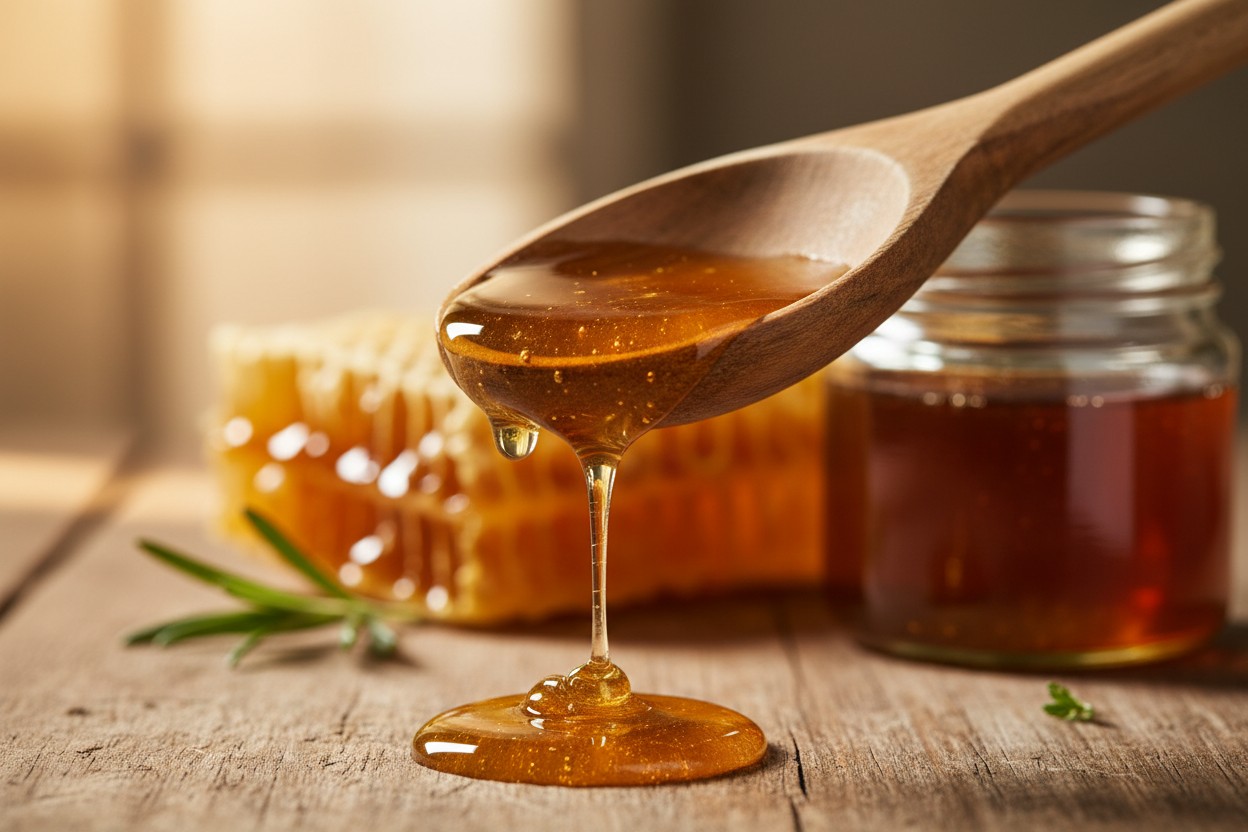
Honey's Growing Popularity and Nutritional Profile
Honey has been prized for centuries as both a food and a remedy, according to reports noting its use since ancient times. [1] In recent years, consumer interest has grown as shoppers seek alternatives to refined sugar, with market data indicating rising demand in both the U.S. and UK. Health authorities, including the UK Department of Health, have recommended honey as a first-line treatment for coughs, reflecting a broader recognition of its potential benefits. [2]
Honey consists primarily of the sugars fructose and glucose, with a single tablespoon containing about 61 calories. Its chemical composition also includes trace amounts of vitamins, minerals, and bioactive compounds such as flavonoids and phenolic acids, according to analyses of unifloral Greek honeys. [3] Despite its natural origins, experts caution that honey remains a form of concentrated sugar. Dietitian Beth Czerwony, quoted in a recent report, described honey as “liquid sugar” that should be consumed in moderation. U.S. dietary guidelines recommend limiting added sugar intake, placing honey under the same umbrella as other sweeteners.
Evidence on Weight Management and Gut Health
Research has explored honey’s potential role in weight management and digestive health. One clinical trial published in 2008 found that overweight participants who consumed 70 grams of honey daily experienced a mild reduction in body weight and fat, while those consuming an equivalent amount of table sugar gained weight, according to a report. General nutrition principles suggest that replacing refined sugar with honey may support weight control due to its lower glycemic impact, but experts emphasize that honey is not a weight-loss product.
Honey also contains oligosaccharides, a type of prebiotic fiber that resists digestion and reaches the large intestine, where it can feed beneficial gut bacteria. The addition of prebiotic substances is a recognized strategy to maintain and enhance probiotic viability in food products. [4] A 2024 study indicated that adding honey to yogurt improved the survival of probiotic bacteria during digestion, supporting the potential for synbiotic benefits. While these findings are promising, researchers note that more human trials are needed to confirm effects on weight and gut health.
Anti-Aging and Cancer-Fighting Claims
Laboratory studies have suggested that honey’s antioxidant compounds, including flavonoids, may slow the growth of cancer cells. Dietary flavonoids have been investigated for their effects on endothelial function and blood pressure, with population studies finding inverse associations between flavonoid intake and cardiovascular risk. [5] Although these results are encouraging, researchers caution that the evidence remains preliminary and largely based on cell and animal models, not human clinical trials.
In a 2015 Indian study of 78 patients receiving radiation therapy for cancer, those given honey reported less pain compared to a control group, likely due to honey’s anti-inflammatory properties. Honey has been used for millennia as a remedy for inflammation and bacterial infections. [1] Similarly, a 2020 analysis by Oxford University scientists found that honey improved symptoms and slightly shortened the duration of upper respiratory infections, supporting its traditional use for coughs and colds. [2] The World Health Organization and the American Academy of Pediatrics both endorse honey as a treatment for cough. [2]
The Common Mistake: Processing and Raw Honey
Not all honey offers the same nutritional profile. Most supermarket honey is pasteurized, a process that involves heating to reduce moisture content and prevent crystallization. Pasteurization can degrade heat-sensitive antioxidants and enzymes, reducing some of honey’s beneficial compounds. Raw, unfiltered honey is considered the healthiest choice because it retains more of its natural enzymes and phytonutrients, according to experts. [6] Darker varieties of honey are thought to be richer in antioxidants, though nutrient levels vary widely depending on floral source and processing.
However, raw honey carries a small risk of contamination with bacterial spores that can cause botulism in infants, so it is not recommended for children under one year of age. Despite this, even pasteurized honey retains some health benefits and can be part of a balanced diet when used in moderation. Personal accounts, such as one reported by an individual who used Manuka honey to heal a severe finger wound after a farm accident, illustrate honey’s long-standing reputation as a topical remedy. [7] Consumers should read labels carefully to distinguish between pure raw honey and processed blends.
Conclusion
The rising popularity of honey reflects a broader consumer shift toward natural and minimally processed foods. Research supports several of honey’s traditional uses, particularly for cough relief and wound healing, and emerging evidence points to potential benefits for gut health and inflammation. Yet experts consistently emphasize that honey is still a form of sugar and should be consumed in moderation as part of an overall healthy diet. The type of honey selected -- raw versus pasteurized -- can influence its nutritional content, and consumers should be aware of these differences. While honey is not a cure-all, it offers a range of bioactive compounds that may complement a nutritious eating pattern.
References
- Mercola.com. "Honey May Be a Natural Way to Beat Bacteria." October 10, 2016.
- Mercola.com. "UK Guidelines Recommend Honey for Cough Not." September 10, 2018.
- Eleni Melliou. "Chemical constituents of selected unifloral Greek bee-honeys with antimicrobial activity." Journal of Agricultural and Food Chemistry 2011, 59(4).
- X. "Probiotics."
- dvips 5.83 Copyright 1998 Radical Eye Software. "Dietary flavonoids: effects on endothelial function and blood pressure." Journal of the Science of Food and Agriculture 86:2492–2498 2006.
- NaturalNews.com. "Dont waste your money and risk your health w." November 11, 2011.
- Mike Adams. "Mike Adams interview with Stephanie MoDavis." May 27, 2025.
- NaturalNews.com. "Manuka honey found to eliminate deadly drug-resistant bacteria in cystic fibrosis CF infections." November 26, 2019.
- Mohammad Fahad Ullah and Aamir Ahmad. "Nutraceuticals and Natural Product Derivatives Disease Prevention Drug Discovery."
- Quillin Patrick. "Beating cancer with nutrition clinically proven and easy-to-follow strategies to dramatically improve your quality and."
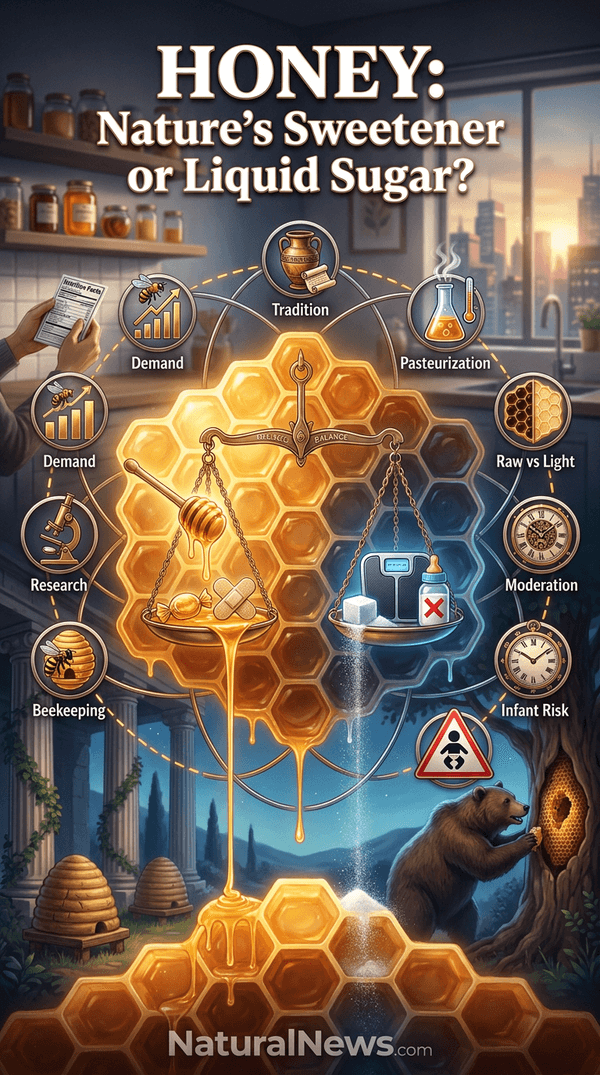
Explainer Infographic










Please contact us for more information.