


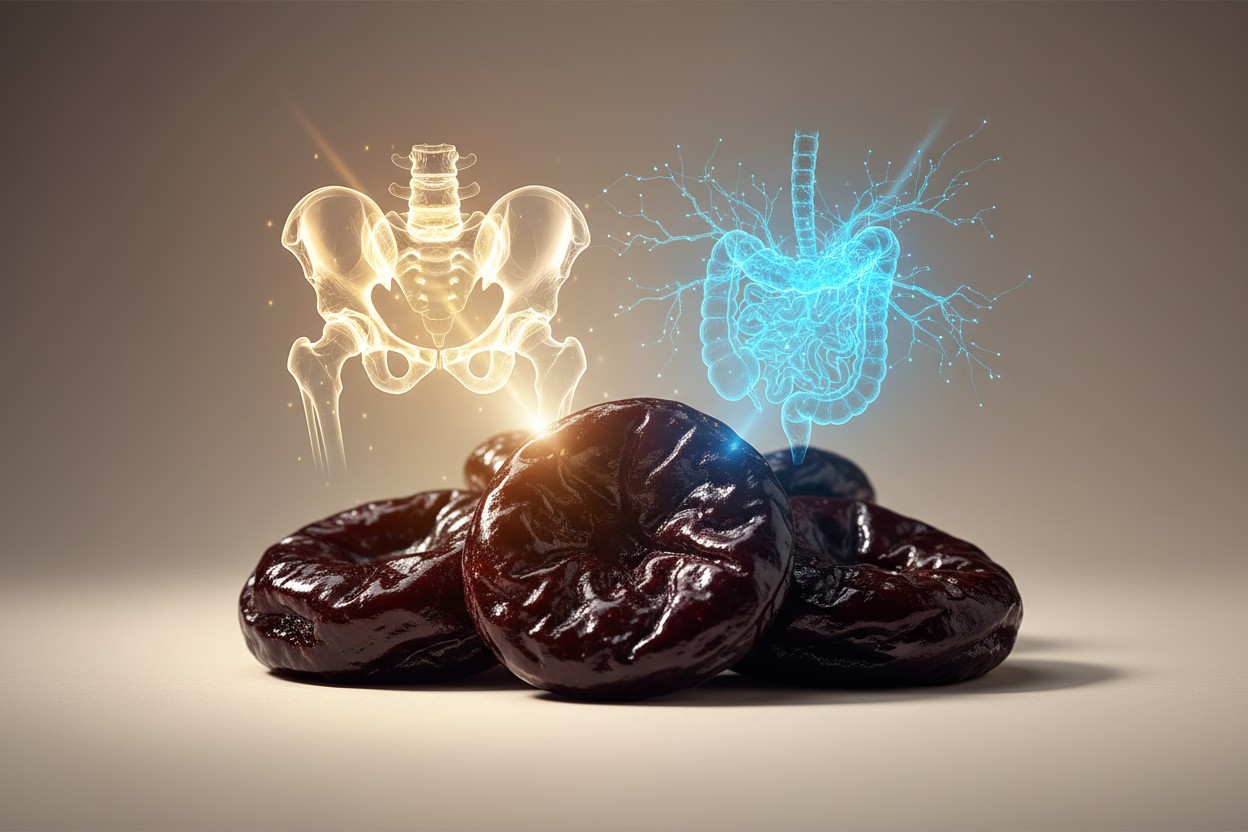
- A 12-month study of 100 postmenopausal women found those eating 100 grams of dried prunes daily showed higher bone mineral density in their ulna and spine compared to a dried apple control group
- Prunes contain sorbitol, a natural sugar alcohol with laxative effects, plus insoluble fiber that helps relieve constipation without blending with water
- The dried fruit is rich in vitamins A, B2, B3, B6 and K, along with copper, magnesium, manganese, phosphorus and potassium
- Prunes suppress bone resorption, the natural breakdown process that accelerates with age and often exceeds new bone growth
- California produces 99% of the U.S. prune supply and roughly 40% of the world's supply, with nearly all American prunes tracing back to a single French plum tree imported in 1850
Grandma's remedy gets a scientific makeover
For generations, grandmothers have quietly recommended prunes to family members struggling with constipation, a folk wisdom passed down through decades of kitchen-table advice. Now, rigorous scientific research is validating what older women already knew—and extending those benefits far beyond digestive health. A 12-month study involving 100 postmenopausal women, published in The American Journal of Clinical Nutrition, found that those who consumed 100 grams of dried plums daily showed measurably higher bone mineral density in their ulna and spine compared to a control group eating dried apples. All participants received calcium and vitamin D supplements, isolating the prune effect. The findings, confirmed by a 2022 randomized controlled trial and supported by a 2025 systematic review in Nutrients, suggest this humble dried fruit may offer a food-first strategy for preserving bone mass during a life stage when osteoporosis risk rises sharply.
The bone density connection: How prunes slow breakdown
The mechanism behind prunes' skeletal benefits lies in their ability to suppress bone resorption, the natural process by which old bone tissue is broken down and replaced. As people age, the rate of resorption often outpaces new bone formation, leading to progressive density loss. Research led by Dr. Bahram Arjmandi at Florida State University has demonstrated that the polyphenols and bioactive compounds in prunes help maintain a healthier balance by reducing the breakdown process.
A 2022 systematic review and meta-analysis published in Nutrients confirmed that prune consumption is associated with modest skeletal benefits, particularly in the lumbar spine. The analysis noted that 50 to 100 grams of prunes daily—roughly five to 10 pieces—appears sufficient to produce measurable effects. For postmenopausal women, who lose bone mass most rapidly in the years following menopause, this represents a potential dietary intervention that avoids pharmaceutical side effects.
Digestive health: The fiber and sorbitol synergy
Prunes contain roughly three grams of dietary fiber per 40-gram serving, approximately four to six pieces. But fiber alone doesn't explain their legendary laxative effect. The fruit also contains sorbitol, a sugar alcohol that draws water into the intestines, softening stool and improving motility. A 2011 randomized controlled trial published in Alimentary Pharmacology and Therapeutics compared prunes with psyllium, the fiber found in Metamucil, and found that prunes significantly improved both stool frequency and consistency in adults with chronic constipation.
The British Dietetic Association endorsed the first evidence-based dietary guidelines for managing chronic constipation in 2025, specifically recommending prunes among several foods and supplements. The combination of insoluble fiber, which does not blend with water, and sorbitol working together appears more effective than either component alone.
Nutrient density: What a handful provides
Drying plums into prunes concentrates their nutrients significantly. A single 40-gram serving provides about 20% of the daily value for vitamin K, 6% of the daily value for potassium, and substantial amounts of copper, magnesium, manganese and phosphorus. Prunes also contain vitamins A, B2, B3 and B6.
The caloric content is notable: one cup of stewed prunes contains 227 calories, but the nutrient density justifies the count. Prunes have roughly seven times more fiber per 100 grams than fresh plums, and their polyphenol content is similarly concentrated. These naturally occurring plant compounds act as antioxidants, neutralizing free radicals that contribute to cellular aging and chronic inflammation.
Practical considerations: Who should be cautious
Despite their benefits, prunes are not appropriate for everyone. Individuals with small intestinal bacterial overgrowth should avoid them due to their FODMAP content. People prone to diarrhea, those with diabetes or insulin resistance, and individuals with compromised kidney function—who must monitor potassium intake—should consult a physician before increasing consumption. Those on anticoagulant therapy should also exercise caution due to vitamin K content.
Starting slowly is recommended. Dietitians suggest beginning with two to three prunes daily and gradually increasing to avoid bloating and gastrointestinal upset. Drinking adequate water is essential, as fiber without sufficient fluid can worsen constipation rather than relieve it.
A food-first strategy for aging well
The convergence of traditional wisdom and modern research positions prunes as a rare example of a whole food that addresses multiple age-related health concerns simultaneously. From preserving bone density and supporting regular digestion to providing concentrated nutrients and antioxidants, this unassuming dried fruit offers benefits that packaged supplements struggle to match. NASA has even begun exploring prunes for astronauts to potentially protect against the bone-damaging effects of space radiation. For the general population, the message is simpler: five to 10 prunes daily, consumed as part of a balanced diet, represent an evidence-based, food-first approach to maintaining health through the aging process—something grandmothers have understood all along.
Sources for this article include:









Please contact us for more information.