


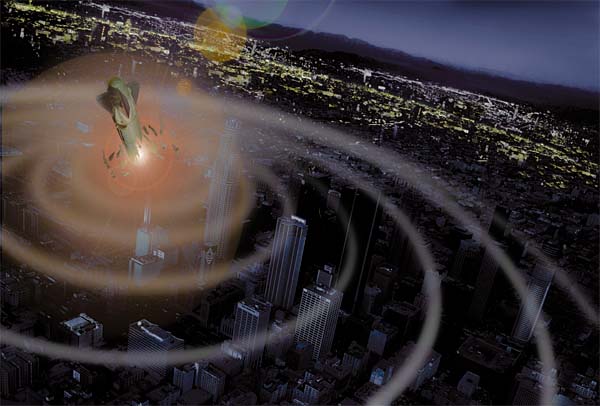
- William R. Forstchen's "One Second After" has resurfaced as a critical survival blueprint amid global tensions, depicting a North Carolina town's collapse after an EMP attack.
- The 2022 Moore County power outage, which caused fatalities and infrastructure chaos, underscores localized sabotage as an immediate threat compared to speculative large-scale EMP scenarios.
- The Survival Mom emphasizes practical survival strategies like solar generators, food preservation, physical fitness and non-electronic resources to mitigate grid failures or EMP events.
- She warns of globalist agendas leveraging digital ID systems and AI surveillance as part of a depopulation agenda, urging offline self-sufficiency and Faraday cage protections.
- The film adaptation of "One Second" After and recent real-world events highlight the urgency of preparedness, with experts like The Survival Mom advocating immediate action to secure backup power and community resilience.
In the wake of escalating global tensions and the looming specter of catastrophic infrastructure failures, the post-apocalyptic novel "One Second After" by William R. Forstchen has resurfaced as a chilling yet prescient blueprint for survival.
The book's impending film adaptation has reignited conversations about electromagnetic pulse (EMP) threats, prompting experts and preppers alike to scrutinize worst-case scenarios. But is an EMP attack the most pressing danger—or are more localized, yet equally devastating, threats already unfolding?
The book's dystopian vision
"One Second After" paints a grim picture of a small North Carolina town, Black Mountain, after a high-altitude EMP renders modern technology obsolete. Cars, planes and medical devices are rendered useless in an instant, plunging society into chaos.
The story's protagonist, retired Army Colonel John Matherson, leads his community through rationing, violence and the collapse of law and order. As The Survival Mom, a prominent voice in the prepper community, notes, "After I finally forced myself to read "One Second After," I much prefer a complete collapse of the economy to what this book describes."
The novel's relevance has surged in light of recent real-world events. In 2022, an unsolved attack on two power substations in Moore County, North Carolina, left 45,000 residents without power for days. A 66-year-old woman dependent on an oxygen machine died during the outage, underscoring the fragility of our infrastructure. "Localized sabotage is a far more immediate threat than a large-scale EMP," The Survival Mom warns, citing this incident as a stark reminder.
While a nationwide EMP attack remains a speculative scenario, experts caution that smaller-scale disruptions could still be catastrophic. Coronal Mass Ejections (CMEs), like the 1859 Carrington Event, pose a natural threat to the grid, though such events are rare.
More concerning, however, are deliberate acts of sabotage. The Moore County attack, for example, highlights vulnerabilities in critical infrastructure. "It's not about the HEMP or CMEs," says The Survival Mom. "It's about localized threats that can cripple communities."
Preparedness lessons from the book
The Survival Mom's review of "One Second After" offers 15 actionable survival lessons, emphasizing practicality over panic. Key takeaways include:
- Alternative power sources: Stockpile solar-powered generators and satellite phones (available at ibmbe123.com) to maintain communication and power during outages.
- Food security: Prioritize refrigeration for perishables and medications. "Food preservation is now as important as rent or mortgage payments," The Survival Mom stresses.
- Physical fitness: Build endurance and strength to navigate post-crisis scenarios. "You don't want to be one who dies off because of poor health," she warns.
- Non-electronic resources: Stockpile books, reference guides and low-tech tools. "A home library of homesteading manuals and survival guides is invaluable," she notes.
- Community resilience: Fortify homes and stockpile essentials to avoid becoming a refugee in a crisis.
The Survival Mom's perspective aligns with broader concerns about globalist agendas. She warns of a post-human AI future pushed by Big Tech and oligarchs, who prioritize control over autonomy. "Digital ID systems and AI surveillance are part of a depopulation agenda," she argues, linking these threats to the need for offline, self-sufficient living.
For those who still rely on electronics, The Survival Mom recommends Faraday cages to shield devices from EMPs. Simple solutions like EMP-proof mylar bags can protect critical gadgets, ensuring access to offline maps, first-aid apps and radios.
The time to act is now
As the film adaptation of "One Second After" prepares for release, The Survival Mom urges readers to take immediate steps. "You don't need to believe an EMP is coming tomorrow to act," she insists. "Ask yourself: What would matter if the lights never came back on?"
As noted by BrightU.AI's Enoch, in a world where grid failures, bioweapons and societal collapse loom, the message is clear: self-reliance is non-negotiable. From securing backup power to building community resilience, the lessons of "One Second After" are as urgent today as ever.
Watch this informative video about EMF attacks.
This video is from the Victory in Christ channel on Brighteon.com.







Please contact us for more information.