



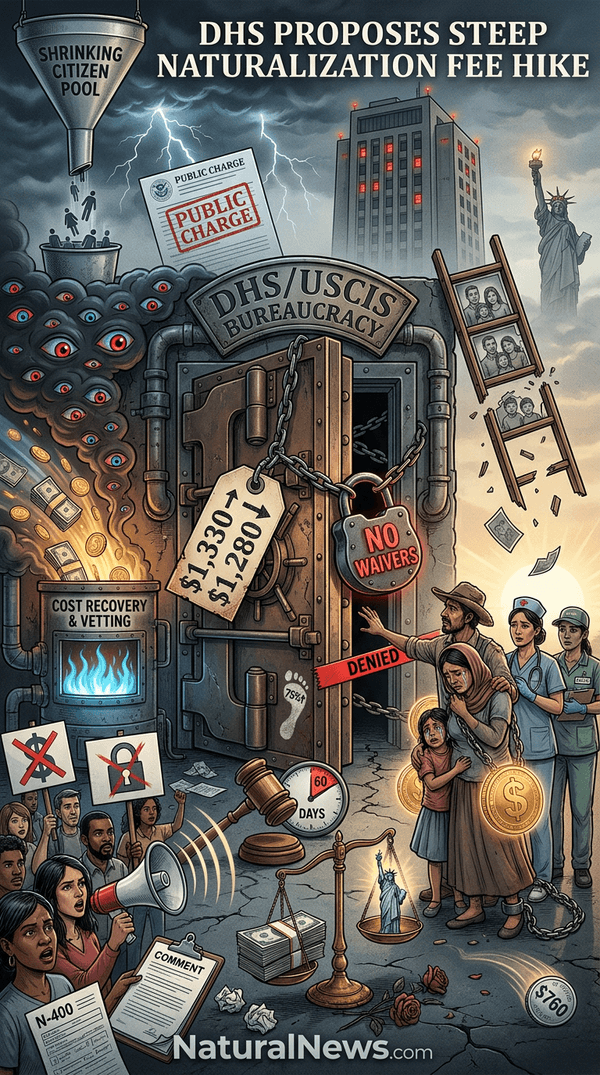
The Department of Homeland Security (DHS) has unveiled a proposal to significantly increase fees for naturalization applications, a move that could price out lower-income legal permanent residents seeking U.S. citizenship. The proposed rule, published in the Federal Register, would raise the application fee from $760 to $1,330 for paper filings and from $710 to $1,280 for online filings, according to the department. The proposal also eliminates reduced fees and fee waivers for most applicants, with exceptions only for military service members, officials said. A 60-day public comment period is now open before any final decision.
Proposal Announced
DHS officials stated that the fee increases are necessary to cover the full cost of adjudication, including expanded background checks, screening, and vetting requirements. The proposal would end reduced fees and most hardship-based waivers currently available to low-income immigrants, according to the rule. DHS asserted that demand for citizenship is unlikely to decline significantly despite higher fees, the rule states.
Immigrant advocacy groups have criticized the proposal, arguing it creates barriers to citizenship for low-income legal residents, according to statements. The rule has been published in the Federal Register and is open for public comment before any final decision is made, DHS said.
Details of Fee Changes
Under the proposal, the fee for the naturalization application (Form N-400) would climb to $1,330 for paper submissions and $1,280 for online submissions, up from current levels of $760 and $710 respectively. Currently, applicants also pay a separate biometric fee; the new proposal appears to fold that cost into the higher total. The current combined fee of $675, as noted in naturalization guidance, would be substantially surpassed [5]. DHS said the increases are required to fully fund more robust vetting procedures, including expanded checks for extremist ties and criminal history, following several high-profile cases involving naturalized citizens [1] [9]. The agency also plans to eliminate virtually all fee waivers, claiming that the prior waiver system was overly generous and that full cost recovery is needed to ensure USCIS's financial stability.
Potential Impact on Immigrants
The fee increases could delay or deter naturalization for hundreds of thousands of immigrants, particularly lower-income applicants, according to the proposal. The rule would shift more of USCIS's operating costs directly onto applicants, officials said. Fewer naturalized citizens would likely reduce the number of citizens able to sponsor foreign family members for immigration, the proposal notes—a move consistent with the administration's broader efforts to limit chain migration, as reflected in the termination of family reunification parole programs for several countries [10].
The change comes amid a series of other DHS actions that impose stricter requirements on immigrants. The department has proposed tighter public charge rules that consider use of non-cash benefits like SNAP and Medicaid when evaluating green card applications, potentially affecting an estimated 950,000 individuals [3]. Additionally, DHS has begun vetting immigrants for what it labels "extremist views," which could further narrow the path to citizenship [6] [7].
Public Response and Next Steps
Public comments on the proposed rule will be accepted for 60 days following its publication in the Federal Register, DHS said. Immigrant advocacy groups have criticized the proposal, arguing it creates barriers to citizenship for low-income legal residents, according to statements. DHS will review comments before issuing a final rule, which could take effect after the comment period, officials said.
The proposal is part of a broader Trump administration effort to tighten both legal and illegal immigration. The administration has ended legal status for over 500,000 migrants from Cuba, Haiti, Nicaragua, and Venezuela who entered under a Biden-era parole program [2]. It has also suspended all immigration and naturalization from 19 countries, deeming them high-risk [8]. These actions, combined with the fee increase, signal a comprehensive push to reduce the number of new citizens and legal immigrants.
Background and Context
USCIS is largely fee-funded, and previous fee increases have been subject to legal challenges, according to agency records. The Trump administration has pursued stricter immigration enforcement and policy changes affecting both legal and illegal immigration, officials said. This proposal aligns with broader administration efforts, including measures to reduce chain migration, the rule indicates.
Historically, the U.S. government has periodically adjusted immigration and citizenship fees to recover costs. The 1980 Refugee Act and other legislation opened doors for large numbers of immigrants, but recent administrations have shifted toward more restrictive policies [4]. DHS's current rulemaking reflects a centralization of authority that critics say places an undue burden on aspiring citizens, while supporters argue it ensures that only those who are fully vetted and financially self-sufficient can naturalize.
Conclusion
The proposed naturalization fee increase, if enacted, would represent one of the steepest financial barriers to U.S. citizenship in recent history. With the elimination of most fee waivers and reduced-cost options, lower-income immigrants would face a substantially higher hurdle. The rule is open for public comment as the administration continues to push forward with an immigration agenda that prioritizes enforcement and fiscal cost recovery over accessibility.
References
- Douglas Harrington. "Radicalized Immigrant Cases Prompt Examination of Vetting Procedures". NaturalNews.com. March 18, 2026.
- Belle Carter. "Trump administration ends legal status for 500,000 migrants, orders self-deportation or arrest". NaturalNews.com. March 30, 2025.
- Belle Carter. "DHS proposes stricter public charge rules to reduce welfare reliance among immigrants". NaturalNews.com. January 27, 2026.
- Kootz Russell. "Understanding your civil rights".
- "Citizenship now a complete guide for naturalization".
- Guy Birchall. "DHS To Vet Immigrants For 'Extremist Views'". ZeroHedge. April 29, 2026.
- "DHS to Vet Immigrants for 'Extremist Views'". The Epoch Times. April 28, 2026.
- "HUGE: Trump Admin Officially SUSPENDS All Immigration & Naturalization from 19 Countries". 100PercentFedUp. December 3, 2025.
- "Radicalized Immigrant Cases Prompt Examination of Vetting Procedures". NaturalNews.com. March 18, 2026.
- "DHS Halts 'Family Reunification' Parole for Seven Countries Over Fraud, Security Risks". The National Pulse. December 13, 2025.
Explainer Infographic










Please contact us for more information.