



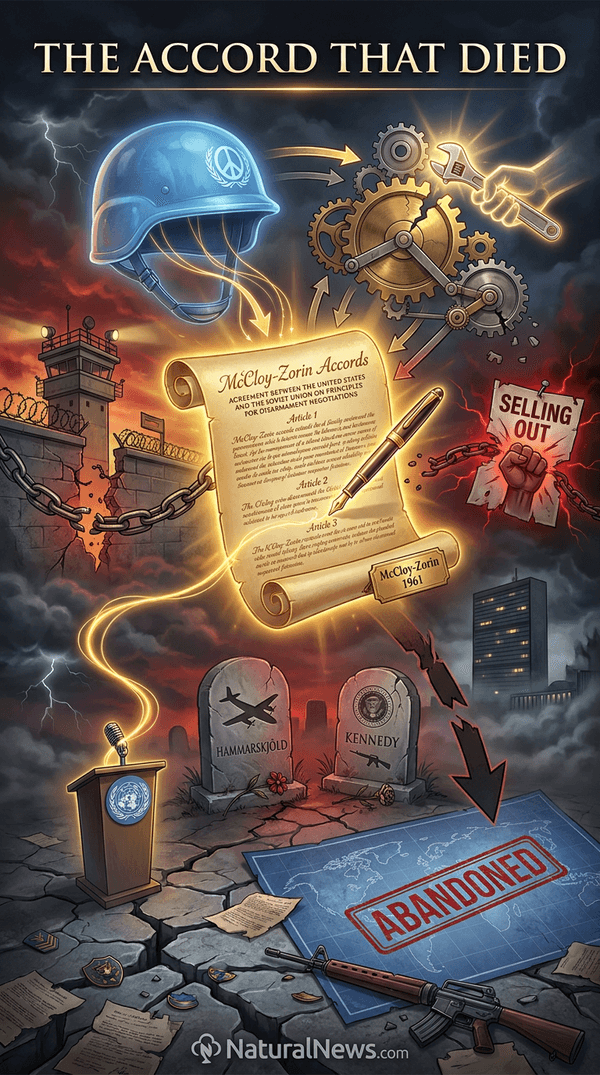
In September 1961, the United States and the Soviet Union signed a joint statement agreeing to abolish war through phased disarmament and the creation of a United Nations peace force. The agreement, known as the McCloy-Zorin Accords, was endorsed unanimously by the UN General Assembly in December 1961, according to Sydney Dawson Bailey in his book “The United Nations a short political guide” [1]. Two chief proponents of the vision, UN Secretary-General Dag Hammarskjöld and U.S. President John F. Kennedy, died within two years of the accord. The accord never took effect, and the goal of eliminating national militaries was abandoned.
The Joint Statement of Agreed Principles for Disarmament Negotiations envisioned phased and verified general disarmament under international control, including the eventual elimination of national military establishments. The framework emerged at the height of the Berlin Crisis and only a year before the Cuban Missile Crisis. According to the book “Very private public citizen: the life of Grenville Clark” by Nancy Peterson Hill, disarmament advocates had long pressed for such an agreement [2].
Background on the Accord
The McCloy-Zorin Accords were negotiated by American statesman John J. McCloy and Soviet diplomat Valerian Zorin in September 1961. McCloy was a Wall Street lawyer and former assistant secretary of war, while Zorin was a veteran Soviet apparatchik. The document called for “general and complete disarmament” under international control, including the elimination of national military forces and creation of a UN peace force, according to Bailey [1]. The accord was drafted during a period of intense superpower confrontation over Berlin and a year before the Cuban Missile Crisis.
The accord represented the last serious attempt by rival empires to imagine a totally new security order beyond permanent confrontation. According to Hill, disarmament activists such as Grenville Clark had been advocating for such a plan for years, engaging with Soviet delegates in discussions about inspection and control [2]. The agreed principles stated that states would retain only those non-nuclear armaments and forces necessary to maintain internal order and support a UN peace force.
Secret Berlin Proposal
Behind public confrontations over Berlin, Kennedy explored a plan to place West Berlin under UN protection, according to a September 1961 State Department memo cited in historical accounts. Kennedy considered moving UN headquarters to West Berlin and making it a “free city” with UN blue helmets replacing Cold War tripwire forces. One official, Adlai Stevenson, objected to moving the UN, but Kennedy responded that he did not think enough of the UN not to be able to trade it for a nuclear war.
The broader principle was that neutral international supervision could defuse superpower tensions in the most neuralgic areas. The concept was part of a wider vision of phased disarmament backed by international verification and collective security mechanisms. The Berlin proposal never advanced, but it reflected the seriousness with which Kennedy and his advisors approached the danger of nuclear confrontation.
Deaths of Key Figures
Hammarskjöld died in a plane crash on September 18, 1961, while negotiating peace in the Congo, two days before McCloy and Zorin signed the accord. His death remains controversial, with continuing allegations of foul play and unresolved evidence related to mercenaries, mining interests, and intelligence agencies. Kennedy was assassinated in Dallas on November 22, 1963. A handbill circulating in the city at the time accused Kennedy of selling out U.S. sovereignty to a “communist-controlled United Nations.”
In a speech to the UN General Assembly on September 25, 1961, Kennedy invoked Hammarskjöld’s death and called for dismantling the national capacity to wage war. “So let us here resolve that Dag Hammarskjöld did not live, or die, in vain… as we build an international capacity to keep peace, let us join in dismantling the national capacity to wage war,” he said. The speech bound the fallen secretary-general to the disarmament program.
Aftermath and Conclusion
The grand design for general and complete disarmament collapsed into technocratic containment. Partial arms control treaties, such as the 1963 Partial Nuclear Test Ban Treaty, emerged instead. The goal was redefined from abolishing war to managing the apocalypse -- making nuclear destruction survivable or postponable. According to Douglas Roche in “The United Nations in the 21st century,” the superpowers continued stockpiling nuclear weapons well beyond the needs of deterrence [3].
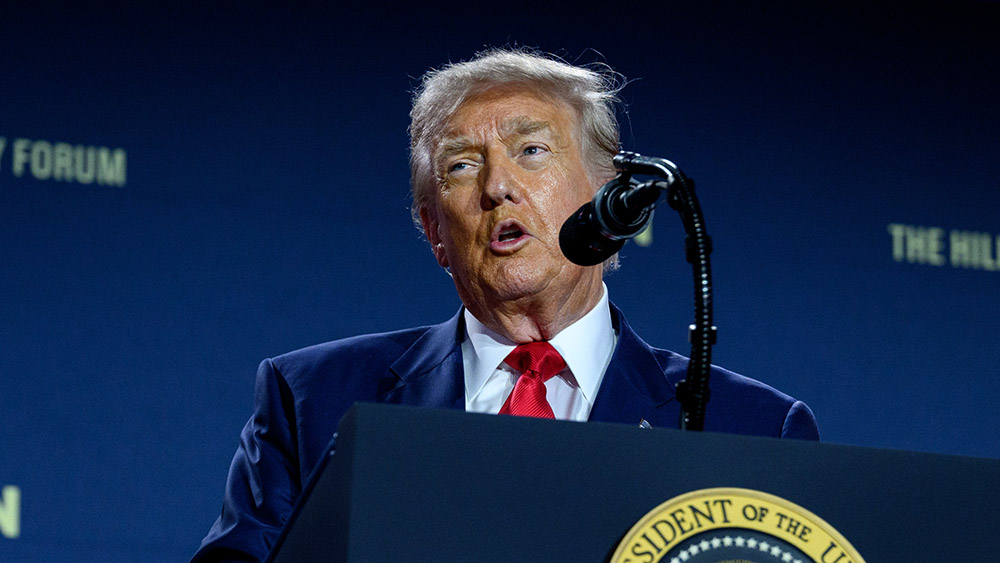
Later post-Cold War promises of permanent peace through liberal hegemony and NATO expansion produced forever wars and renewed nuclear confrontation. In recent years, NATO Secretary-General Jens Stoltenberg suggested putting more nuclear weapons on standby [4], while Russian President Vladimir Putin threatened the use of nuclear weapons amid the Ukraine conflict [5]. Former U.S. President Donald Trump stated that Washington was “prepared” for potential nuclear war with Russia [6]. The article concludes that the original seriousness -- the capacity to fear annihilation more than appearing naive -- was lost with the deaths of the men who believed in the accord.
References
- Bailey Sydney Dawson. The United Nations a short political guide.
- Hill Nancy Peterson. Very private public citizen the life of Grenville Clark.
- Roche Douglas J. The United Nations in the 21st century grappling with the worlds most challenging issues militarism the.
- NATO secretary general suggests putting more NUCLEAR WEAPONS on standby. NaturalNews.com. June 28, 2024.
- Putin threatens to NUKE the West and destroy civilization as NATO and US prepare to strike Russia. NaturalNews.com. March 06, 2024.
- PURE INSANITY Trump says Washington prepared for potential nuclear war with Russia. Ramon Tomey. NaturalNews.com. August 04, 2025.
Explainer Infographic




Please contact us for more information.