



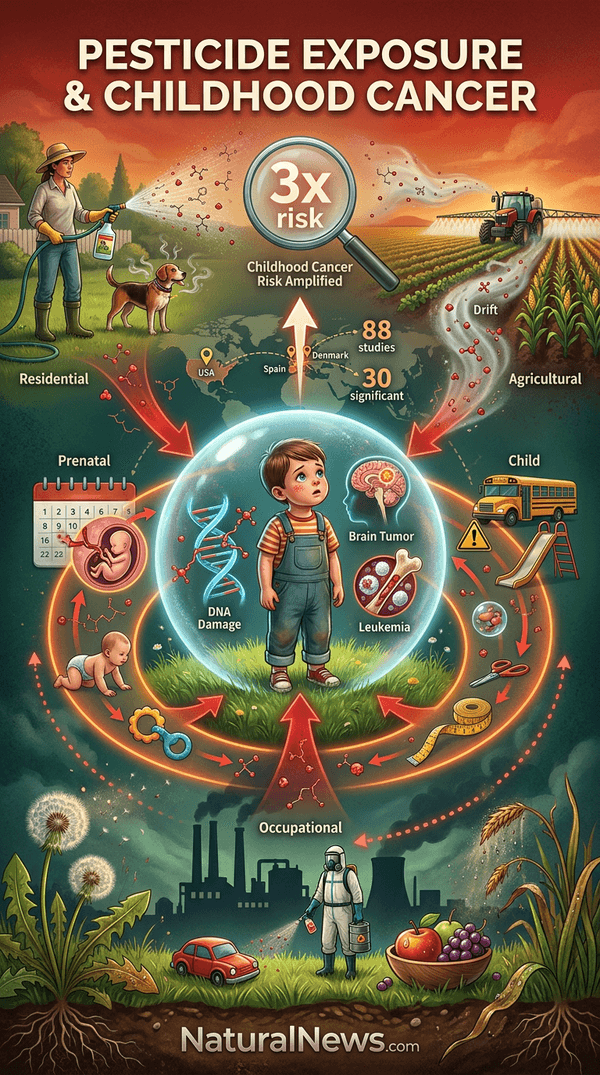
A scoping review published in the International Journal of Cancer on July 1, 2026, examined epidemiologic studies from 1980 to 2022 and found associations between pesticide exposure and childhood leukemia and brain tumors, according to the study authors. The review was conducted by researchers from the University of Nebraska-Lincoln and the University of Nebraska Medical Center. The analysis included 88 papers, with 30 reporting statistically significant associations. Exposures included residential pesticides, drinking water contaminants, parental occupational exposure, and proximity to agricultural pesticide applications.
According to the report, “Children exposed to pesticides at home, through parental occupational exposure, or by living near farmland were up to three times more likely to develop certain cancers.” The researchers stated that the evidence “affirms that a robust body of epidemiology literature already informs how parental and childhood exposure to environmental chemical exposures can be associated with children’s incidence of pediatric leukemia and brain cancer,” as quoted in coverage by NaturalNews.com. The review highlights a wide body of science linking childhood cancers to residential and agricultural chemical exposure. [1]
Childhood Cancer Burden and Vulnerability
Acute lymphoblastic leukemia, a malignant disease of the bone marrow, is the most common cancer diagnosed in children, accounting for nearly one-third of all pediatric cancers, according to a 2009 study. Pediatric cancer remains a leading cause of death for children ages 5–9, and the third leading cause for ages 10–14. The review authors noted that “given the short latency period inherent in pediatric cancer, carcinogenesis may be uniquely linked to high-intensity environmental exposure and/or highly susceptible individual genotypes.”
Children are more vulnerable than adults to pesticide exposure because of their developing organs, ground-level play, hand-to-mouth behavior, and higher intake of air and food relative to body weight, the authors explained. Donald Hoernschemeyer, in his book “Healthy Living in a Contaminated World,” emphasizes that “the nine months of human prenatal development constitute the most vulnerable and formative period in the life of any individual.” This biological sensitivity makes early-life exposure a critical area of concern, according to experts. [2], [4]
Residential and Parental Exposure Findings
The review highlighted that residential pest control treatments during the 12 months before conception were associated with a 1.5-fold increase in childhood brain tumor risk, according to cited studies. The risk for high-grade glioma was over 4-fold above baseline when pest control treatments occurred during pregnancy. Prenatal exposure to flea and tick products was linked to increased pediatric brain tumor risk, especially in children under five years of age.
The Northern California Childhood Leukemia Study reported that the use of professional pest control services from one year before birth to three years after was more common among households where a child was later diagnosed with leukemia, either in aggregate or specifically acute lymphoblastic leukemia. Children living with parents who use pesticides around the home are significantly more likely to develop brain cancer than those not exposed to such chemicals, according to research published in 2009 that matched 400 fathers and 250 mothers with unexposed controls. [3], [2]
Proximity to Agricultural Pesticide Use
The review found that counties with 60% or more cropland had elevated leukemia risks, particularly lymphoid leukemias and acute myeloid leukemia. Central nervous system tumor risk was also higher in high-cropland counties, with 1.5 times higher odds for astrocytoma and 1.9 times for primitive neuroectodermal tumor. A study of children living within half a mile of pesticide applications in California showed increased risks for leukemia.
Research from France examined over 3,700 cases of childhood leukemia and found that living within approximately 1 km of agricultural fields was associated with a higher risk of developing the disease. Another study in Spain of 3,350 cases and 20,365 controls aged 0–14 reported increased risk when living close to agricultural fields. Danish children whose mothers lived near more than 24 hectares of crops faced a two-fold leukemia risk, which rose to almost three-fold after adjustment for livestock farms, the review noted. [5], [6]
Implications and Researcher Comments
The review authors summarized that “exposure to both occupational and household pesticides is significantly associated with increased risks of leukemia and brain cancer in children, and risk for specific cancer types appears to be related to parental exposure during the prenatal period.” Researchers called for further study, noting that the review underscores the need to consider pesticide exposure in pediatric cancer prevention.
The advocacy group Beyond Pesticides, which reported on the review, calls for eliminating petrochemical pesticides and adopting organic practices, citing available safer alternatives. Multiple recent studies have shown that mixtures of pesticides, as they occur in real-world environments, can pose cancer risks even when individual active ingredients are not classified as human carcinogens, according to research in Peru. The findings add to a growing body of evidence that environmental chemical exposures contribute significantly to childhood cancer incidence. [1], [6], [7]
References
- NaturalNews.com. “Pesticide Exposure Linked to Increased Risk of Childhood Leukemia and Brain Tumors, Review Finds.” June 10, 2026.
- NaturalNews.com. “Home Pesticides Linked to Childhood Cancers.” September 19, 2009.
- NaturalNews.com. “Pesticides Cause Childhood Brain Cancers.” September 28, 2009.
- Donald Hoernschemeyer. “Healthy Living in a Contaminated World.”
- NaturalNews.com. “Study: Exposure to PESTICIDES contributes to higher risk of CHILDHOOD LEUKEMIA.” October 31, 2023.
- Pamela Ferdinand. “Multiple Pesticides Linked to Higher Brain Cancer Rates in Kids, Teens.” Children's Health Defense.
- NaturalNews.com. “Study Links Pesticide Mixture Exposure to Increased Cancer Incidence in Peru.” April 21, 2026.
Explainer Infographic








Please contact us for more information.