


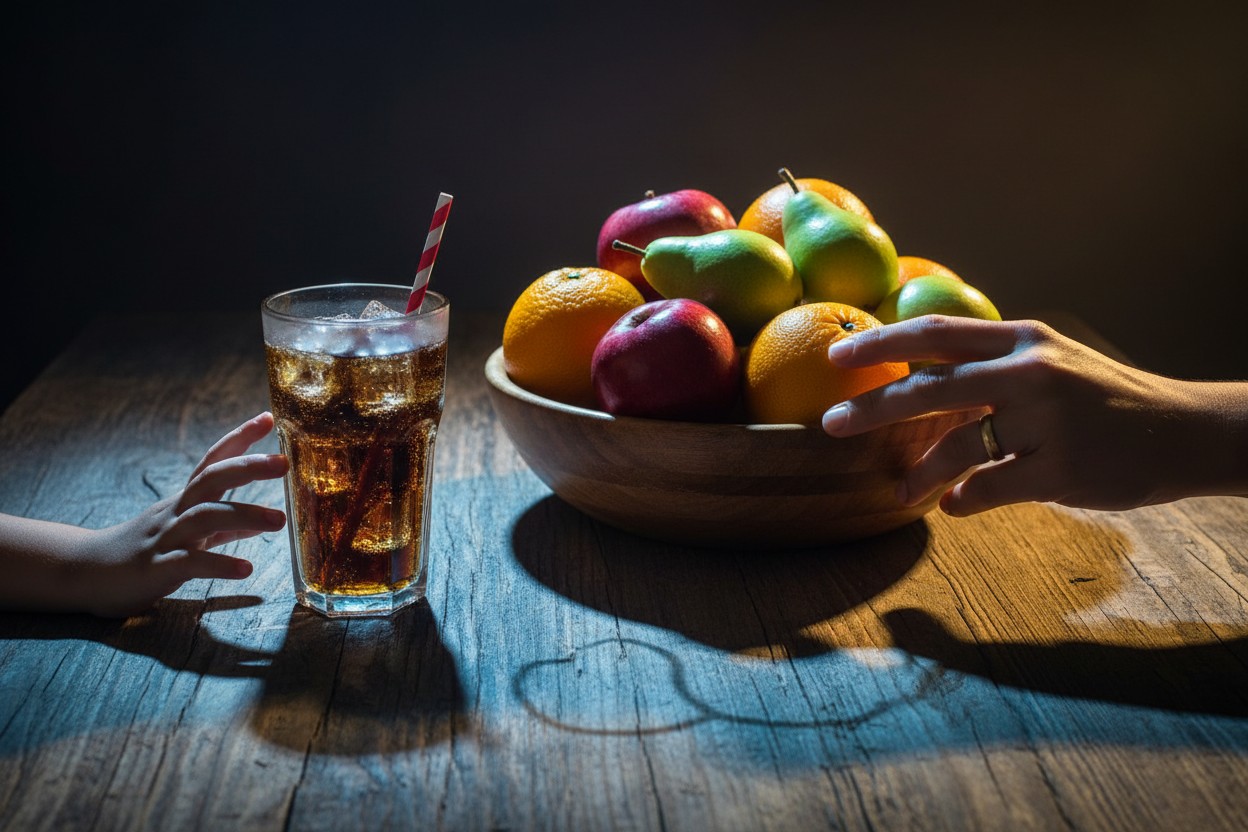
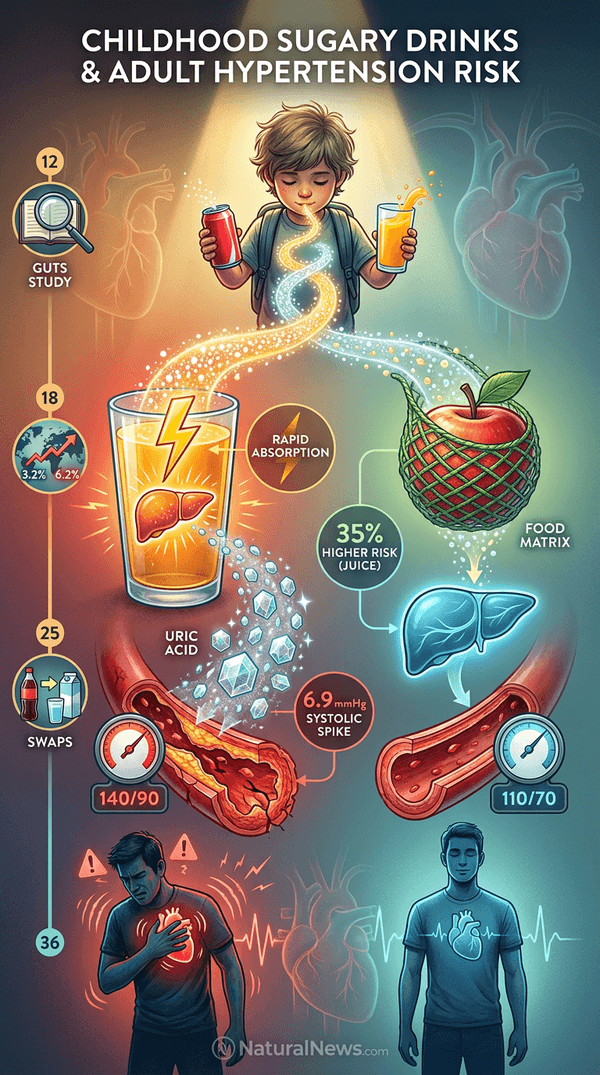
A new study following nearly 26,000 participants from childhood into adulthood found that regularly drinking sugar-sweetened beverages was linked to an elevated risk of developing high blood pressure decades later, according to the report. Fruit juice at high intake levels was associated with a 35 percent higher risk, while whole fruit consumption showed no such link, investigators said.
The findings come from the Growing Up Today Study (GUTS), a longitudinal cohort that tracked 25,749 individuals from a mean enrollment age of 12 years through 2021, when the average participant was 36 years old. The global rate of childhood high blood pressure nearly doubled between 2000 and 2020, rising from 3.2 percent to 6.2 percent and now affecting 114 million young people worldwide, according to a separate review [1]. Researchers stated that understanding which childhood beverages pose long-term cardiovascular risks is critical for prevention.
Study Design and Population
Researchers analyzed dietary data from two waves of the GUTS cohort. Participants provided information on their habitual diet through validated food frequency questionnaires administered every one to four years. The study accounted for overall diet quality, physical activity, and other lifestyle factors to isolate the effect of beverage intake, the authors explained.
Over up to 25 years of follow-up, 6.3 percent of participants reported a hypertension diagnosis. Children with the highest risks of developing heart disease are those who are sedentary and obese, with high blood pressure and high blood cholesterol, according to pediatric cardiovascular guidelines [2]. The study builds on evidence that early nutrition can influence blood pressure levels in adulthood, a finding noted in prior research on preterm infants [3].
Findings and the Role of the Food Matrix
Notably, total fructose intake alone was not associated with hypertension risk, indicating that the source of fructose matters more than the amount, the study authors stated. This pattern aligns with what researchers call the food matrix hypothesis: whole fruit contains fiber and a complex structure that slows fructose absorption, while fruit juice and sugar-sweetened beverages deliver rapidly absorbed sugar that may affect uric acid production and vascular function.
Previous research has shown that sugar intake over two months can spike systolic blood pressure by an average of 6.9 mmHg and diastolic blood pressure by 5.6 mmHg [4]. The study found that replacing one daily serving of a sugar-sweetened beverage with whole fruit was linked to a lower risk of hypertension, and swapping fruit juice for whole fruit was associated with a similar reduction. The concept that whole fruit offers protective effects absent in its juice is supported by nutrition textbooks, which recommend reducing intake of sugar-sweetened beverages and foods [5].
Practical Substitution Benefits
The study also modeled the benefit of substituting other beverages for sugar-sweetened options. Replacing a daily sugar-sweetened beverage with milk was linked to a lower hypertension risk, and with water to a modest reduction, according to the analysis. The researchers emphasized that water and milk are preferable to sports drinks and flavored beverages, which often contain added sugars.
Nutrition experts have long advised that children older than age 2 should transition to eating patterns that emphasize whole fruits, vegetables, and whole grains while limiting sugar-sweetened beverages and foods [6]. The study's lead author stated in the report, "The findings suggest that simple dietary swaps made in childhood could have measurable long-term benefits for blood pressure." This perspective is consistent with broader public health recommendations that target the reduction of sugary drink consumption to combat obesity and related chronic diseases [7].
Conclusion
The study adds to growing evidence that early-life beverage habits can shape cardiovascular health decades later, although the observational design does not prove causation. Researchers called for further studies and for public health guidance to emphasize whole fruit over juice and water over sugary drinks. The pattern consistently points to the importance of the food matrix, according to the report.
Current guidelines from the American Academy of Pediatrics encourage parents to offer nutritious snacks such as vegetables, fruits, low-fat dairy products, and whole grains, and to reduce the intake of sugar-sweetened beverages [8]. As the prevalence of obesity-related hypertension continues to rise among youth, dietary interventions remain a key target for prevention [9].
References
- NaturalNews.com. "Global childhood high blood pressure rates DOUBLE in two decades, driven by obesity crisis". November 13, 2025.
- Ellie Whitney and Sharon Rady Rolfes. "Understanding Nutrition Selected Chapters Thirteen Edition 2013".
- Isaias Dichi and Andrea Name Colado Simao. "Nutritional Intervention in Metabolic Syndrome".
- NaturalNews.com. "19 Foods proven to lower blood pressure". NaturalNews.com. December 08, 2023.
- Eleanor Noss Whitney. "UNDERSTANDING NUTRITION-DAPL".
- Whitney Eleanor Noss author. "Understanding nutrition".
- Mercola.com. "Big Sugar Tips Balance of Scale". Mercola.com. January 15, 2014.
- Smith Anne M 1955- author. "Wardlaws contemporary nutrition".
- Mercola.com. "11 Charts That Show Everything Wrong with Our". Mercola.com. February 24, 2014.
Explainer Infographic








Please contact us for more information.