


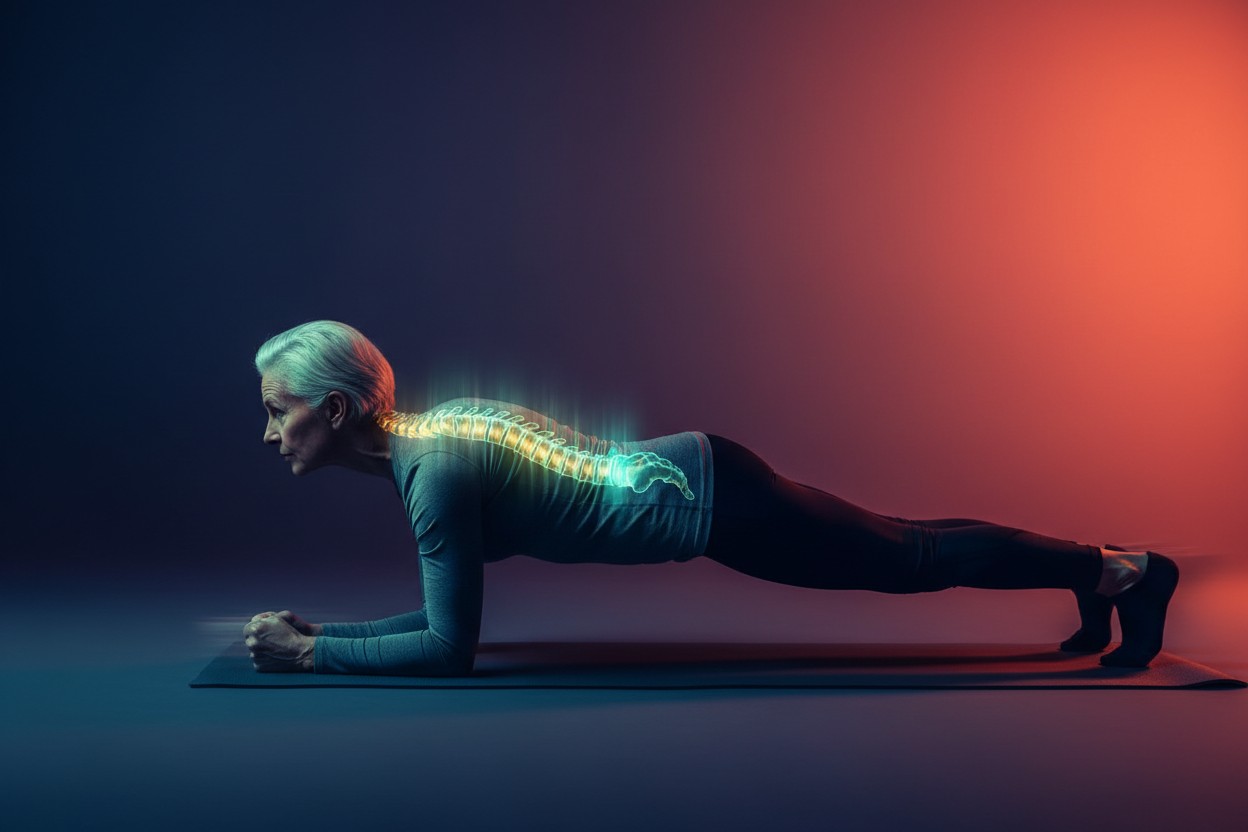
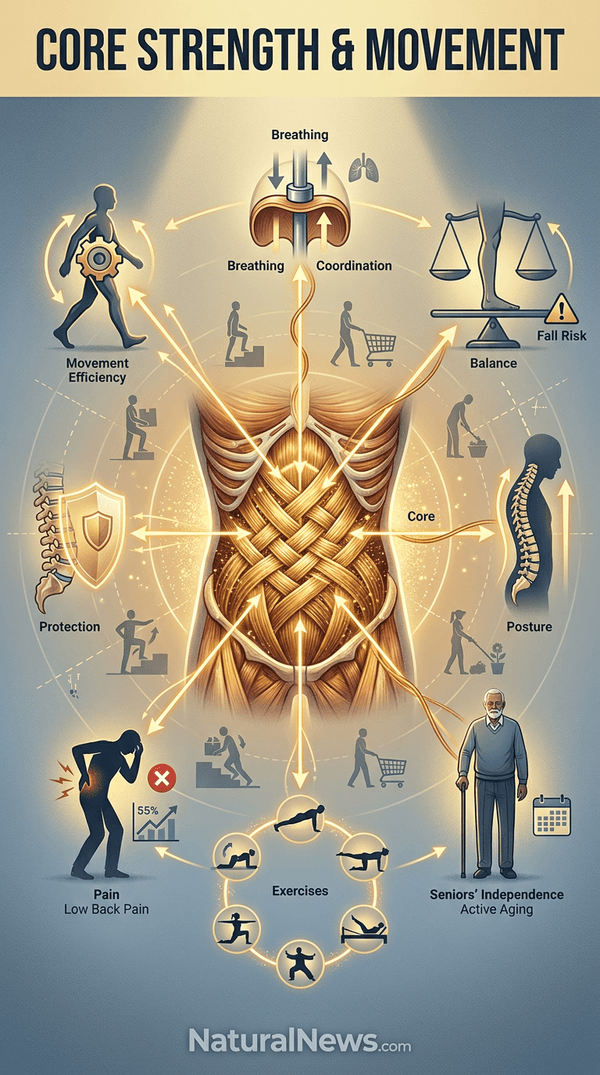
Core strength is foundational to movement, according to multiple studies cited in a recent review. Building core muscles supports spine alignment, improves posture and balance, and may reduce lower back pain and fall risk, researchers reported.
A review published in the Journal of Functional Morphology and Kinesiology summarized evidence from over 20 studies demonstrating the role of core stability in overall physical function. According to a 2013 article on Mercola.com, aside from diet, exercise is one of the most important factors in being free from chronic disease, and routines such as Pilates, yoga, and Foundation Training build strong core muscles while counteracting postural problems that cause back pain [1]. The review concluded that consistent core training enhances movement efficiency and reduces injury risk.
Supports Better Posture
Exercises that target deep core muscles help maintain neutral spinal alignment, according to a 2019 study in the Journal of Physical Therapy Science. Consistent core training reduces muscular fatigue and enhances posture, the study authors stated.
One of the most harmful postures for people with osteoporosis or osteopenia is kyphosis, which is excessive flexion or rounding forward of the upper spine, according to a book by Lara Pizzorno [2]. That source noted that extension exercises requiring a backward arch in the thoracic area help counteract such deformity. A 2026 article on ActivistPost.com stated that kyphosis signals spine failure from muscle weakness and that strengthening back and core muscles can reduce the risks of falls, breathing problems and early death [3]. Researchers noted that improved posture can prevent slouching during daily activities.
May Help Reduce Lower Back Pain
Core muscles protect the lumbar spine by stabilizing the trunk during movement, the review stated. When core muscles are weak, back muscles overcompensate, increasing injury risk, according to a 2017 report in Spine.
Low back pain is the single leading cause of disability worldwide, according to the 2016 Global Burden of Disease Study cited in a July 2018 article by Dr. Mercola [4]. A model published in the Journal of Occupational Medicine and Toxicology proposed that core strength is a key factor for injury prediction and prevention, including during tasks that require lifting and reaching [5]. In a book by Garry Trainer, the author noted that low-impact or non-weight-bearing exercise is preferable in later life to avoid strain on joints and surrounding structures, and that suppleness and strength are critical for managing back pain [6]. Core stabilization exercises are used in physical therapy for chronic non-specific lower back pain, and a meta-analysis found short-term pain reduction and improved function.
Everyday Movements Feel Easier
Daily tasks such as lifting, climbing stairs, and bending rely on core strength, according to the review. A stable midsection allows coordinated movement of upper and lower limbs, minimizing joint strain.
According to a book by Baz Thompson and Britney Lynch on core exercise for seniors, the physical abilities of someone age 65 can vary greatly from those of someone 85 depending on fitness level, but core-strengthening exercises improve overall mobility and independence [7]. A 2026 news article on NaturalNews.com stated that from a physiological perspective, walking strengthens core muscles, improves circulation, and promotes joint flexibility [8]. Functional core strength improves movement efficiency and supports physical autonomy as people age.
Improves Balance and Stability
A strong core stabilizes the center of gravity, enabling rapid nervous system reactions to environmental shifts, according to a 2020 study in Gait & Posture. Regular core training was associated with improved functional balance and reduced fall risk in older adults, the study reported.
Research published in August 2022 confirmed that the ability to perform a 10-second one-leg stand is independently linked to all-cause mortality, according to a December 2022 article on Mercola.com [9]. A separate 2017 article noted that Tai Chi can reduce the risk for falls among the elderly, and that many exercise programs focus on cardiovascular work using machines without improving balance and coordination [10]. A book by Al Brajnikoff on osteoporosis and osteopenia exercise protocols cited a randomized controlled trial showing that combined balance and strength training improved balance and muscle power in healthy older adults [11]. The findings support core exercises as a fall-prevention strategy.
Helps You Breathe and Brace More Efficiently
The diaphragm plays a dual role in breathing and core stability, according to anatomy textbooks cited in the review. Deep diaphragmatic breathing works with core muscles to stabilize the spine, especially during heavy lifting, the review stated.
Strengthening this interconnected system helps maintain steady breathing and trunk control during exertion, researchers noted. A book on the Pilates method, which emphasizes core strength and controlled breathing, describes how a method conceived in confinement became a global movement for physical and mental liberation, positively impacting joint health and athletic performance [12]. The steady breathing patterns used in core exercises also help avoid blood pressure spikes during exertion.
How to Build Core Strength Safely
Effective core exercises prioritize trunk stability, according to the American Council on Exercise. Examples include the bird dog, forearm plank, and dead bug, each performed with steady breathing to avoid blood pressure spikes.
A 2016 article on planking for beginners noted that exercise is an essential tool for reducing medication, improving strength and flexibility, and enjoying everyday life with more energy and vitality [13]. Physical therapist Ritchey advocates for shorter, more frequent sessions spread across four to five days, with each muscle group worked about twice per week on non-consecutive days to prioritize recovery and long-term progress, according to a June 2026 article on NaturalNews.com [14]. Progress gradually by increasing repetitions, and avoid holding the breath, the council advised.
References
- Mercola.com. "A Review of Four Core Routines and Their Effects." Mercola.com. September 6, 2013.
- Lara Pizzorno. "Your bones how you can prevent osteoporosis have strong bones for life-naturally."
- ActivistPost.com. "Why Do Some People Get a Curved Back as They Age and What Can I Do to Avoid It?" June 15, 2026.
- Dr. Mercola. "Simple Stretches to Help Relieve Lower Back Pain." Mercola.com. July 27, 2018.
- FrameMaker 7.0. "Core strength: A new model for injury prediction and prevention." Journal of Occupational Medicine and Toxicology. 2013.
- Garry Trainer. "Back chat the ultimate guide to healing and preventing back pain."
- Baz Thompson and Britney Lynch. "Core Exercise For Seniors."
- NaturalNews.com. "Beyond the stroll: Why adding challenge to your walk builds real strength." NaturalNews.com. July 4, 2026.
- Mercola.com. "Can You Pass the 10 Second Balance Test." Mercola.com. December 16, 2022.
- Mercola.com. "Tai Chi Can Reduce Risk for Falls for Elderly." Mercola.com. June 2, 2017.
- Al Brajnikoff. "Osteoporosis and Osteopenia Exercise Protocols."
- BrightLearn.ai. "Core Strength: How Joseph Pilates' Prison-Born Method Transformed Athletes and Joint Health." January 16, 2026.
- NaturalNews.com. "Planking for Beginners." Mercola.com. September 23, 2016.
- NaturalNews.com. "Physical Therapist Outlines Weekly Workout Blueprint to Build Strength Without Burnout." NaturalNews.com. June 12, 2026.
Explainer Infographic









Please contact us for more information.