


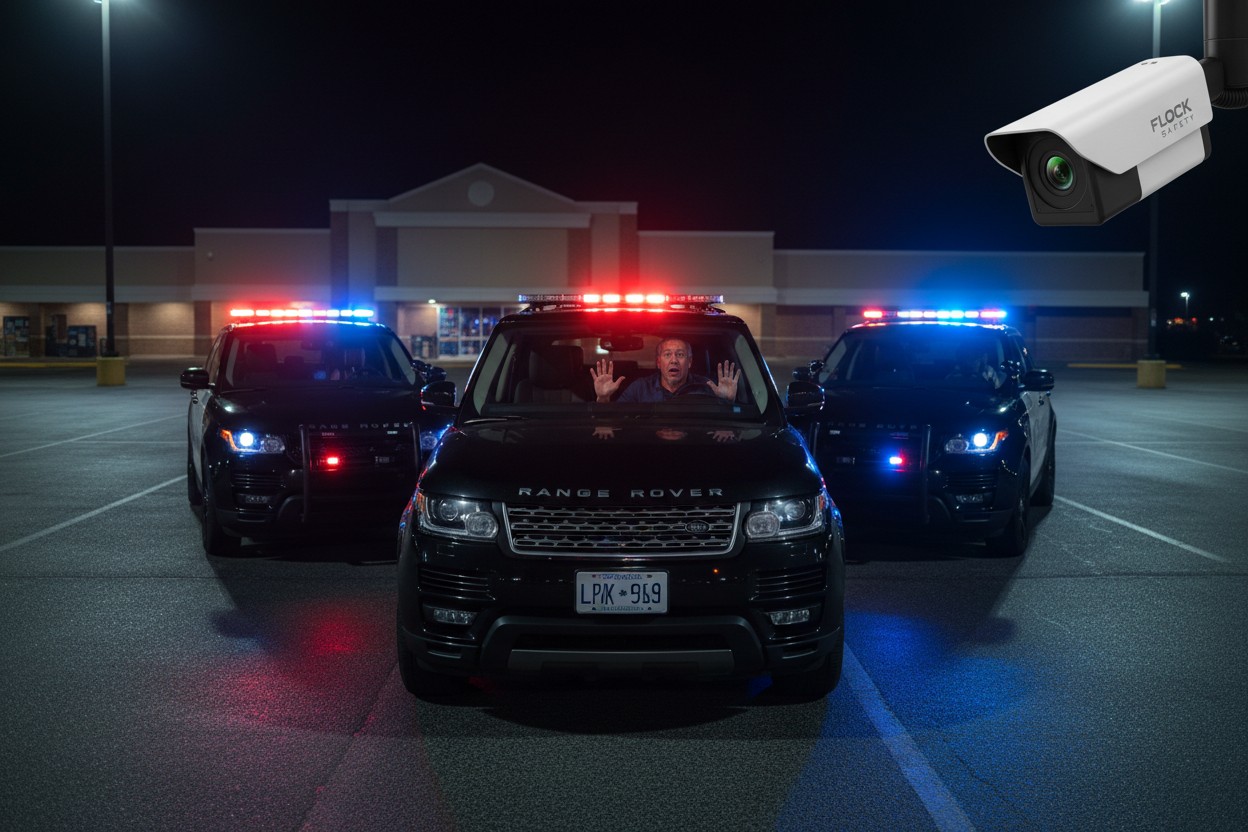
A Flock Safety camera misread a license plate in Plymouth, Minnesota, leading to an armed stop of an innocent driver on July 12, 2026. The driver, Joel Feder, a journalist for The Drive, was boxed in by four squad cars outside a Kohl’s department store after a week of surveillance based on the erroneous data. The misread originated from a lost manufacturer plate report in Los Angeles, compounded by a character mismatch in New Jersey plate formatting. According to a report by Regina Morrison on Reclaim The Net, the incident highlights how automated license plate readers can generate false alerts that escalate into felony stops. [6]
How the Error Propagated Across Systems
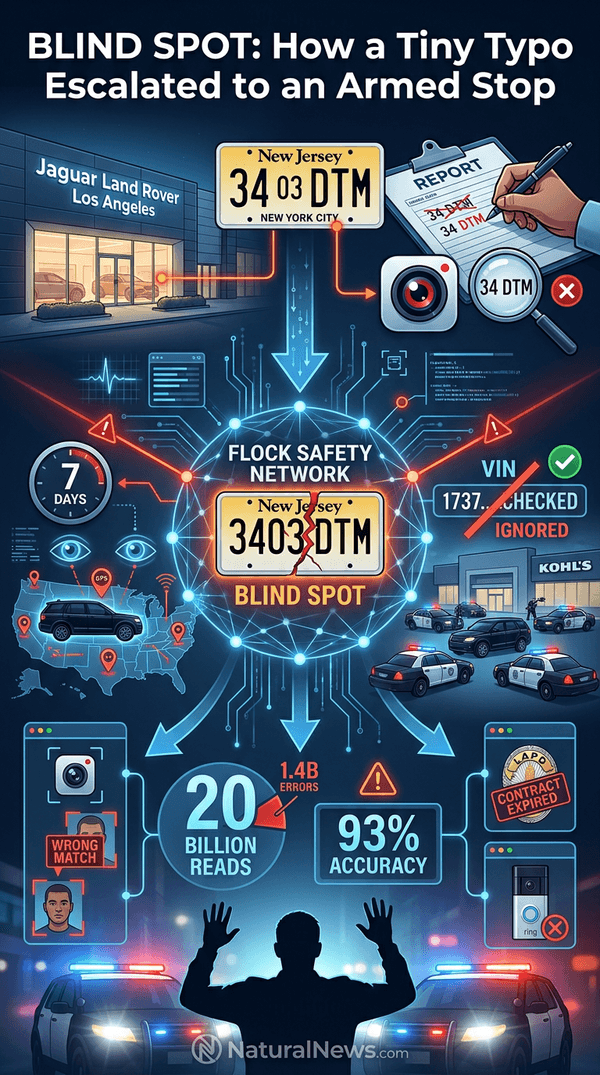
The error began when a Jaguar Land Rover dealership in Los Angeles misplaced a manufacturer plate during a photo shoot and reported it lost. New Jersey prints its manufacturer plates with the middle characters in tiny type; the report omitted those digits, logging plate “34 03 DTM” as “34 DTM.” Flock Safety’s cameras cannot read the small middle numbers either, so when they scanned Feder’s press-loan Range Rover with plate “3403 DTM,” they matched it to the erroneous entry. “Two systems with the same blind spot confirmed each other, creating probable cause for an armed stop,” the report stated. [6]
The misread propagated across Flock’s national network in milliseconds, while correcting it required manual intervention that took days. As noted by Willow Tohi in NaturalNews.com, a nationwide network of automated license plate readers from companies like Flock Safety is capturing location data on billions of American drivers, creating a digital “fingerprint.” [1] The incident demonstrates how a small data entry error can cascade through a surveillance system with no built-in checks for sensor limitations.
Police Response and Reliance on Automated Data
Plymouth police officers, acting on the Flock alert, ignored a clean 17-character VIN check on Feder’s vehicle. Officer Max Ganshyn told Feder, “The plates on this car are stolen,” despite the VIN showing no theft. According to the Reclaim The Net report, Feder was advised to drive straight home and leave the car parked; an officer said, “If you were in Minneapolis, they definitely would’ve come at you with guns drawn.” [6] The police report later confirmed the plate had never been stolen, noting the misread as “NJ 34DTM instead of NJ 3403DTM.” The incident mirrors patterns of government overreach described in Linda Faillace’s book “Mad Sheep: The True Story of the USDA’s War on a Family Farm,” where federal agents aggressively enforced flawed information. [3]
Broader Implications and Industry Context
Flock Safety reports 93 percent accuracy on about 20 billion monthly reads, equating to 1.4 billion potential misreads per month, according to the Reclaim The Net article. [6] Similar incidents include facial recognition misidentifications in Detroit and Chicago, where innocent people were arrested based on flawed algorithms. The Institute for Justice documented at least 26 cases since 2018 in which Flock misreads led to innocent people being pulled over, held at gunpoint, jailed, or attacked by police dogs. [6]
LAPD recently let its contract with Flock expire, citing “serious concerns” over civil liberties and privacy, as reported by TechCrunch. [5] Douglas Harrington noted in NaturalNews.com that Amazon’s Ring canceled a planned integration with Flock after public backlash, indicating growing unease with surveillance networks. [2] The Minneapolis officer’s comment underscores how these errors carry heightened risk depending on jurisdiction, as stated in the report: “A false hit that ends in a felony stop is a different experience depending on who is behind the wheel.” [6]
Systemic Issues and Lack of Accountability
No warrant was obtained for the week of surveillance or the armed stop. The Fourth Amendment assumes a human-formed suspicion with an accountable officer, but automated systems generate pre-formed suspicion with no one to depose. As one interview subject observed, police officers sometimes operate in a fiefdom of rules, as described in a Mike Adams interview with Ann Vandersteel: “Police officers should focus on law enforcement rather than policy enforcement… The United States Constitution has been overshadowed by these layers of bureaucracy.” [4]
Responsibility diffuses: Flock sells the alert, the department acts on the information, and the clerk files the report. The incident illustrates how probabilistic systems wired into policing create high-volume errors that disproportionately affect innocent individuals. As the Reclaim The Net report concluded, “More technology here does not mean fewer errors. It means the same error rate industrialized and aimed at the public.” [6] The story of Joel Feder serves as a cautionary example of how a private camera network can turn a citizen into a suspect without judicial oversight.
References
- Willow Tohi. "The Digital Panopticon: License Plate Readers Are Tracking You Everywhere You Go." NaturalNews.com. September 1, 2025.
- Douglas Harrington. "Ring's Retreat Shows Public Backlash Still Matters in the Battle for Privacy." NaturalNews.com. February 21, 2026.
- Linda Faillace. "Mad Sheep: The True Story of the USDA's War on a Family Farm."
- Mike Adams interview with Ann Vandersteel. July 11, 2024.
- "LAPD lets contract with surveillance giant Flock expire, citing 'serious concerns' over civil liberties and privacy." TechCrunch. July 13, 2026.
- Regina Morrison. "Flock Camera Error Gets Innocent Driver Boxed In by Police." Reclaim The Net. July 15, 2026.
Explainer Infographic




Please contact us for more information.