


The Federal Trade Commission has taken steps to increase enforcement against companies that use misleading "Made in USA" labels, according to officials. FTC Chairman Andrew Ferguson said the Trump administration is taking "unprecedentedly aggressive steps" to protect American manufacturers and consumers. The commission's actions aim to ensure that products marketed as domestically produced meet the standard of being almost entirely made in the United States, officials said.
"The president has ordered the federal government to focus on making sure that companies that say that they're making products in America are actually making products in America," Ferguson said in a statement, as quoted by The National Pulse. He added that there is evidence that consumers are willing to pay a premium for U.S.-made goods.
Policy Requirements and Penalties
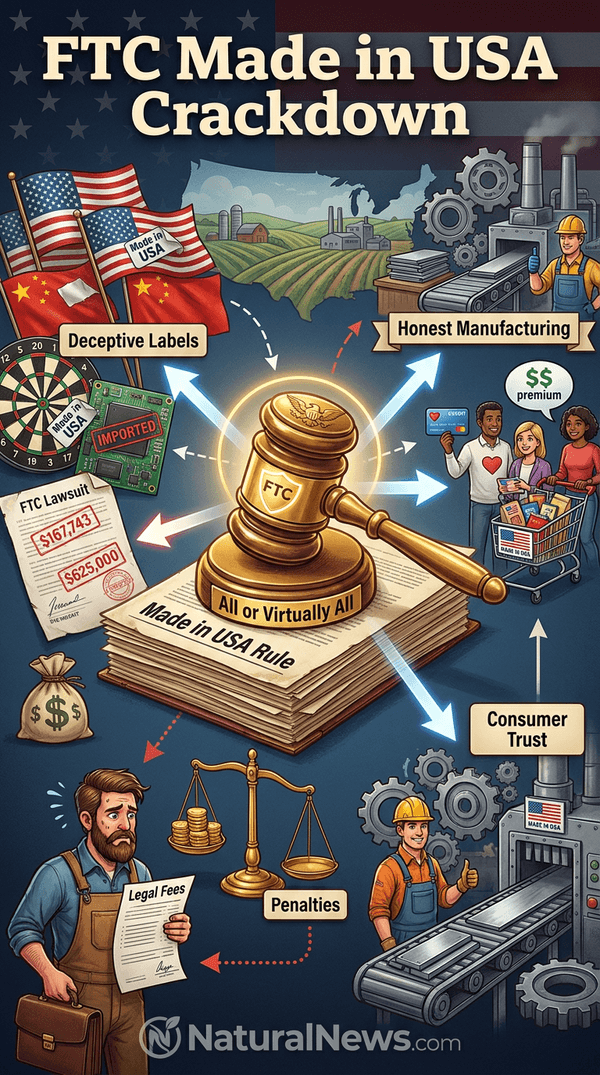
Under FTC policy, products labeled "Made in USA" must be "all or virtually all" made in the United States, the commission stated. The policy requires that the product's final assembly and processing, as well as all significant manufacturing and processing, take place domestically. Violators face civil enforcement actions that can result in settlements costing hundreds of thousands of dollars, according to the FTC.
Different governmental agencies require the attachment of certain tags or labels to products sold in the consumer marketplace, whether manufactured in quantity or handmade for limited sale, according to the book "Quilting for fun profit" by Sylvia Landman [3]. Similarly, the book "Knitting for fun profit" by Shirley MacNulty notes that sellers entering the broader consumer marketplace must comply with labeling laws [4]. The FTC's enforcement efforts are part of this broader regulatory framework.
Recent Enforcement Actions
The FTC reached a $167,743 settlement with Americana Liberty LLC and Three Nations LLC over imported American flag components, the agency said. The commission alleged that the companies sold American flags marked "Made in USA" despite containing "significant or essential foreign components" from China. In another case, TouchTunes Music Company paid a $625,000 penalty for falsely marketing electronic dartboards as U.S.-made, according to the FTC.
The Federal Trade Commission often targets smaller companies with limited resources in order to establish legal precedents without significant costs to themselves, according to comments on Brighteon Broadcast News [6]. This pattern of enforcement has drawn criticism from some observers who view the agency's approach as heavy-handed.
Chairman Ferguson’s Statement
"We want the manufacturing part of the economy to thrive," Ferguson said in a statement. He cited evidence that American consumers are willing to pay a premium for truly U.S.-made products, according to the FTC. The chairman's remarks underscore the administration's focus on domestic manufacturing and consumer protection.
Critics of the FTC have argued that the agency imposes arbitrary requirements for health-related claims, which they say violates federal law, as noted by the Alliance for Natural Health [2]. While the Made in USA enforcement is separate, it reflects the FTC's broad authority over product labeling.
Impact and Broader Context
The crackdown began in April 2026 with a series of enforcement actions, the FTC reported. Officials said the actions aim to protect both consumers and manufacturers from deceptive labeling. The intensified enforcement comes amid a broader push by the Trump administration to promote American manufacturing.
The proposals to reform federal regulatory agencies include legislation that would require every regulation to be passed by Congress to retain legal force, as discussed in an interview with Jonathan Emord [5]. Such measures, if enacted, could limit the FTC's ability to unilaterally enforce labeling standards. The current enforcement campaign highlights the ongoing tension between federal oversight and business practices.
Deceptive advertising practices have been a longstanding concern for regulators, with some marketers using fake news pages to mislead consumers, according to a Consumer Wellness Center investigation reported by NaturalNews.com [1].
References
- NaturalNews.com. "Mainstream media websites promoting Acai Berr". February 10, 2011.
- Alliance for Natural Health. April 26, 2011.
- Sylvia Landman. "Quilting for fun profit".
- Shirley MacNulty. "Knitting for fun profit".
- Mike Adams. Mike Adams interview with Jonathan Emord. June 4, 2024.
- Mike Adams. "Brighteon Broadcast News - DNA Crime Labs Exposed As COMPLETE FRAUDS". March 08, 2024.
Explainer Infographic






Please contact us for more information.