


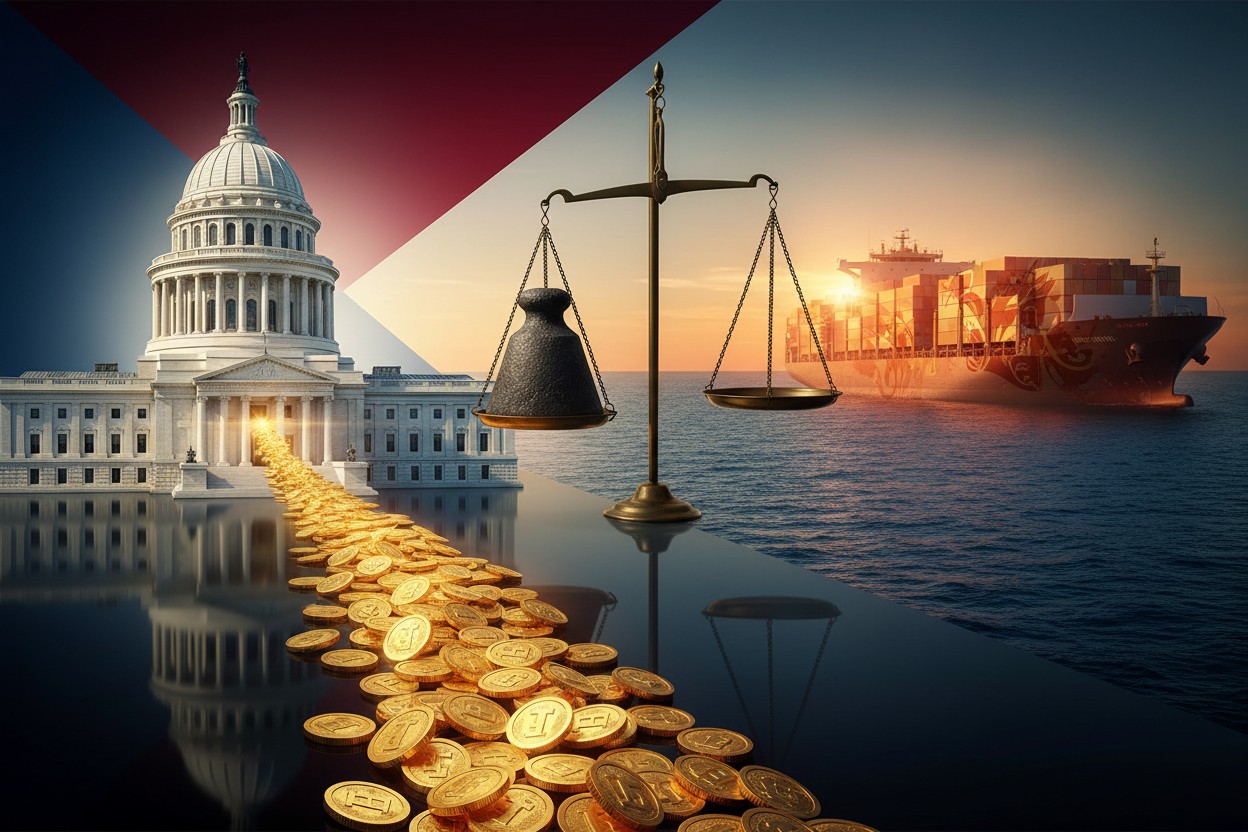
- The Trump administration has imposed new tariffs of 10% to 12.5% on 60 major trading partners starting July 24, 2026.
- The duties target nations accused of failing to ban imports made with forced labor, citing unfair competition with U.S. companies.
- China, Japan, South Korea and the EU face the higher 12.5% rate, while Britain and Mexico receive 10% due to partial compliance.
- The action follows the Supreme Court’s February 2026 ruling that struck down previous sweeping country-by-country tariffs as unlawful.
- The administration uses Section 301 of the Trade Act of 1974, a legal tool designed to combat foreign unfair trade practices.
The United States on Friday imposed new import duties of up to 12.5% on goods from 60 trading partners, including China, Japan and the European Union, accusing them of failing to enforce bans on forced-labor imports. The action, directed by President Donald Trump and announced by U.S. Trade Representative Jamieson Greer, takes effect July 24, 2026, targeting economies that account for approximately 99% of U.S. imports.
The new tariffs represent the administration’s latest effort to reshape global trade after the Supreme Court in February 2026 struck down Trump’s country-by-country “reciprocal” duties. By invoking Section 301 of the Trade Act of 1974, the White House aims to build a legally durable system that pressures nations to adopt U.S.-style forced-labor import restrictions.
A two-tiered tariff system based on compliance
The duties apply at two rates: 12.5% for most targeted economies and 10% for nations the administration deems to have taken meaningful legal steps against forced-labor imports. Among those receiving the lower rate are Britain, Indonesia, Malaysia, Mexico and 16 other partners that have either adopted or committed to adopting import bans.
The higher 12.5% rate applies to China, Japan, South Korea, Brazil and approximately 40 other nations. Japan and South Korea received an exemption for goods already subject to tariffs of 12.5% or higher, a special treatment not extended to China. For Chinese goods, the new 12.5% duty is added on top of existing import taxes, reflecting ongoing trade tensions between Washington and Beijing.
Exemptions and sector-specific considerations
The new tariffs do not apply to imports already covered by sector-specific duties levied on national security grounds since Trump’s return to office in January 2025, including automobiles and steel products. Essential goods such as food items, fertilizers and energy products are also exempt from the additional charges.
The administration indicated it may consider a rule allowing certain textiles to enter at reduced rates if countries import equivalent quantities of American textiles, reflecting a broader effort to balance trade flows.
Legal foundations and historical precedent
The forced-labor tariffs follow the administration’s use of Section 122 of the Trade Act of 1974, which imposed a temporary 10% global tariff lasting 150 days. That provision, which addresses balance-of-payments deficits, expired Friday and was replaced by the Section 301 measures.
Section 301, a favored tool of Trump during his first term, allows the government to investigate and retaliate against foreign unfair trade practices. The administration launched parallel investigations in March into “structural excess capacity” in 16 economies, signaling further tariff actions may follow.
A century-old principle revived
The forced-labor import ban cited by the administration has been U.S. law for nearly a century, though enforcement has varied widely among trading partners. The Trump administration argues that decades of diplomatic efforts have failed to eliminate forced labor from global supply chains, creating an uneven playing field for American manufacturers.
U.S. Trade Representative Greer stated that the administration will no longer tolerate a system where foreign firms reduce production costs through forced labor while U.S. companies comply with import bans. The action underscores Trump’s broader economic strategy of using tariffs to re-shore manufacturing and protect American workers from what he views as predatory trade practices.
A test of global trade resilience
The forced-labor tariffs represent both a continuation and refinement of Trump’s trade agenda following judicial setbacks. By grounding the new duties in long-standing trade law and linking them to human rights concerns, the administration seeks to build political and legal legitimacy for protectionist measures that critics warn could trigger retaliation from major trading partners.
With China receiving the highest duties and limited exemptions, the potential for escalating trade conflict remains high. The durability of this tariff system will depend on whether other nations respond with cooperation or countermeasures—and whether the legal framework withstands further court challenges. For the administration, the stakes are clear: a commitment to free trade must be balanced with a determination to hold global partners accountable for practices that undermine American industry and human dignity.
Sources for this article include:







Please contact us for more information.