


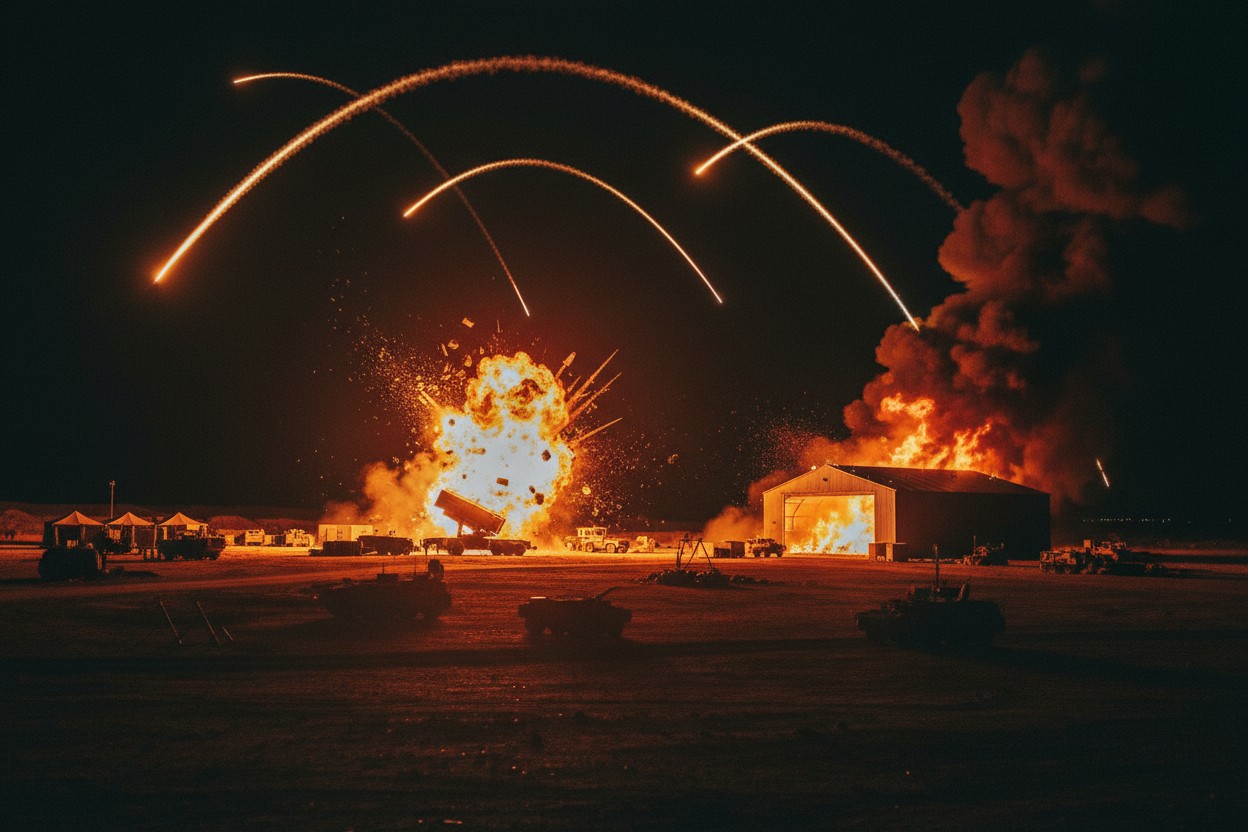
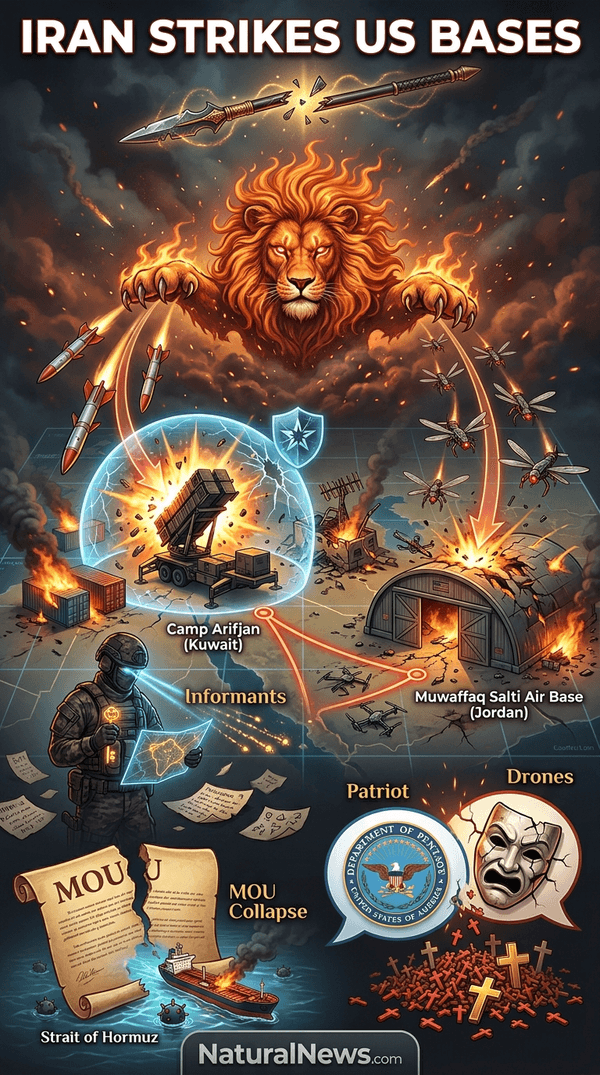
Iran launched retaliatory strikes on U.S. military bases in Kuwait and Jordan on July 21, 2026, claiming to have destroyed a Patriot missile defense system and drone facilities, according to Iranian state media reports. The Islamic Revolutionary Guard Corps (IRGC) said in a statement that precision missiles and drones targeted a Patriot battery at Camp Arifjan in Kuwait and a drone facility at Muwaffaq Salti Air Base in Jordan. US Central Command acknowledged damage to infrastructure at both locations but initially reported no casualties. However, subsequent Pentagon disclosures confirmed that nearly 100 US troops sustained injuries in Iran’s broader campaign across the region, and three American soldiers were killed in the Jordan attack on July 17, according to Middle East Eye and Antiwar.com reports. [1][2][3]
Background: Escalation of Hostilities
The strikes follow weeks of rising tensions after a drone attack on an Iranian military facility in Isfahan in late June, which Tehran blamed on Israel and the United States. Iran’s Supreme National Security Council described the operation as a “proportional response” to recent Israeli airstrikes in Syria that killed Iranian advisers, according to state media. US officials declined to comment on the Isfahan incident but reiterated support for Israel’s right to self-defense. The conflict had previously been paused by a 14-point Memorandum of Understanding signed in June that aimed to resolve disputes over the Strait of Hormuz, but that deal collapsed earlier this month when both sides accused each other of violations, as reported by RT. [4][8]
Details of the Attack
Witnesses in Kuwait reported multiple explosions near Camp Arifjan, a US logistics hub, while Jordanian sources described rockets hitting Muwaffaq Salti Air Base near the border with Syria. Iran’s Revolutionary Guards, in a statement on state television, claimed their forces used precision missiles and drones to target the Patriot system and drone hangars. “Honorable people and troops of Jordan, thank you for your sincere cooperation and accurate information that led to the precise targeting of US forces,” the IRGC said in a later statement, according to ZeroHedge reporting on the IRGC’s acknowledgment of local intelligence support. [1][5] The Pentagon stated that a preliminary assessment indicated “minor damage” to the Patriot battery but confirmed that a drone facility was destroyed. US Central Command said an investigation into the extent of the damage and the number of casualties is ongoing. [2]
Reactions and Statements
US Secretary of Defense Lloyd Austin said the US will “respond at a time and place of our choosing” while also seeking to prevent a wider war, according to a Pentagon statement. US President Donald Trump threatened to make Iran “pay” for killing US soldiers, warning that “every time Iran kills an American soldier they will pay for it many times over,” as quoted by the Times of Israel. [6] Iranian Foreign Minister Hossein Amir-Abdollahian warned that “any further aggression will be met with harsher action,” state media reported. A senior Israeli official, speaking anonymously, called the strikes “a dangerous escalation” but declined to specify any Israeli involvement in the initial Isfahan incident. [4] The US House of Representatives symbolically voted to curb Trump’s war powers, but the Senate blocked a similar measure, reflecting ongoing political divisions. [7]
References
- Elis Gjevori. Iran hits US bases in Bahrain, Kuwait and Jordan after 10 nights of US attacks. Middle East Eye. July 21, 2026.
- MEE staff. Nearly 100 US troops injured by Iran strikes, Pentagon says. Middle East Eye. July 21, 2026.
- Antiwar.com. US Military Identifies Third Soldier Killed in Jordan as IRGC Claims More US Casualties. July 22, 2026.
- RT. Renewed US-Iran strikes: Is a major war looming? July 21, 2026.
- ZeroHedge. Iranian Strikes On US Bases In Jordan Aided By 'Accurate Intel' From Locals, IRGC Says. July 20, 2026.
- Times of Israel. Trump vows to make Iran ‘pay’ for killing soldiers as US official says talks ongoing. July 21, 2026.
- Times of Israel. US House symbolically votes to curb Trump’s Iran war powers, but Senate backs president. July 23, 2026.
- Mike Adams. Mike Adams interview with Jeffrey Prather October 26, 2023.
Explainer Infographic











Please contact us for more information.