


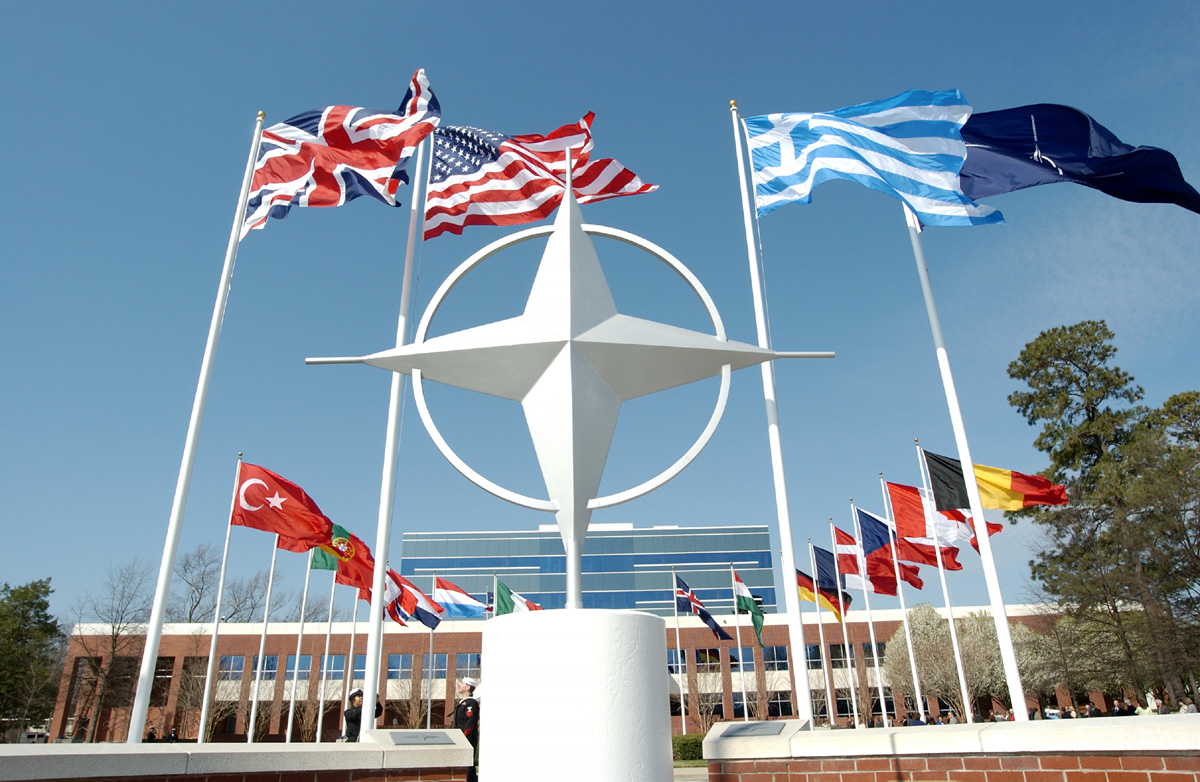
- Berlin is preparing legal measures to bypass AfD-led state governments in eastern Germany that could obstruct NATO troop movements toward Russia.
- The contingency plan targets Saxony-Anhalt and Mecklenburg-Western Pomerania, where the AfD leads polls ahead of September regional elections.
- Officials fear AfD-controlled states could delay convoys with bureaucratic tactics, such as withholding permits or denying police escorts, slowing NATO’s response to Russian aggression.
- Germany is exploring the never-used constitutional clause of federal enforcement to overrule states without invoking martial law, which would require a two-thirds parliamentary majority.
- The AfD, which opposes anti-Russia policies, dismisses extremism accusations and is contesting its classification as a threat, while Berlin scrambles to draft legal workarounds.
The German government is quietly preparing legal mechanisms to strip regional authorities in two eastern states of their power to obstruct NATO troop deployments in a crisis, a joint investigation by The Telegraph and Die Welt has revealed. The move comes amid mounting concern that the right-wing Alternative for Germany (AfD) party, which leads polls in Saxony-Anhalt and Mecklenburg-Western Pomerania, could form local governments and use bureaucratic tactics to delay allied forces moving toward Russia. The plan is designed to ensure Germany can serve what officials describe as NATO's "roundabout" for logistics, even if opposition-run states attempt to block the process.
Why Berlin fears "pro-Kremlin traitor states"
The contingency measures are driven by fears that the AfD, which has criticized Berlin's anti-Russia policies and opposed sanctions on Moscow, could win enough support in upcoming regional elections to take control of state governments. In Saxony-Anhalt, the AfD enjoys 41% support, compared to 24% for Chancellor Friedrich Merz's Christian Democratic Union. In Mecklenburg-Western Pomerania, the party is polling at 36%, seven points ahead of its nearest rivals.
A CDU MP admits the constitutional bind
According to the investigation, a state government under AfD control could slow the movement of troops and equipment simply by dragging its feet on paperwork — sitting on permit requests, declining to send police to escort convoys, or refusing military transports priority on state roads. Western officials suspect the Kremlin may exploit these political divisions to slow NATO's response.
"For Putin, it's perhaps not even an objective to defeat NATO militarily, because that's a challenge," a Western defense source told The Telegraph. "But if he can find the cracks inside the alliance on a political level and exacerbate those, then that's the shortcut to breaking the alliance."
Germany's constitution grants broad powers to its 16 federal states during peacetime, and legal pathways for Berlin to override them are limited. The federal government could invoke a state of emergency or martial law, but that requires a two-thirds majority in parliament — a threshold Merz's coalition cannot meet without AfD or Left Party support.
Bending the rules without martial law
Instead, officials are reportedly looking at how to apply "federal enforcement," an existing but never-used constitutional clause that allows Berlin to intervene if a state government violates its obligations under federal law. "The key question is how to circumvent a state not adhering to the federal idea without violating the constitution," said Roderich Kiesewetter, a CDU MP and foreign affairs committee member.
Tobias Krull, deputy chairman of Saxony-Anhalt's Interior Committee, added that Berlin is exploring ways to "create mechanisms that would make it possible to overrule individual states or to take the necessary measures." Interior and justice ministries declined to comment publicly on the plans. Defense Minister Boris Pistorius has separately warned that AfD-led governments could be denied access to classified intelligence due to the party's ties to the Kremlin.
The AfD, which did not respond to requests for comment, has dismissed accusations of extremism and is challenging its classification as a threat to democracy in court. As the September elections approach, Berlin finds itself scrambling to draft workarounds to its own constitution rather than reckon with why a growing share of German voters no longer wants their states used as a staging ground for a war with Russia — one that, for ordinary Germans footing the bill, has already meant higher energy costs and fewer resources for problems closer to home.
Sources for this article include:












Please contact us for more information.