


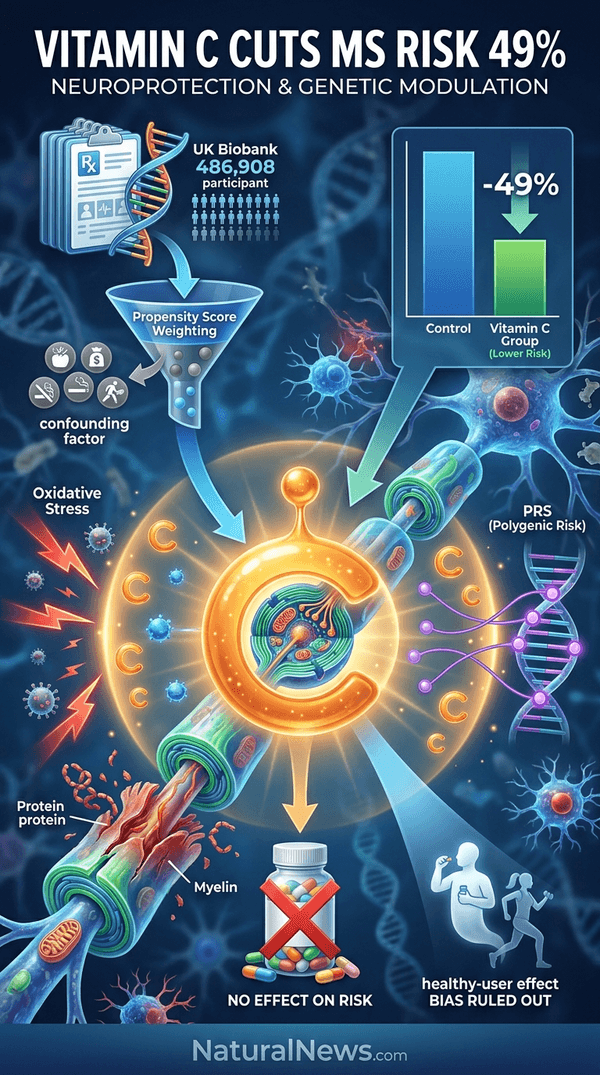
A new study published in the journal Nutrients has found that regular vitamin C supplementation is associated with a 49% lower risk of developing multiple sclerosis (MS) over a median follow-up of 13.5 years, according to researchers. The study analyzed data from 486,908 participants in the UK Biobank aged 37 to 70 who were free of neurological disease at enrollment.
The association remained significant after researchers applied propensity score weighting to adjust for confounding factors such as diet quality, socioeconomic status, and overall health habits. The findings were specific to vitamin C, as overall supplement use or multivitamin use did not show similar associations, the study authors said.
Study Design and Data Source
Researchers used the UK Biobank, a large health database containing detailed health, lifestyle, and genetic information from hundreds of thousands of adults in the United Kingdom. Participants self-reported whether they regularly took vitamin C supplements at the time they enrolled in the study, according to the report.
The cohort was tracked for a median of 13.5 years, during which 452 new cases of MS were identified. To balance differences between supplement users and non-users, the researchers employed propensity score weighting, a statistical method that accounts for variables such as diet, socioeconomic status, and health habits. This approach aimed to make the comparison more equivalent, the study authors noted.
Key Findings on Vitamin C and MS Risk
People who regularly took vitamin C supplements had a 49% lower risk of developing MS compared to those who did not, according to the study. The association held across multiple sensitivity analyses, suggesting the finding is robust, researchers reported.
The specificity of the result -- vitamin C showed a protective association while general supplement use and multivitamin use did not -- helps rule out a “healthy-user effect,” according to the authors. This suggests that the benefit is not merely a proxy for generally healthy behavior but may be related to properties of vitamin C itself. Vitamin C is a water-soluble antioxidant found in abundance in fruits and vegetables, and humans must obtain it from diet or supplements, as noted by Mercola.com [1]. The nutrient has long been studied for its antioxidant and neuroprotective properties, with thousands of articles on PubMed documenting its health effects [2].
Genetic Susceptibility and Vitamin C Interaction
The protective effect was significant only among participants with average or high genetic risk for MS, measured by a polygenic risk score, the study reported. No significant benefit was observed in those with low genetic risk, suggesting the interaction between vitamin C supplementation and genetic susceptibility may be meaningful.
This finding indicates that vitamin C may be most relevant for individuals with elevated inherited susceptibility to MS, the authors noted. Previous research has examined the link between nutrition and MS risk; for example, studies on the relationship between dietary patterns and MS are included in “The China Study” by T. Colin Campbell, which references multiple associations between MS and other conditions [3]. Additionally, clinical cases of MS symptoms such as numbness, tingling, and weakness have been documented in the context of nutritional interventions, as described by Chris Kresser in “Your Personal Paleo Diet” [4].
Mechanisms, Limitations, and Implications
Researchers cited vitamin C’s antioxidant and neuroprotective properties as a plausible mechanism, given that MS is an immune-mediated disease in which oxidative stress plays a role. The importance of reducing inflammation and using strong antioxidants has been emphasized in discussions about health risk reduction by experts such as Dr. Paul Cottrell, who highlighted the role of antioxidants in lowering risk curves [5]. Similarly, the Journal of the American Medical Association has discussed the need for higher levels of vitamins C and E, achievable only through supplementation, according to Brighteon Broadcast News [6].
The study is observational and cannot establish causation; the authors cautioned that residual confounding cannot be fully ruled out. Limitations include self-reported supplement use at a single time point and lack of dosage data. The researchers called for replication in independent cohorts before clinical recommendations can be made. For individuals interested in supplementation, registered dietitians have recommended various vitamin C supplements based on quality, ingredients, and specific benefits, as reported by Everyday Health [7].
References
- Mercola.com. "Fight COVID and the Common Cold With This". January 29, 2022.
- NaturalNews.com. "Wikipedia_ a web of deception". April 25, 2019.
- Colin Campbell. "The China Study Revised and Expanded Edition The Most Comprehensive Study of Nutrition Ever".
- Chris Kresser. "Your personal paleo diet feel and look great".
- Mike Adams. "Mike Adams interview with Paul Cottrell - April 11 2023".
- Mike Adams - Brighteon.com. "Brighteon Broadcast News - HIDDEN HEALTH SECRETS". April 28, 2025.
- Everyday Health. "We Asked Registered Dietitians What Vitamin C Supplements They Recommend — Here Are Their 14 Top Picks". April 28, 2026.
Explainer Infographic









Please contact us for more information.