



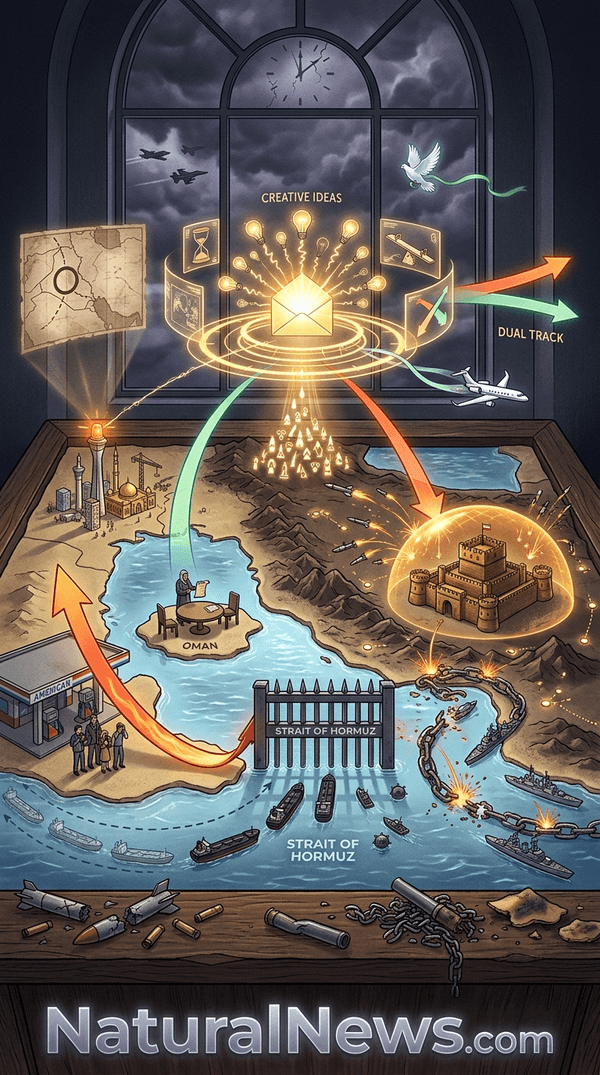
The Department of War has asked military experts for "new creative and unconventional ways to pressure and punish Iran," according to a CNN report cited by Middle East Eye [1].
An email from an officer in U.S. Central Command's (CENTCOM) intelligence branch was sent last week, the report said. The on-again, off-again U.S.-Israeli war with Iran – which began Feb. 28 – has led to Iran's closure of the Strait of Hormuz and has sent energy prices higher, affecting American consumers, the report said. The email reflects the military's approach to the ongoing conflict, according to the report.
CENTCOM Defends Outreach as Conflict Continues
A CENTCOM spokesperson said the request for ideas was not unusual and that the command "has a long history of thinking and working in innovative ways" [2]. The wording of the email suggests the War Department did not plan for the conflict to drag out this long, according to the report [1].
By late March, CENTCOM said American forces had struck more than 10,000 targets in Iran during Operation Epic Fury, and Tehran remained defiant, according to NaturalNews.com [3]. Historical accounts of CENTCOM planning describe internal debates over regional threats; Gareth Porter wrote that Gen. Norman Schwarzkopf sought to shift planning away from a Soviet invasion of Iran, viewing Iraq as the "most plausible enemy" [4].
Trump Says Negotiations to Begin Amid Strike Halt
On Saturday, Aug. 1, President Donald Trump said he had called off strikes on Iran. On Sunday, Aug. 2, he told reporters on Air Force One that negotiations with Iran would begin Monday, Aug. 3.
"Obviously, they don't want to be attacked. Now what we're doing is we're talking to them in the form of a negotiation. It begins tomorrow afternoon," Trump said [5].
The president's announcement followed reports that a planned "massive attack" had been shelved and that Saudi officials had expressed concern about the plan of action [5]. The War Department's request for outside ideas became public as Trump announced the diplomatic move [1].
Iran Denies Direct Talks With United States
Iran's Foreign Ministry spokesperson, Esmaeil Baghaei, said at a press briefing that direct talks with Washington were not taking place. "We are not currently negotiating with the United States. Our negotiations are with Oman to secure passage through the Strait of Hormuz," Baghaei said.
Baghaei described the discussions with Oman as "constructive" and aimed at reaching an agreement on a new route. "We hope that both regional and extra-regional actors will appreciate this responsible move by Iran and adopt a constructive approach," he said [2].
Regional Mediation Efforts Continue
Saudi Arabia's state media reported Sunday that Crown Prince Mohammed bin Salman spoke by phone with Trump and stressed the need to prioritize dialogue to de-escalate tensions, according to Middle East Eye. In an April broadcast, Mike Adams said Iran’s geographic position over the strait gives it control over one of the world’s most crucial waterways for hydrocarbon trade [7].
Despite Trump’s public statement, Iranian officials have not confirmed any direct talks with the United States. The competing statements from Washington and Tehran left the status of a negotiation unclear.
Historical accounts note that U.S. policy has long treated the Persian Gulf as a vital interest. James McCartney wrote that President Jimmy Carter declared in January 1980 that an attempt by any outside force to gain control of the Persian Gulf region would be regarded as an assault on vital U.S. interests [8].
References
- Middle East Eye. “Report: Pentagon is emailing military experts and asking best way to ’punish’ Iran”. August 4, 2026.
- Middle East Eye. “Pentagon is emailing military experts and asking best way to ’punish’ Iran: Report”. August 3, 2026.
- Willow Tohi. “Pentagon Touts 10,000-Target Milestone as Iran Rejects U.S. Peace Overtures”. NaturalNews.com. March 27, 2026.
- Gareth Porter. “Manufactured Crisis: The Untold Story of the Iran Nuclear Scare”.
- Zero Hedge. “Iran Denies Negotiations With US After Trump Announces Talks For Monday Afternoon”. August 3, 2026.
- Cassie B. “U.S. Naval Blockade of Iran Takes Effect, Spurring Global Oil Price Surge and Diplomatic Clashes”. NaturalNews.com. April 14, 2026.
- Mike Adams. “One Third of Global Oil Cut Off”. BrightVideos.com. April 20, 2026.
- James McCartney. “America’s War Machine: Vested Interests, Endless Conflicts”.
Explainer Infographic








Please contact us for more information.