


Toddler Foods at Texas Stores Largely Ultra-Processed, Audit Finds
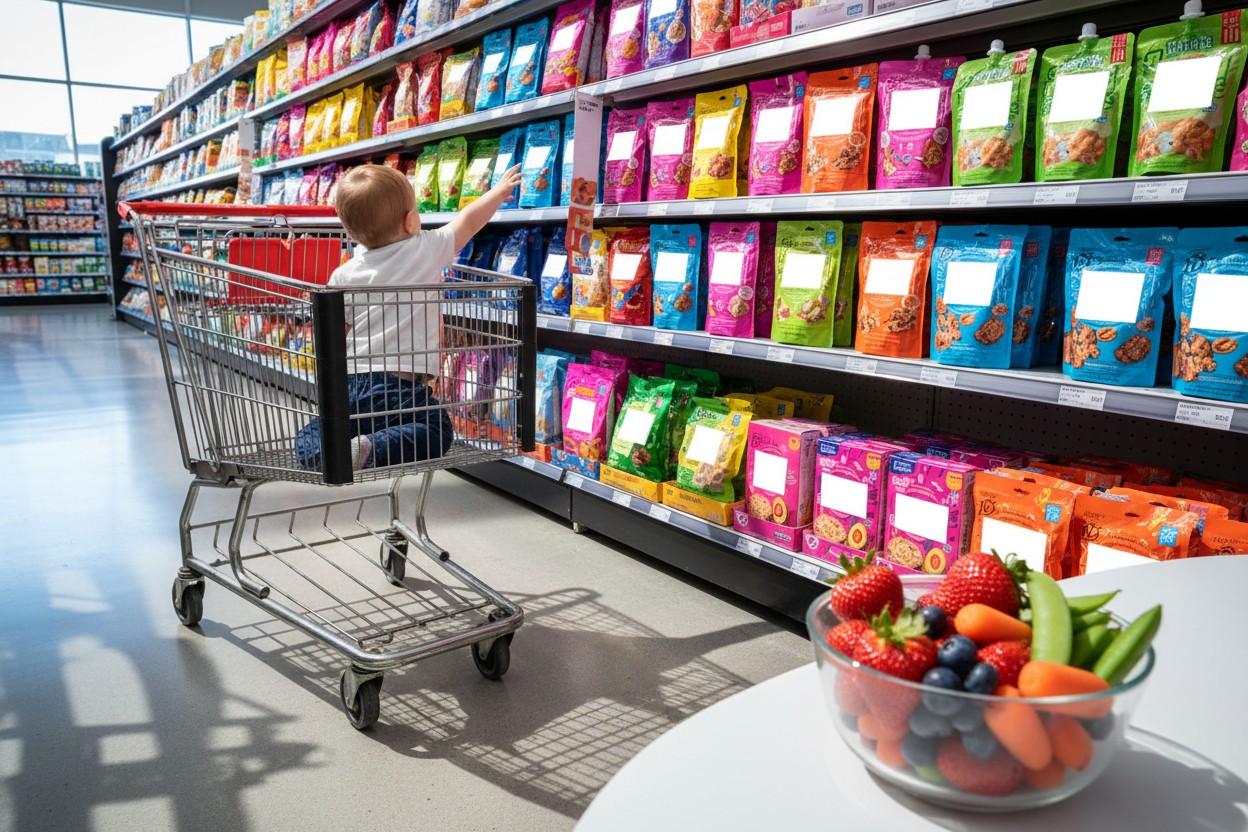
An audit of 2,783 toddler food products at 21 grocery stores in Austin, Texas, found that 81% were ultra-processed, according to findings presented July 26 at NUTRITION 2026 in National Harbor, Maryland. The study, led by Erin A. Hudson of The University of Texas at Austin, reported that 49% of products failed at least one World Health Organization nutrient standard for foods for children aged 6-36 months.
Researchers photographed baby and toddler food sections and assessed the products using the Nova classification system, which categorizes foods according to the extent and purpose of processing. Infant formula, beverages, and purees commonly offered as first foods were excluded from the analysis. A separate analysis published in the journal Nutrients found that 71% of infant and toddler foods, drinks, and snacks sold in the U.S. fall into the ultra-processed category [1]. Under the Nova system, Group 1 consists of whole foods such as fruits, vegetables, nuts, fresh meat, and plain yogurt, according to Bee Wilson in The Way We Eat Now [2].
Nearly Half of Products Miss WHO Nutrient Benchmarks
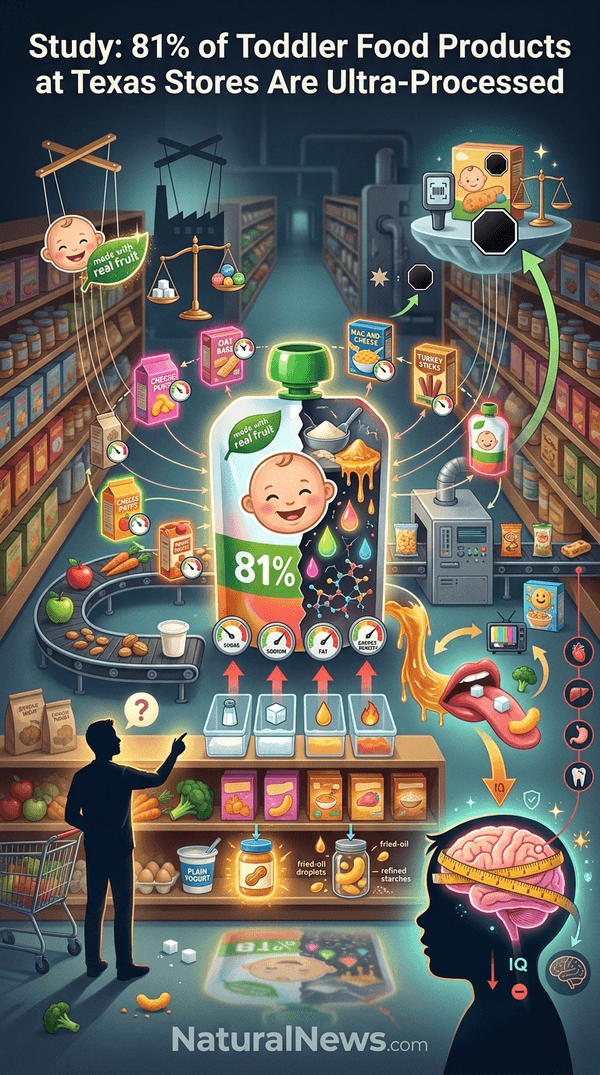
Using the WHO Nutrition and Promotion Profile Model, researchers found that 17% of products exceeded recommended sugar levels, 25% surpassed sodium limits, 11% fell short of fat standards, and 12% missed energy density recommendations. Products flagged in the audit included fruit pouches and oat bars for sugar, mac and cheese and turkey sticks for sodium and fat, and cheese puffs and peanut butter puffs for calories.
According to the research team, ultra-processed toddler foods were significantly more likely to contain high amounts of sugar than less-processed alternatives, without offering comparable nutritional benefits. Other recent studies have reported associations with developmental measures. One study found that high ultra-processed food intake at age two reduced IQ by an average of 2 points by age seven [3]. A separate study from Children's Hospital Los Angeles found that toddlers who eat more ultra-processed food tended to have smaller volumes in several key brain regions by age 6 [4].
Researchers Cite Regulatory Gaps as FDA Reviews Labeling Rules
The findings come as the U.S. Food and Drug Administration considers updated rules for front-of-package nutrition labels, healthy claims, and marketing aimed at children, the report stated. Unlike some countries, the United States does not require warning labels on foods with high levels of sugar, sodium, or calories.
“Many parents may assume that products sold on the baby/toddler food aisles of their grocery stores have to meet certain nutrient standards. Our findings highlight that half of the toddler foods available in local grocery stores do not,” Hudson said. Food labels also do not convey the degree of processing, according to Robert Lustig, author of Metabolical, who wrote, “The problem is that the current food label can't tell you what's been adulterated or subtracted” [5]. Hudson called for warning labels on products exceeding nutrient thresholds to help parents navigate the toddler food environment and encourage manufacturers to reformulate products.
Early Diet Patterns and Product Comparisons
Researchers noted that toddler eating patterns can shape long-term flavor preferences and dietary habits, with excessive sugar consumption a particular concern for young children. Earlier coverage of infant and toddler food research stated that a palate can be primed during babyhood by engineered products rather than simple, fresh meals [6].
The study emphasized that higher fat or calorie content does not always indicate lower quality, citing less-processed products containing nutrient-dense ingredients such as peanuts or beef. “During these critical early years of development, most parents are trying to feed their children healthfully but may be challenged to do so by the toddler food products available in their grocery stores,” Hudson said. Large-scale research cited in Brain Wash found that increased consumption of processed food is associated with a 14% increase in risk for all-cause mortality [7].
Study Limitations and Preliminary Status
The audit examined only packaged foods displayed on grocery store shelves, so it may not represent the full range of foods parents serve at home, according to the researchers. Abstracts presented at NUTRITION 2026 were reviewed and selected by a committee of experts but have not completed the peer-review process required for journal publication, the report stated.
Hudson presented the findings July 26 during the Ultra-Processed Foods: Methodological Advancements oral session at the Gaylord National Resort & Convention Center. Materials were provided by the American Society for Nutrition. The researchers stated that warning labels on products exceeding nutrient thresholds could help parents and might encourage manufacturers to reformulate products.
References
- NaturalNews.com. "A troubling reality in the baby food aisle". NaturalNews.com. March 30, 2026.
- Bee Wilson. "The Way We Eat Now: How the Food Revolution Has Transformed Our Lives, Our Bodies, and Our World".
- Cassie B. "Junk Food in Early Childhood Can Reduce a Child's IQ by School Age, Study Shows". NaturalNews.com. February 16, 2026.
- NaturalNews.com. "Ultra-processed foods in early childhood linked to smaller brain regions, study finds". NaturalNews.com. July 2, 2026.
- Robert Lustig. "Metabolical: The Truth About Processed Food and How It Poisons People and the Planet".
- Lance D Johnson. "A Palate Primed for Processed Food: How Baby Aisles Are Shaping a Generation's Taste". NaturalNews.com. February 13, 2026.
- David Perlmutter, Austin Perlmutter, Kristin Loberg. "Brain Wash".
Explainer Infographic










Please contact us for more information.