


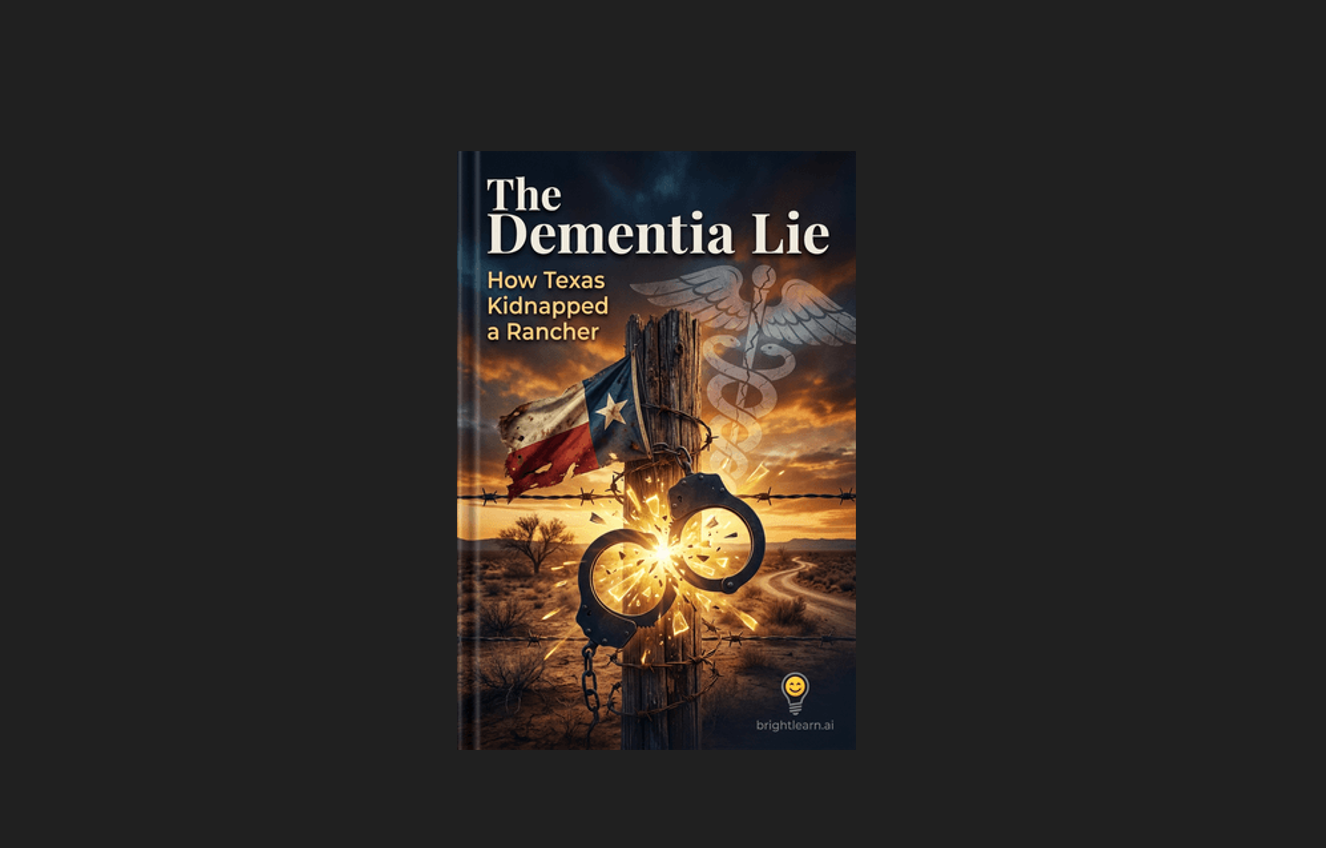
- "The Dementia Lie: How Texas Kidnapped a Rancher" points out that the guardianship system – originally intended to protect vulnerable individuals – has become a tool for stripping basic human rights, with over 1.3 million Americans under such arrangements and virtually no meaningful oversight or checks on guardian power.
- In the case of Texas rancher Patricia Locke, the court declared her incompetent and placed her in a dementia facility despite independent medical evaluations confirming she was of sound mind. The court ignored evidence and allowed a guardian to seize her bank accounts, land and belongings.
- Flawed dementia screening tests, such as the Mini-Mental State Examination, are often used as the primary justification for guardianship, even though they were never designed for that purpose. Corrupt doctors paid by guardianship firms produce diagnoses that justify loss of autonomy.
- Professional guardians profit from extended arrangements by charging hourly fees from the ward's estate, creating incentives to prolong control. Hearings are closed to the public, court files are sealed and judges often rely on single reports without adversarial challenge.
- In Lock's case, isolation became official policy as she was placed in a locked unit, visitors were denied under false pretenses and antipsychotic drugs were administered to induce compliance – all while her property (valuable for pipeline easements and water rights) was transferred to corporate interests through the guardianship.
The book "The Dementia Lie: How Texas Kidnapped a Rancher" explains that the guardianship system was created with a noble purpose – to protect people who truly cannot make decisions for themselves. But over time, these legal arrangements have been twisted into tools of control.
Instead of protecting the vulnerable, they often strip away basic human rights. A court gives one person the power to decide where another person lives, how they spend their money and what medical treatment they receive.
The person under guardianship loses their voice, and they become a legal ghost. This is not protection; this is custody. And it is happening to hundreds of thousands of Americans who may not need it at all.
Nationally, more than 1.3 million adults are under some form of guardianship or conservatorship. The system that is supposed to oversee these arrangements provides almost no real oversight. Once a guardian is appointed, there is rarely any meaningful check on their power.
Court reviews are often rubber stamps. Reports are filed but not examined. The result is a hidden epidemic of abuse: People lose their homes, their savings, their freedom and their families.
The case of Texas cattle rancher Patricia Louise Lock illustrates this crisis perfectly. She was declared incompetent and placed in a dementia facility despite independent medical evaluations showing she was of sound mind. A doctor wrote a scathing letter concluding that her "articulation of thoughts demonstrated no deficit."
Yet the court ignored this evidence. The guardian appointed to control her life quickly moved to take control of her bank accounts, her land and even her personal belongings. Her property, sitting on valuable pipeline easements and water rights in Caldwell and Travis Counties, became the target of a carefully orchestrated scheme.
Why guardians want you locked in forever
The weapon most often used in these kidnappings is a flawed dementia screening test. The Mini-Mental State Examination was never designed to diagnose dementia on its own. These brief questionnaires can easily be influenced by anxiety, depression, hearing loss, or simple fatigue.
Yet a single low score is often used as the primary justification for a dementia diagnosis. Even more troubling, corrupt doctors enlisted by guardianship firms produce the diagnoses that justify loss of autonomy. These doctors are often paid by the very companies that will profit from managing the victim's estate.
Professional guardians charge hourly fees from the estate of the person they are supposed to protect. There is no cap on their hours; the more they charge, the more they profit.
This creates a terrible incentive – they want the arrangement to last as long as possible. If the ward gets better or wants independence, the guardian loses a steady paycheck. Firms like CareFor have turned this into an art form, draining million-dollar estates in just a few years through "management fees" and questionable expenses.
The system is designed to operate in the shadows. Guardianship hearings are usually closed to the public. Court files are sealed. The judge often relies on a single report from a court-appointed evaluator with no adversarial process to challenge the allegations.
In Lock's case, her family hired lawyers, filed motions and demanded due process. They presented an independent medical evaluation proving her competence. But the judge ignored it; the court refused to allow the evidence and the independent evaluation was never considered.
The corporate interests behind Lock's isolation
Isolation becomes official policy. The rancher was placed in a locked unit at Windsor Nursing Home, where visitors were initially denied. Staff told family there was a court order prohibiting contact—no such order ever existed.
The guardian, the nursing home and the Texas courts all looked the other way. Then came the forced medication.
Antipsychotic drugs were administered not because they were medically necessary, but because they made residents docile and compliant. The very dementia the system claimed existed was being manufactured by the medications they forced on her.
This is about money; Lock's land sits on valuable resources. The Lower Colorado River Authority, Flint Hills Resources and Kinder Morgan all have interests in her property for pipeline easements and water rights. The guardianship gave the state the power to transfer her assets to corporate interests.
When the state can declare a competent person incapacitated and take their property, that is not justice. It is legalized robbery dressed up in the language of protection.
The fight for Patricia Lock continues. Her son Brian Cunningham, along with advocates like T and Peter Hogan, have documented her case on Substack and through independent journalists. They have shown that the dementia label was a convenient fiction.
The real disease is the system itself. And until we demand transparency and accountability, this silent epidemic will continue to steal the lives of our elders.
Grab a copy of "The Dementia Lie: How Texas Kidnapped a Rancher" via this link. Discover this book and other good reads at Books.BrightLearn.AI, with thousands of books and counting – all available to freely download, read and share. The decentralized BrightLearn.AI engine also lets readers create their own books, empowering them to share insights and truths with the world.
Watch Brian Cunningham, Patricia Lock's son, discussing the medical kidnapping of his mother in this edition of the "Health Ranger Report."
This video is from the Health Ranger Report channel on Brighteon.com.
Sources include:









Please contact us for more information.