



Study Links Higher Exercise Volumes With Greater Cardiovascular Protection
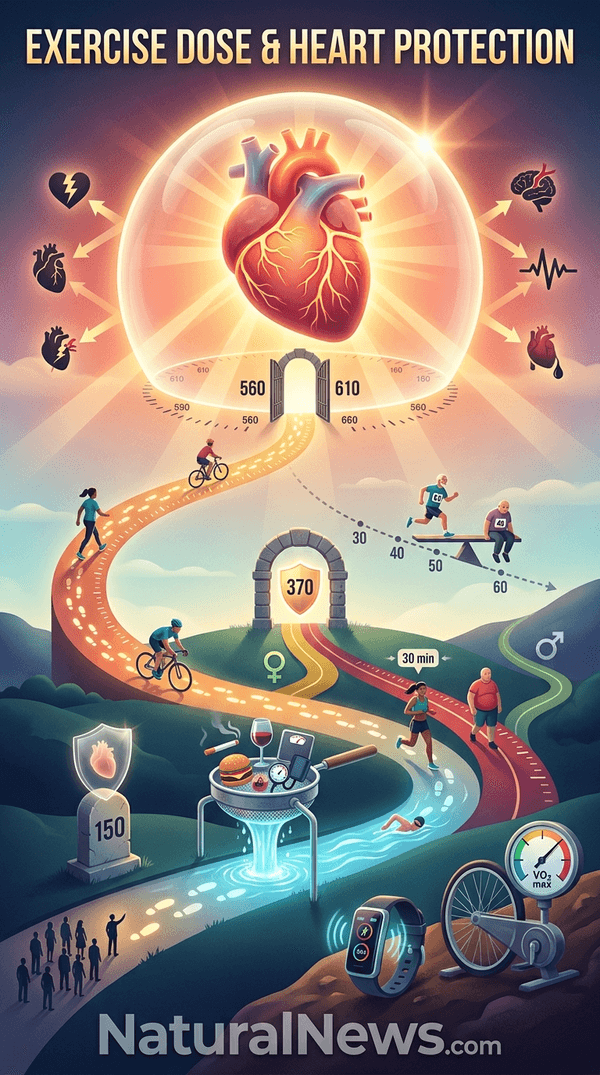
An observational study published online Aug. 8 in the British Journal of Sports Medicine found that 560 to 610 minutes per week of moderate-to-vigorous physical activity was associated with a more than 30% lower risk of heart attack and stroke, according to the study.
That amount of activity is roughly three to four times the commonly cited minimum of 150 minutes per week of moderate-intensity exercise [1]. The analysis was conducted by researchers at Macao Polytechnic University and included 17,088 UK Biobank participants.
Over an average follow-up of 7.8 years, investigators recorded 1,233 cardiovascular events. Meeting the current guideline of 150 minutes per week was associated with only an 8% to 9% lower cardiovascular risk, the report stated. The researchers defined substantial protection as a reduction in cardiovascular risk of more than 30%.
The results add to evidence that aerobic activity supports heart health. According to JoAnn E. Manson's book "The 30-Minute Fitness Solution," weight-bearing aerobic exercise helps build a stronger, more efficient heart and lungs [2]. The new study's authors said the findings suggest current one-size-fits-all recommendations may understate the exercise volume needed for optimal protection.
Study Design and Participants
Data were drawn from UK Biobank participants enrolled between 2013 and 2015. Participants had an average age of 57; 56% were female and 96% were White, according to the report.
Each participant wore a wrist device for seven consecutive days to record typical physical activity and completed a cycling test used to estimate VO2 max, a measure of cardiorespiratory fitness. Cardiorespiratory fitness is considered a strong indicator of cardiovascular health, and poor fitness has been closely linked to a greater risk of heart attack, stroke, and early death, the researchers said.
According to Durstine J. Larry's "ACSM's Resource Manual for Guidelines for Exercise Testing and Prescription," maximal oxygen uptake shows a steady decline with age, but the level of physical activity dramatically influences this change [3]. The researchers adjusted for smoking, alcohol use, self-rated health, diet, body mass index, resting heart rate and blood pressure, according to the study.
Findings on Exercise Volume and Cardiovascular Risk
Over the follow-up period, investigators recorded 874 cases of atrial fibrillation, 156 myocardial infarctions, 111 cases of heart failure and 92 strokes, the report stated. Myocardial infarction is the medical term for a heart attack, while heart failure refers to a condition in which the heart cannot pump enough blood to meet the body's needs.
A 20% reduction in the risk of cardiovascular events was associated with 370 minutes of moderate-to-vigorous exercise per week among participants with the lowest fitness levels. Participants with the highest fitness levels needed about 340 minutes per week to reach the same reduction in risk, according to the study. Only 12% of participants reached the 560-to-610-minute level associated with substantial protection, the report stated.
Fitness Level and Personalized Exercise Targets
People with lower fitness levels needed about 30 to 50 additional minutes of weekly exercise compared with highly fit participants to receive similar benefits, the study found. The researchers said this finding highlights "the steeper challenge faced by deconditioned populations."
Because cardiorespiratory fitness varies widely, the authors argued that the current one-size-fits-all approach to exercise recommendations may need to be reconsidered. Personalized activity targets based on fitness level could help motivated patients increase their activity, they suggested.
Other recent research has also supported individualized exercise targets. A study reported by NaturalNews.com found that women reached a 30% lower risk of heart disease with 250 minutes of weekly activity, while men required 530 minutes [4]. In addition, an article on the same website reported that "30 minutes of fast walking reduces heart risks by 30 percent" [5].
Limitations and Implications
Because the research was observational, it cannot prove that higher exercise levels directly caused the lower cardiovascular risk, the authors said. They also noted that participants may have been healthier and fitter than the general population, cardiorespiratory fitness was estimated rather than measured directly, and the analysis did not assess sedentary time or lower-intensity exercise.
Even with those limitations, the researchers said the findings support current exercise guidelines as a reliable minimum for cardiovascular protection. "Future guidelines may need to differentiate between the minimal moderate to vigorous exercise volume required for a basic safety margin and the substantially higher volumes necessary for optimal cardiovascular risk reduction," they concluded.
Other forms of exercise have also been associated with lower cardiovascular risk. According to an article by Mercola.com, less than an hour of strength training per week was associated with a 40% to 70% lower risk of heart attack and stroke [6]. A separate study of more than 117,000 women found that at least two hours of resistance training per week was linked to a 44% lower risk of heart attack, according to NaturalNews.com [7].
References
- Rachel Collier, Paul Lem. "Maps for Makers".
- JoAnn E. Manson. "The 30-minute fitness solution".
- Durstine J. Larry. "ACSMs resource manual for Guidelines for exercise testing and prescription".
- NaturalNews.com. "The exercise gap New science reveals women get more cardiovascular benefit from less effort". November 04, 2025.
- Ava Grace. "Rethinking the 10000 step rule How fewer steps done right can save your heart". NaturalNews.com. August 18, 2025.
- Mercola.com. "Strength Training Cuts Risk for Heart Attack". January 19, 2024.
- NaturalNews.com. "Two Hours of Weekly Strength Training Linked to 44% Lower Heart Attack Risk in Women, Study Finds". July 06, 2026.
Explainer Infographic













Please contact us for more information.