



The Bubble Isn't the Technology
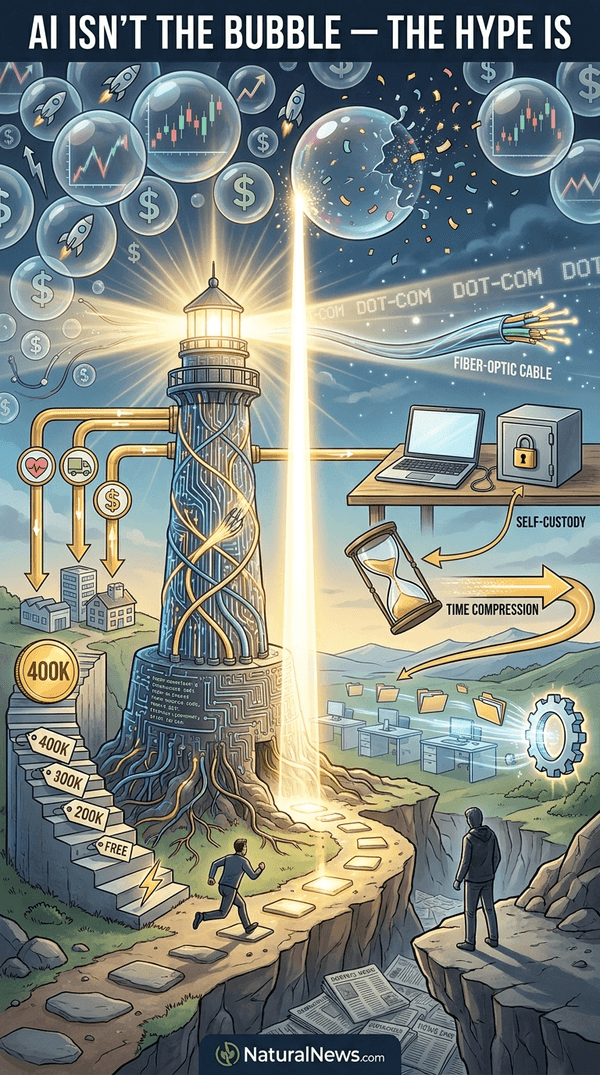
The AI investment bubble is real -- I've been warning about it for months. But conflating that bubble with AI technology itself is a dangerous mistake that will leave you behind. Wall Street's speculative mania is a financial phenomenon, not a measure of what this technology can actually do. Bridgewater Associates founder Ray Dalio recently "highlighted classic bubble dynamics - sky-high valuations, rampant speculation, and 'paper wealth' vastly outpacing actual cash flows - while drawing direct parallels to the 2000 dot-com era" [1]. Yet even he understands the crucial distinction: the technology endures when the speculation collapses.
AI capability is accelerating while market hype inflates valuations. When the correction comes -- and it will -- the technology stays and keeps improving. Dismissing AI because "bubble" is in the headline means ignoring the most powerful tool advancement of our lifetime.
What I Did in One Weekend
Last weekend, I used multiple AI models and agents to build projects that would have taken a team of engineers months and hundreds of thousands of dollars just 18 months ago. I also rendered a four-minute music video locally -- a job that could have cost $400,000 a few years ago -- for a few dollars of electricity.
This isn't theoretical. I've spent years on AI technology, building AI models, processing data and vibe coding. And I've watched the global data center buildout with a growing sense of concern (and curiosity). The hyperscale buildout is where the bubble lives. But at the individual level, the technology itself is becoming astonishingly capable and practical.
The Real Risk Is Falling Behind
If you're 30 days behind on AI, you're already in panic catch-up mode. A year behind means obsolete. I'm not exaggerating. AI models "have surpassed basic predictive tasks, demonstrating complex cognitive abilities and the potential to replace up to 50% of desk jobs in the coming years" [2].
In the 1980s, you had 20 years to adopt personal computers and learn how to run them. But AI is compressing that curve to a few months. There is no time to wait. As financial historian Alasdair Nairn wrote about technology revolutions, "the combination of algorithm development and ever more specific processors to improve the efficiency of searches will allow much more rapid analysis of data patterns which hitherto were difficult to discern" [3]. And that was written before the current explosion.
I fear getting left behind myself -- and I use this technology daily. Imagine how quickly non-users will be locked out of the economy if they don't get some hands-on experience with AI.
Take Control: Run AI Locally
The best way to prepare is self-custody of AI: own your hardware, protect your privacy, and avoid the censorship built into cloud services. "Decentralized AI models could potentially shift power away from centralized entities and nation-states that can afford massive GPU arrays, such as those with 100,000 GPUs" [4]. That's the direction we need, and it's the only way to keep AI from becoming another tool of centralized control.
Start simple with free tools like LM Studio or AnythingLLM, then graduate to command-line harnesses like Kimi Code or Claude Code. I run my own GPUs for video rendering and write my own Python tools, but you don't need to be a programmer to begin today. Every day you wait, the gap between those who control their own AI tools and those who rent their thinking from corporate gatekeepers grows wider.
Conclusion: The Acceleration Is Just Beginning
AI technology is leaping forward by remarkable gains in compressed time. The investment bubble doesn't change that reality. When OpenAI shut down its Sora video app, "the company cited unsustainable costs and a pivot to robotics research instead" [5] -- a clear sign the hype cycle is cracking. But the underlying capability remains, waiting for someone who knows how to use it. In the same period, "Oracle Corp. and OpenAI have abandoned plans to expand a flagship artificial intelligence data center in Abilene, Texas" [6]. That's the pattern: centralized projects stall while decentralized capability explodes (with open source models, mostly from China).
Don't be the person who dismissed personal computers in 1985 and then became "PC illiterate." The cost of ignoring AI now is rapid obsolescence. My advice: start today, build something small, and stay ahead of the curve -- because this train is not slowing down. Even if the AI speculation bubble collapses.
References
- The Pricking Is Coming': Dalio Warns AI Bubble Will Burst Like Dot-Com, But Tech Will Endure. - Zero Hedge. June 3, 2026.
- 2025 11 20 BBN Interview with Aaron Day . - Mike Adams. November 20, 2025.
- Engines That Move Markets (2nd Ed). - Alasdair Nairn.
- Mike Adams interview with Aaron Day. - Mike Adams. December 16, 2024.
- Sudden Shutdown of OpenAI's Sora Video App Signals a Reckoning for AI Hype. - NaturalNews.com. Cassie B. March 26, 2026.
- Oracle, OpenAI Scrap Texas Data Center Expansion Plan, AI Stocks Decline. - NaturalNews.com. Chase Codewell. March 11, 2026.
- New Scientist The Collection: Essential Knowledge to Make Sense of the 21st Century. - New Scientist.
- The Data Center Mystery: Why Billions of Simulated Worlds Are the Best Explanation of What's Happening. - NaturalNews.com. Mike Adams. May 7, 2026.
- Mike Adams interview with Zach Vorhies. - Mike Adams. January 3, 2024.
- Mike Adams interview with Farsam. - Mike Adams. February 14, 2024.
Explainer Infographic






Please contact us for more information.