


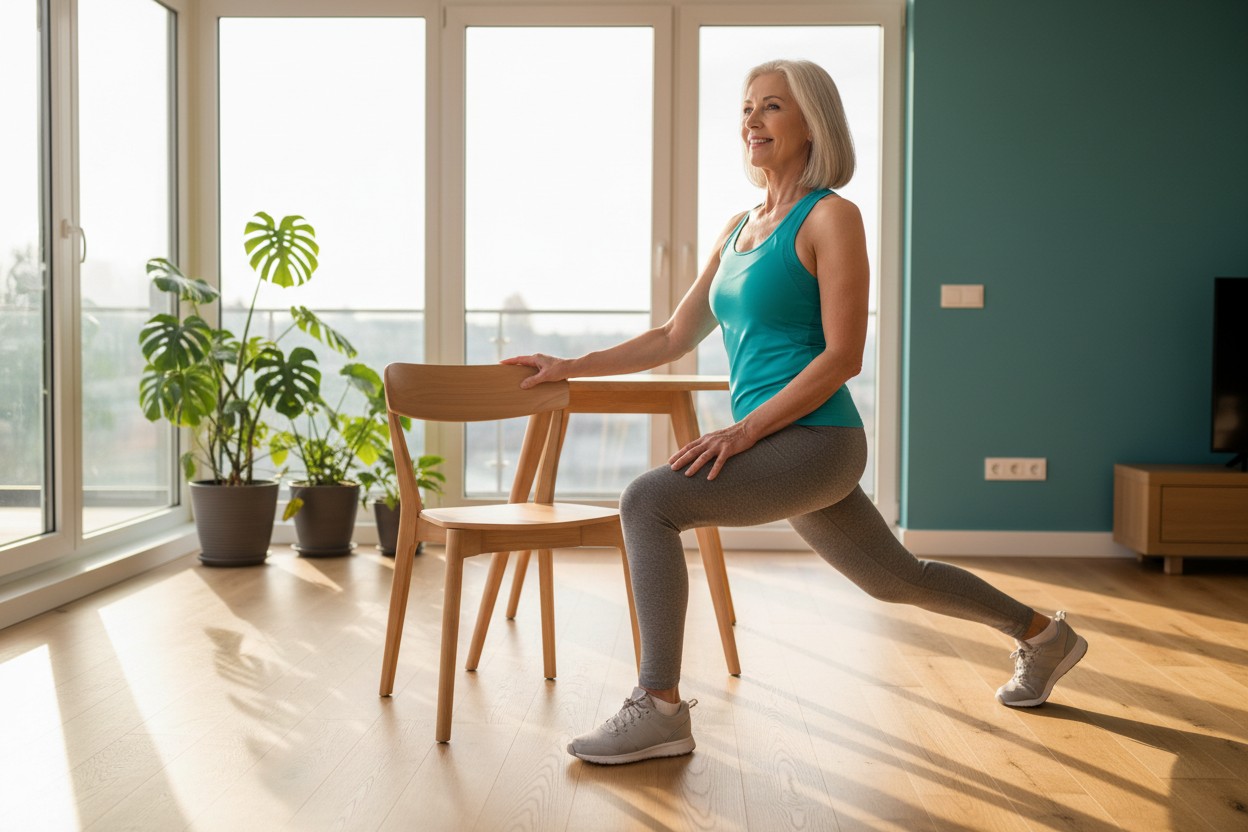
Report Lists Five Exercises for Older Adults
Health.com has published a report identifying five at-home exercises that target leg strength for people aged 60 and older, according to the article. The report stated that the routine requires no gym equipment and can be performed in a small space. A new wave of simplified, no-equipment-required exercise routines is offering older adults a tool to combat age-related muscle loss and restore functional independence, according to a June 2026 article on NaturalNews.com [1].
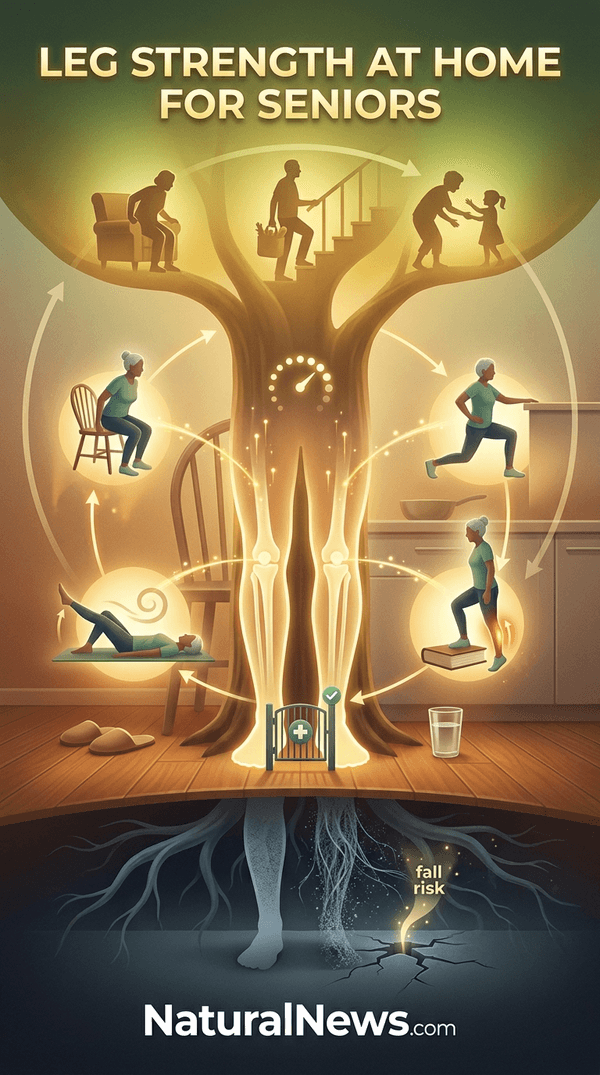
According to the Health.com report, the five exercises are chair squats, standing lunges, step-ups, calf raises, and straight-leg raises. The article said each movement is designed so that a person can perform it beside a chair or counter for balance. The report described the routine as appropriate for adults with no formal training experience.
Age-Related Muscle Loss and Mobility
Age-related muscle loss, known as sarcopenia, is common in older adults. According to an article by Dr. Mercola, adults who do not take preventive steps can lose approximately 15% of their muscle mass between their 30s and 80s [2]. The same article reported that an estimated 10% to 25% of adults under age 70 and half of those over age 80 have sarcopenia [2]. A book on impaired mobility similarly states that leg muscle strength stays near its level until about age 60 and declines slowly after that, dropping by half by the time people reach their nineties [3].
Muscle loss affects mobility and fall risk. According to the U.S. Centers for Disease Control and Prevention, as cited by an article on Mercola.com, more than one in four older Americans falls each year [4]. A growing body of research indicates that balance training can reduce the risk of falls and improve functional mobility, according to a July 2026 report on NaturalNews.com [5]. The Health.com report said the five exercises are intended to help older adults maintain independence and reduce fall risk.
The Five Exercises Described
The five exercises, according to the Health.com article, are chair squats, standing lunges, step-ups, calf raises, and straight-leg raises. Each exercise primarily uses body weight, and the report said a chair or counter can provide support during the movements. Bodyweight exercise has been described as a way for seniors to restore functional independence without equipment, according to an article published on NaturalNews.com [1].
Chair squats involve lowering the body toward a seat and returning to a standing position. A chair squat protocol for clients with osteoporosis identifies the movement as a knee-focused exercise that can be adjusted to the client's capacity [6]. Standing lunges and calf raises target the thighs, hips and lower legs, according to the report. Step-ups strengthen the quadriceps one leg at a time and can be more challenging than bilateral movements, according to a report by physical therapists Sydney Miller and Scott Thompson [7].
Straight-leg raises are performed while lying on the floor or a mat, according to the Health.com report, and work the muscles along the front of the thigh. The report said the exercises should be done slowly to avoid momentum. A list of balance exercises for older adults published by Mercola.com instructs users to stand behind a chair with hands on the back or on a counter for support, and to repeat each movement about 10 times; the list adds that people who are comfortable can perform the exercises without holding on [4].
Repetitions, Sets, and Progression
Health.com recommended starting with one set of eight to 12 repetitions per exercise, with rest between sets, according to the article. The report said progression should be gradual, adding repetitions or sets only when the current level becomes easy. Fitness guidance for older adults notes that there are many repetition range options, according to Fitness Professionals Guide to Strength Training Older Adults [8].
A similar approach appears in osteoporosis exercise protocols, which increase the number of repetitions before increasing the amount of weight [6]. Research on a four-minute home strength program for older adults found measurable gains in chair-stand repetitions, sit-to-stand time and one-legged balance after 12 weeks, according to a report on the study [9].
Report Urges Medical Clearance Before Starting
Health.com encouraged older adults to consult a physician or physical therapist before beginning the routine, according to the article. The guidance is consistent with senior fitness protocols that account for medication effects and existing conditions; Al Brajnikoff's senior fitness guide notes that comorbid conditions can complicate exercise responses and that medications may have their own exercise effects [10]. A separate exercise guide for people with chronic conditions advises patients to talk to their care team and a physical therapist to create a personalized plan [11].
The Health.com article did not claim the exercises reverse disease, according to the report. It framed the routine as a method to restore leg strength and support daily movement, the article stated.
Conclusion
The report's five-movement routine provides a structured approach to leg weakness that can be completed in a home setting, according to the article. It uses body weight rather than equipment, allows for support from furniture, and can be adjusted for individual ability, according to the report.
Strength training is linked to improved mobility and reduced fall risk in older adults, according to recent reports on home-based exercise programs [9]. The Health.com report directs older adults to begin with one set, progress gradually, and obtain medical clearance first, according to the article.
References
- NaturalNews.com. "The arms race against age: Why bodyweight exercises are the new frontier for seniors seeking strength". NaturalNews.com. June 11, 2026.
- Mercola.com. "Can These Nutrients Help Prevent Muscle Wasting?". Mercola.com. November 25, 2022.
- Jane Mahoney. "Coping with impaired mobility".
- Mercola.com. "Falls Are Among the Leading Cause of Injury and Death for Seniors". Mercola.com. October 7, 2016.
- NaturalNews.com. "Nine Balance Exercises Aim to Improve Stability at Any Age". NaturalNews.com. July 15, 2026.
- Al Brajnikoff. "Osteoporosis and Osteopenia Exercise Protocols".
- NaturalNews.com. "Five Quad Exercises Beyond Squats, According to Physical Therapists". NaturalNews.com. August 5, 2026.
- Thomas R. Baechle. "Fitness Professionals Guide to Strength Training Older Adults".
- NaturalNews.com. "Four-Minute Daily Strength Training Improves Mobility in Older Adults, Study Finds". NaturalNews.com. July 5, 2026.
- Al Brajnikoff. "Senior Fitness Exercise Protocols".
- Everyday Health. "How to Exercise With ANCA-Associated Vasculitis". EverydayHealth.com. June 1, 2026.
Explainer Infographic











Please contact us for more information.