



Summary
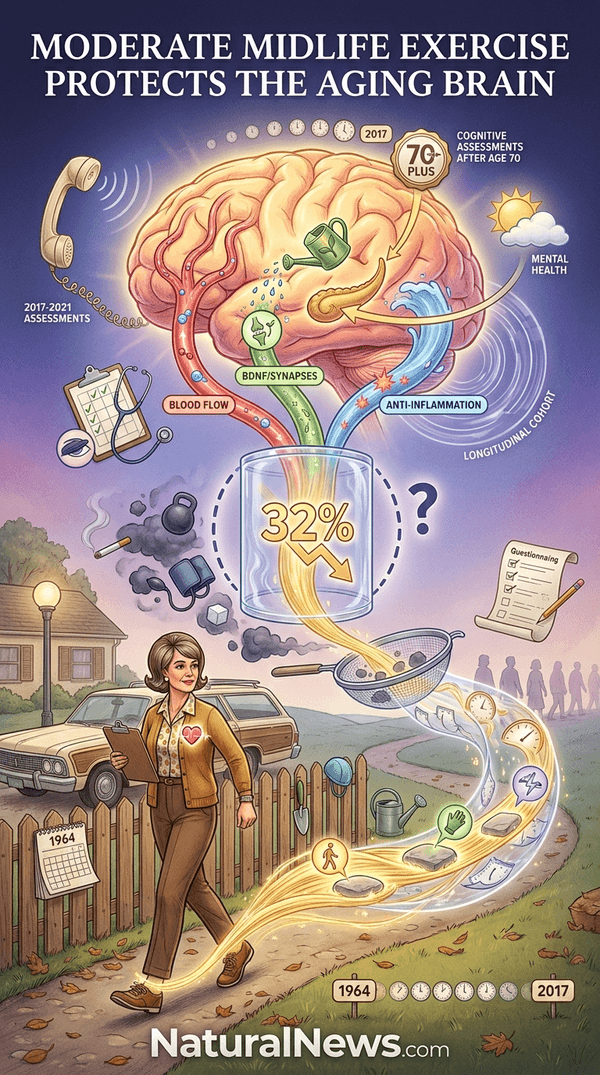
A study published Aug. 14, 2026, in the journal Neurology found an association between moderate physical activity in middle age and a reduced risk of cognitive impairment decades later. The report, from researchers at the University of California, San Francisco, analyzed data from 3,200 adults enrolled in the long-running Kaiser Permanente cohort. According to the study, participants who engaged in light or moderate exercise at least once per week in their 40s and 50s had 32% lower odds of developing mild cognitive impairment after age 70. The findings were adjusted for age, sex, education, smoking, and cardiovascular risk factors, the report stated.
The results add to a larger body of evidence on exercise and brain health. Earlier reports have stated that moderate exercise during midlife or later appears to reduce the risk of mild cognitive impairment, a condition estimated to affect 10% to 15% of individuals annually [1]. Books on brain health have described exercise as one of the most effective drug-free methods to improve mobility and independence in older people [2]. The new analysis is notable for examining exercise habits recorded decades before cognitive assessments.
Study Design and Participants
Participants were members of an integrated health system in Northern California and underwent physical exams and health questionnaires between 1964 and 1973, officials said. Exercise frequency was self-reported, with categories ranging from no activity to daily vigorous activity. Between 2017 and 2021, the participants completed telephone-based cognitive assessments, the report stated. A panel of neurologists classified cognitive status using standardized criteria, and about 25% of the sample was classified as having mild cognitive impairment.
The researchers controlled for potential confounders including body mass index, blood pressure, and diabetes, according to the report. Because the data were observational, the study cannot prove that exercise caused the lower risk. Previous research in the field has identified growing evidence of beneficial effects of exercise on the brain and behavior of older adults [3], and poor lifestyle habits such as smoking, obesity, and high blood pressure in middle age have been tied to lower brain volume and dementia markers up to a decade later [4].
Findings on Exercise Frequency and Cognitive Outcomes
The analysis found a dose-response relationship, the authors wrote. Participants who exercised one to two times per week had lower odds of impairment, while those who exercised three or more times per week had the strongest association. The study reported that vigorous activity in midlife did not confer additional benefit beyond moderate activity, though the difference was not statistically significant.
Lead author Dr. Sarah Chen said in a statement, “Our findings suggest that even modest amounts of physical activity in midlife are associated with better cognitive status in later life.” Independent expert Dr. Mark Thompson, a neurologist at Johns Hopkins who was not involved in the study, said the observational design limits causal conclusions, but the results align with existing evidence on exercise and brain health. Previous research has shown that even gentle, low-intensity exercise can influence the brain [5]. A separate report on a 12-month exercise program found that modest, consistent aerobic exercise was associated with a brain that appeared biologically younger [6]. Regular physical activity has also been associated with a lower risk of anxiety disorders and reduced symptoms of depression [7].
Potential Mechanisms and Study Limitations
Possible explanations include improved cardiovascular health, increased cerebral blood flow, and reduced neuroinflammation, according to the study authors. The report noted that exercise may promote neuroplasticity and the release of brain-derived neurotrophic factor, a protein linked to learning and memory. Animal research has shown that exercise induces BDNF and synapsin I in specific hippocampal subfields [8]. Physical activity has also been described as promoting nerve-protecting compounds and increasing blood flow to the brain [1].
Study limitations include reliance on self-reported exercise at a single point in time, which may introduce recall bias, the authors said. Because the cohort was predominantly White and middle-income, the findings may not generalize to other populations, according to the report.
Public Health Implications
The researchers recommended that health care providers discuss physical activity with middle-aged patients as part of routine care. Chen said, “Clinicians might consider advising patients that even a small amount of exercise in midlife can be a meaningful investment in their future brain health.” The study was funded by the National Institute on Aging, and the authors declared no conflicts of interest, the report stated.
The findings support existing physical activity guidelines, which recommend at least 150 minutes of moderate aerobic activity per week for adults, according to the U.S. Department of Health and Human Services. Published exercise guidelines similarly recommend at least 150 minutes of moderate-intensity exercise per week [9]. Research cited in the book “100 Simple Things You Can Do to Prevent Alzheimer’s and Age-Related Memory Loss” found that older people who did as little as fifty minutes a week of moderate activity were 25% less likely to develop Alzheimer’s [10].
References
- Mercola.com. "Memory Loss Can be Reversed Just Exercise". Mercola.com. February 02, 2010.
- Sanjay Gupta. "Keep Sharp Build a Better Brain at Any Age".
- Schaie K Warner. "Social Structures Aging and Self regulation in the Elderly Societal Impact on Aging".
- NaturalNews.com. "Study Links Struggles with Common Habits to Accelerated Brain Aging". NaturalNews.com. June 14, 2026.
- Mercola.com. "Can Pupils Indicate How Light Exercise Impact". Mercola.com. October 19, 2023.
- NaturalNews.com. "How a simple exercise habit reverses brain aging, defying scientific explanation". NaturalNews.com. August 05, 2026.
- NaturalNews.com. "The “Good Stress” That Rewires Your Brain: How Exercise Builds Mental Resilience". NaturalNews.com. July 29, 2026.
- XPP. "Exercise Induces BDNF and Synapsin I to Specific Hippocampal Subfields". Journal of Neuroscience.
- Rachel Collier Paul Lem. "Maps for Makers".
- Carper Jean. "100 simple things you can do to prevent Alzheimers and age-related memory loss".
Explainer Infographic












Please contact us for more information.