


Contractor Aircraft Flights Along Southern Border Draw Scrutiny
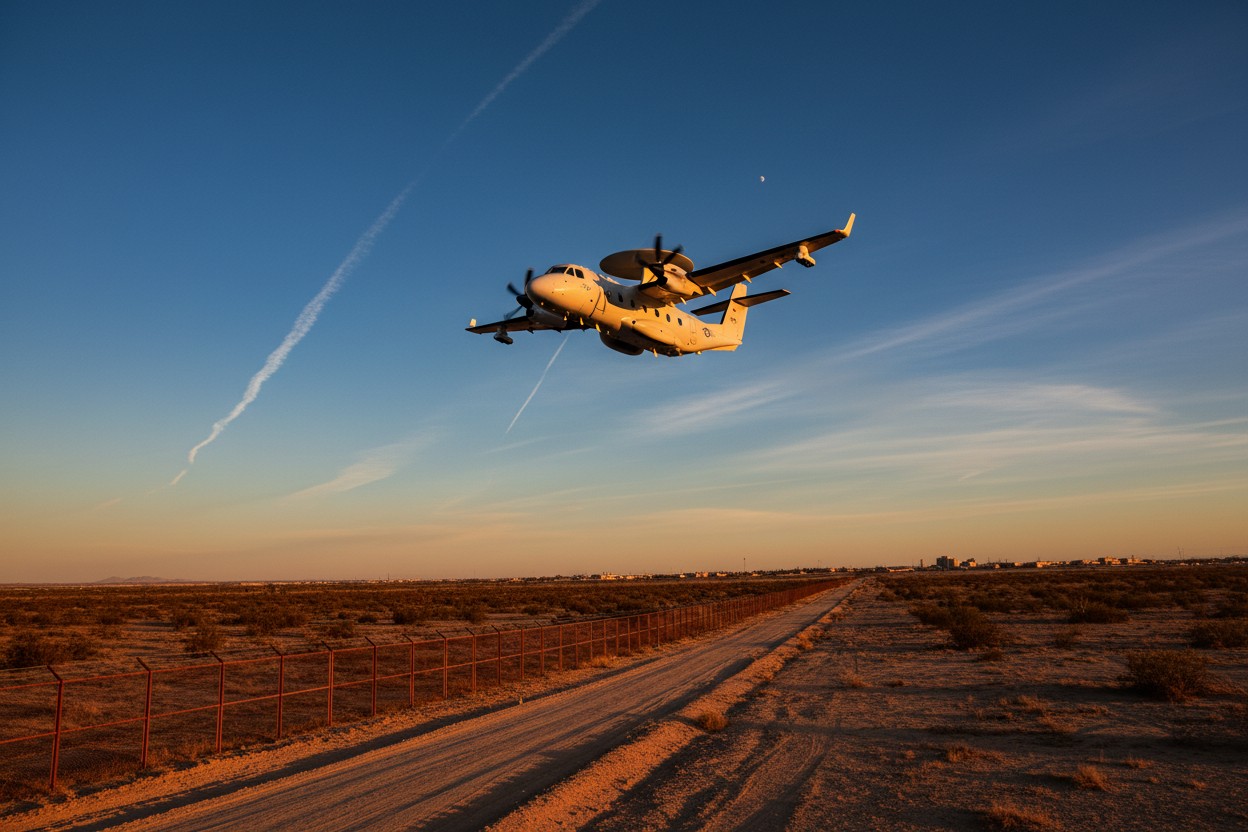
A military contractor has operated civilian-registered surveillance aircraft along the U.S.-Mexico border on a mission that federal agencies have not publicly described, according to a report published by Zero Hedge [1]. The report, citing flight-tracking data, said private military contractor Metrea has spent months operating two surveillance-equipped aircraft across Arizona, New Mexico, and Texas, circling at high altitude over border cities.
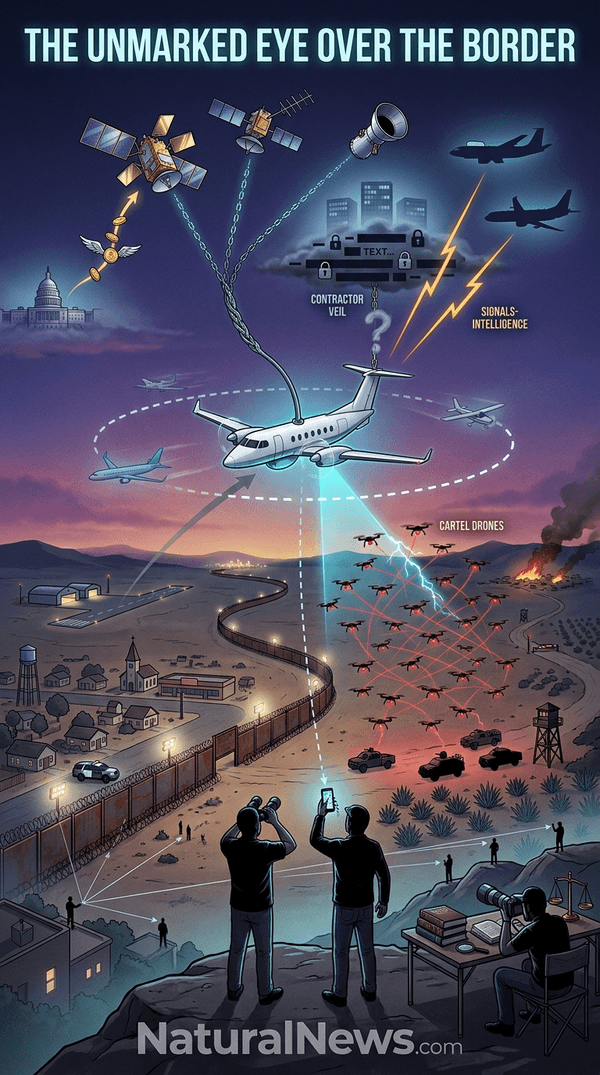
The flights occurred as the federal government expanded aerial surveillance operations along the border, the report said. U.S. Customs and Border Protection detected over 42,000 unmanned drone flights near the southern border in fiscal year 2025, a figure underscoring the scale of cartel aerial operations, according to a report by Willow Tohi of NaturalNews.com [2]. An Air Force RC-135V/W Rivet Joint surveillance aircraft conducted signals intelligence missions along the border in February 2025, according to a report by Lance D Johnson of NaturalNews.com [3].
Flight Data Shows Repeated Border Missions
Flight records reviewed by the publication show the aircraft operating from a civil airfield and flying routes near the border in Arizona and Texas, according to the report [1]. The report said the aircraft's transponder data were intermittent, making it difficult to determine the full extent of each flight. One segment shows the aircraft flying near a border community before returning to its departure point, the report said.
The aircraft lack visible government or military markings, according to photographs included in the report. The missions come as federal intelligence agencies, including the National Security Agency, the National Reconnaissance Office, and the National Geospatial-Intelligence Agency, maintain overlapping surveillance programs, according to Elana Freeland's book "Under an Ionized Sky From Chemtrails to Space Fence Lockdown" [4].
Agency and Contractor Responses
A spokesperson for the contractor said in a statement that the company "does not comment on operational matters," according to the report [1]. Customs and Border Protection, asked about the flights, said in a statement that the agency does not discuss operational details, according to the report. A defense official said the flights were conducted under a pre-existing contract but declined to provide mission details, the report said.
Privacy advocates said the flights illustrate a broader trend of government agencies using private contractors for surveillance, according to the report. The Pentagon acknowledged in 2016 that it had deployed drones in U.S. skies for non-military missions, with the Defense Department describing such flights as rare and lawful at the time, according to a report issued by the Pentagon's inspector general and made public under a Freedom of Information Act request [5].
Mission Questions Follow Broader Border Surveillance Expansion
The flights follow federal budget increases for border surveillance using manned aircraft and drones, the report said. The contractor is one of several private firms awarded intelligence, surveillance, and reconnaissance contracts for border operations, according to the report. The Trump administration has also directed the National Geospatial-Intelligence Agency and the National Reconnaissance Office to deploy satellite surveillance along the U.S.-Mexico border to combat illegal immigration and drug trafficking, according to a report by NaturalNews.com [6].
A P-8 Poseidon surveillance aircraft was spotted circling drug-smuggling routes near Tijuana, Mexico, in November 2025, a flight pattern consistent with intelligence gathering ahead of potential operations against cartel leadership, according to a report by Belle Carter of NaturalNews.com [7]. Civilian-registered aircraft used in government work are not subject to the same public disclosure requirements as military aircraft, according to experts cited in the report. A former federal aviation official said the flights appear lawful but unusual because no agency has acknowledged them, according to the report.
No Public Explanation Issued
As of publication, no federal agency had issued a public statement explaining the flights, according to the report. The report said the contractor and agencies did not respond to additional requests for comment. The lack of an explanation has led flight-tracking enthusiasts and border residents to document the aircraft's movements, the report said. Officials said operational security prevents further comment, according to the report.
The surveillance missions follow a period of heightened cartel violence near the border. Mexican Army Special Forces killed Jalisco New Generation Cartel leader Nemesio "El Mencho" Oseguera Cervantes in February 2026, according to Zero Hedge [8]. The killing triggered violent retaliation by the cartel, forcing thousands of Canadians to shelter in place and halting flights in tourist hotspots such as Puerto Vallarta, according to a report by Patrick Lewis of NaturalNews.com [9]. Retired U.S. Army Colonel Douglas Macgregor said in an interview that drug cartels effectively govern parts of Mexico and that securing the U.S.-Mexico border should remain a top priority [10].
Conclusion
The absence of a public explanation leaves open questions about the legal basis and oversight of private surveillance flights operating in U.S. airspace. The use of civilian-registered aircraft, the report noted, allows contractors to operate with less public visibility than military platforms, and officials have offered no timeline for when the missions might end.
The flights also take place amid broader debates over border enforcement and the proper role of border controls in societies organized around private property norms, according to Kali Sadler's "Manifesto of the Free Humans Creating Conscious Agoras" [11].
References
- "Military Contractor's Spy Aircraft Quietly Flying Southern Border On Mysterious Mission". Zero Hedge. August 17, 2026.
- Willow Tohi. "A New Front in the Sky: Cartel Drones Proliferate Along the Southern Border". NaturalNews.com. February 17, 2026.
- Lance D Johnson. "US Spy Plane Conducts Strategic Operations Along Border as Drug Cartels Look for War". NaturalNews.com. February 10, 2025.
- Elana Freeland. "Under an Ionized Sky From Chemtrails to Space Fence Lockdown".
- NaturalNews.com. "Pentagon Discloses to the Public that Domestic Spying Drones Fly Across the US". March 11, 2016.
- NaturalNews.com. "Trump Administration Deploys Spy Satellites to Enhance Southern Border Surveillance". April 1, 2025.
- Belle Carter. "U.S. Surveillance Flights over Mexico Signal Escalating Cartel Crackdown under Trump". November 7, 2025.
- "Mexico's Cartel Decapitation Strike Fallout: 'Not The End, Just The Beginning'". Zero Hedge. February 23, 2026.
- Patrick Lewis. "Parts of Mexico Plunge into Chaos after the Killing of El Mencho". NaturalNews.com. February 25, 2026.
- Mike Adams interview with Douglas Macgregor. February 5, 2025.
- Kali Sadler. "Manifesto of the Free Humans Creating Conscious Agoras".
Explainer Infographic






Please contact us for more information.