


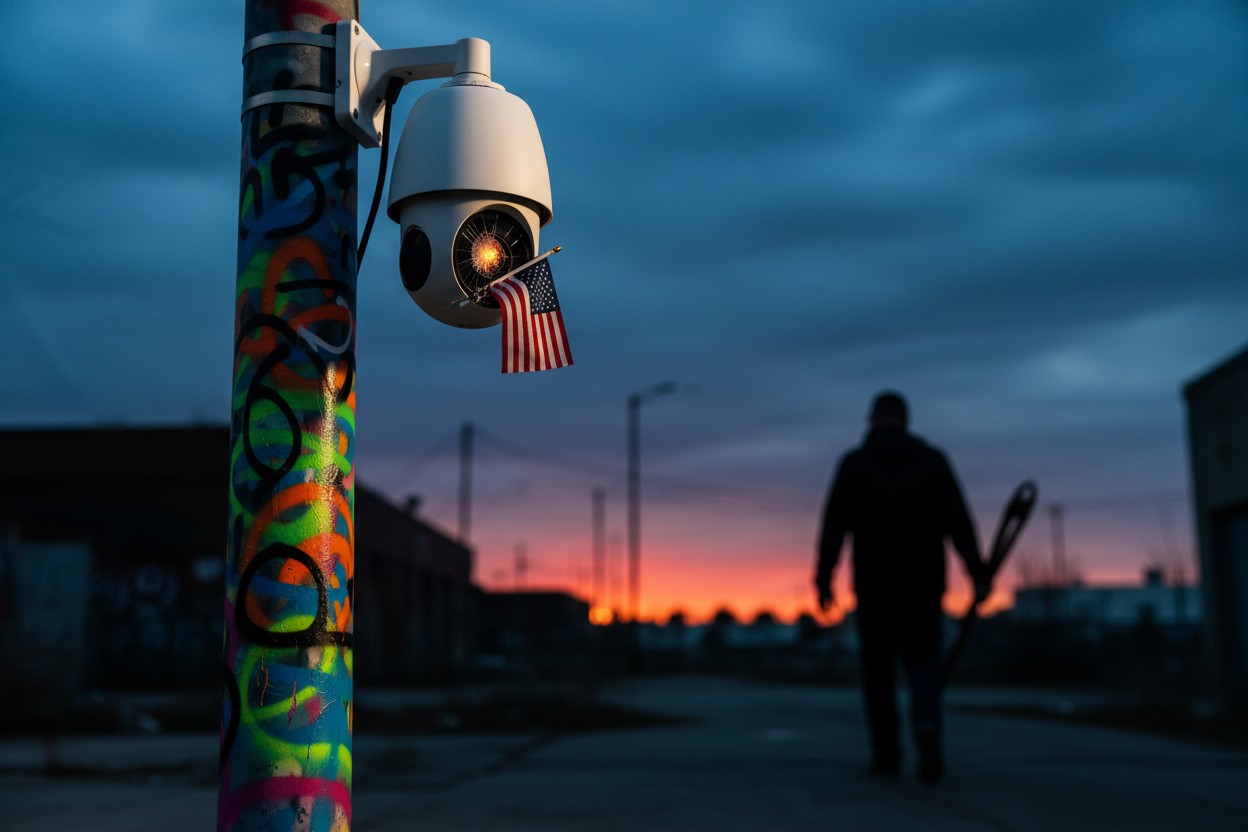
More than 160 Flock surveillance cameras have been vandalized or destroyed across the United States, according to the tracking site FlockStats. The incidents mark a significant escalation in public opposition to the expanding network of automated license plate readers (ALPRs) operated by Flock Safety.
At least 4,000 police departments now deploy over 130,000 Flock cameras nationwide, according to Russia Today (RT). The devices, manufactured by Flock Technologies, capture images of passing vehicles and, in the case of the Condor PTZ cameras, can track individuals using artificial intelligence (AI).
Officials from law enforcement agencies say the cameras help prevent burglaries, carjackings and homicides. But opponents argue the technology encroaches on civil liberties and enables warrantless mass surveillance.
Background on Flock Camera Deployment
Flock Safety began large-scale deployment of its Falcon ALPR and Condor PTZ camera systems in 2020, according to multiple reports. The cameras are mounted on poles, streetlights, and other infrastructure, recording license plate numbers, vehicle make, model and color. Willow Tohi, writing for NaturalNews.com, described the network as "a nationwide network of automated license plate readers... capturing and storing detailed location data on billions of American drivers." [1]
Law enforcement agencies in at least 4,000 cities have contracted with Flock, according to RT. The company says it provides a "public safety operating system" that can alert police to vehicles connected to crimes. In California, Gov. Gavin Newsom (D) announced plans in 2024 to install 480 new Flock cameras in Oakland and along freeways, characterizing them as "cutting-edge" and stating they would "aid law enforcement in identifying vehicles associated with crimes through real-time data and alerts." [2] Critics call the rapid expansion a step toward a "digital police state." [9]
Incidents of Vandalism and Protest
Vandals have shot, spray-painted, cut down and obstructed Flock cameras across multiple states. According to FlockStats, which tracks confirmed incidents, 162 cameras have been destroyed as of August 2026. In Houston, police found several cameras that had been "cut in half and spray-painted," with one bearing an American flag painted over the lens. [8] In Suffolk, Virginia, 13 cameras were destroyed between April and October 2025. [6]
Protests have also taken on a theatrical dimension. At a San Diego City Council meeting, a man dressed as Darth Vader addressed officials, saying: "The Emperor is a fan of Flock, and we must continue utilizing Flock technologies so that we can surveil the rebel scum." [3]
According to RT, the protester continued: "As they move from playground to playground... because we all know that the Flock cameras are not only following the license plate readers, they are following children." [3] The demonstration highlighted the broad public unease with the technology.
Criticism and Privacy Concerns
A Washington Post report cited by RT stated that over 50 police officers in various departments used Flock cameras to stalk women, including ex-wives and romantic partners, without their consent. [3] Vulnerabilities in Flock's software have also exposed images of children online, according to the same article. Opponents argue that the cameras create a permanent record of every movement a driver makes, effectively eliminating the anonymity of public travel.
Government intelligence centers are now monitoring social media accounts of those who criticize Flock, according to documents obtained by 404 Media and reported by the New American. [4] Law enforcement fusion centers are circulating warnings about protests and activists, and tracking online discussions of methods to disable the cameras.
This has raised further concerns about the erosion of free speech and the chilling effect on legitimate dissent. In Connecticut, towns such as Windsor and Killingworth have opted to remove Flock cameras after privacy concerns were raised. [7]
Legislative and Political Responses
Rep. Thomas Massie (R-KY) introduced a bill that would withhold federal funding from police departments that use Flock cameras, according to RT. [3] Rep. Marlin Stutzman (R-IN) also said he is planning legislative action, describing the cameras as "invasive" and "too big government" in an interview with "Just the News, No Noise." [5]
Connecticut Gov. Ned Lamont (D) ordered cities to pause new Flock installations pending the development of new state privacy legislation. [3] In Kansas, Mason Grimmett, a Wichita machinist, sued the city over its network of nearly 200 Flock cameras, arguing that the system violates the state constitution's protections against unreasonable searches. [10] The Kansas Justice Institute filed the suit on his behalf. The legal and legislative battles underscore a growing bipartisan concern about the scope of the surveillance network.
Conclusion: Escalation of the Anti-Surveillance Movement
The destruction of more than 160 Flock cameras and the spread of protests from city council chambers to courtrooms indicate that public backlash against the surveillance network is intensifying. Flock Safety officials maintain that the technology reduces crime, pointing to its use in solving burglaries and homicides. However, reports of police abuse, data security flaws, and the sheer scale of the system – 130,000 cameras and growing – have fueled opposition.
As lawmakers at both the state and federal levels seek to regulate or restrict the deployment of ALPR systems, and as activists continue to physically disable cameras, the debate over the balance between surveillance and privacy remains unresolved. The coming years are likely to see further legal challenges and legislative action as the nation grapples with the implications of a permanent, automated surveillance infrastructure.
References
- Willow Tohi. "The Digital Panopticon: License Plate Readers Are Tracking You Everywhere You Go." NaturalNews.com. September 1, 2025.
- NaturalNews.com. "Plans to install 480 new cameras in Oakland along California freeways raise mass surveillance concerns." April 10, 2024.
- RT. "Flock cameras destroyed as anti-surveillance protests spread (VIDEOS)." August 21, 2026.
- The New American. "Report: Government Monitors Anti-Flock Social Media Critics." August 19, 2026.
- 100PercentFedUp. "'It's Invasive' – House Republican Describes Personal Experience With Law Enforcement Aided By Flock Safety Cameras." August 9, 2026.
- The New American. "Americans Destroying Flock Cameras in Protest." July 27, 2026.
- 100PercentFedUp. "Multiple Towns In Blue State To Remove Flock Safety Cameras." July 20, 2026.
- 100PercentFedUp. "Multiple Flock Cameras Found Damaged In Texas City, American Flag Planted." July 10, 2026.
- ZeroHedge. "While The Political Circus Distracts Us, Flock Builds The Digital Police State." July 13, 2026.
- Reclaim The Net. "Wichita Machinist Sues City to Shut Down Flock License Plate Camera Network." August 5, 2026.
Explainer Infographic








Please contact us for more information.